
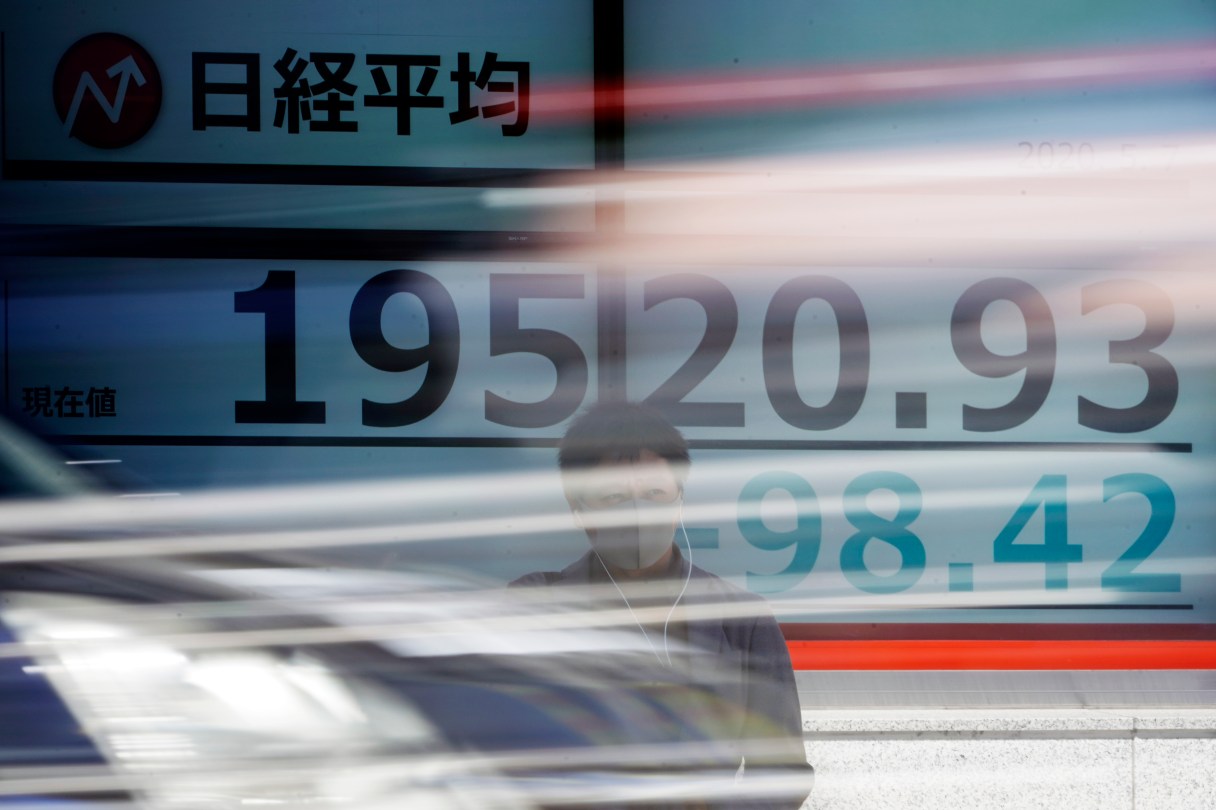
Even with the economy still in miserable shape, some investors are finding reasons to hope the worst of the plunge may have passed, and Wall Street rallied to its biggest gain in a week on Thursday.
The S&P 500 climbed 1.2% for its third gain in four days, following up on similar increases in European markets. Other areas of the market were still showing much more pessimism, though, including bonds.
The day’s headliner economic report showed another 3.2 million U.S. workers applied for jobless benefits last week, bringing the total to 33.5 million over the last seven weeks. It’s a shocking number, but it’s also the fifth straight week that it has declined since hitting a peak in late March.
Several companies also cited signs that the worst may have passed in some parts of their businesses, though more weakness is still definitely on the horizon.
That was enough to bolster hopes that have coursed through the stock market recently as investors look ahead to a future that’s not as bad as the horrific present. On Wall Street, investors often care more about how quickly economic pain is increasing than about whether there is more pain.