
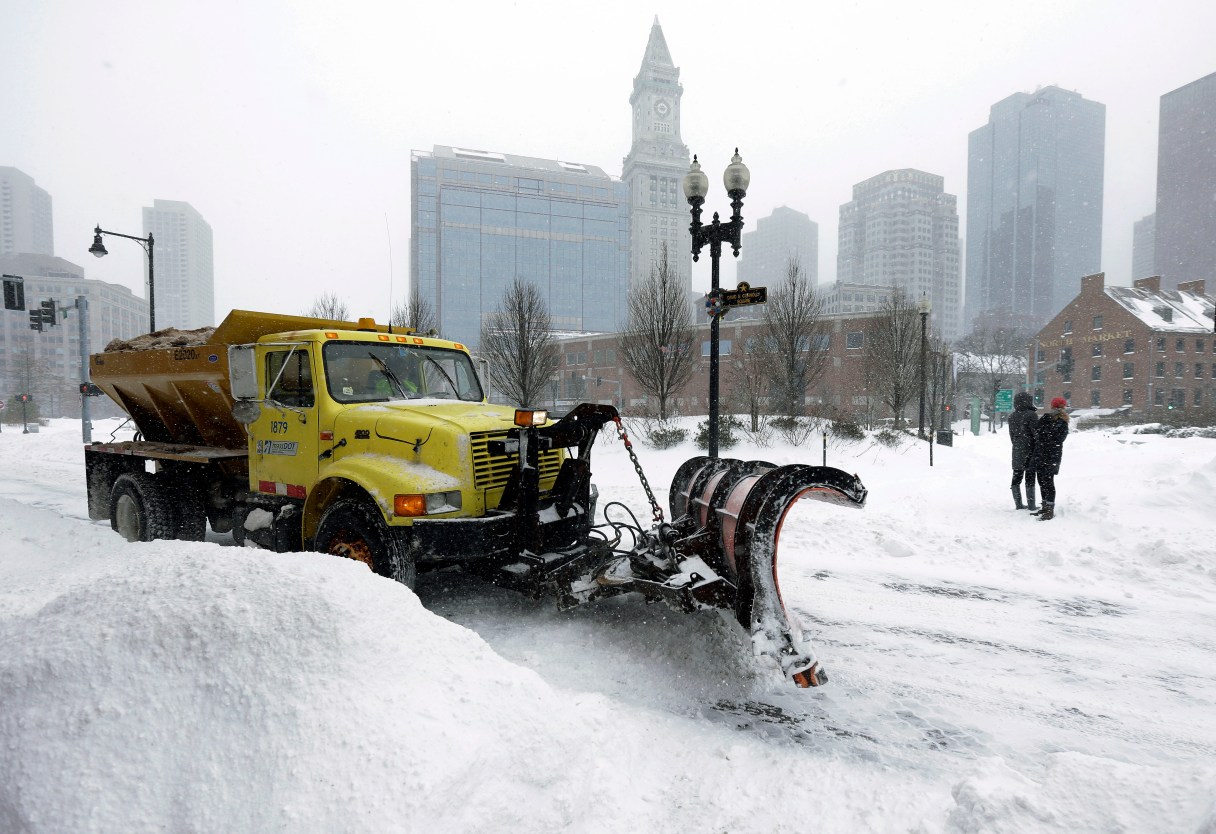
BOSTON (AP) – Winter’s full fury arrived late in much of the country but once it did it was relentless, quickly exhausting snow removal budgets and pushing the resources of state transportation agencies to their limit as they fought to keep highways safe and passable, according to a first-of-its-kind survey.
The American Association of State Highway and Transportation Officials said 23 states reported combined spending of more than $1 billion on winter maintenance operations and 8 million work hours plowing or treating state roads from October to March.
The states that responded to Monday’s survey, obtained in advance by The Associated Press, also went through 6 million tons of salt and other huge quantities of brine and liquid deicing chemicals. One state reported using 216,000 gallons of beet juice, which can help salt stick to road surfaces.
“This winter the storms just came one on top of the other and there wasn’t time in between to replenish your salt piles and give your folks some time off,” said Rick Nelson, coordinator of the association’s Snow and Ice Cooperative Program.
A single season snowfall record was broken in Boston, with virtually all the 110 inches coming in a six-week stretch from late January to early March when temperatures rarely rose above freezing.