
RIO DE JANEIRO (AP) – A currency hitting historic lows. Unemployment at a five-year peak. Consumer spending in the dumps, and a grinding political crisis that’s frozen leaders’ ability to push through Congress measures to jumpstart a moribund economy.
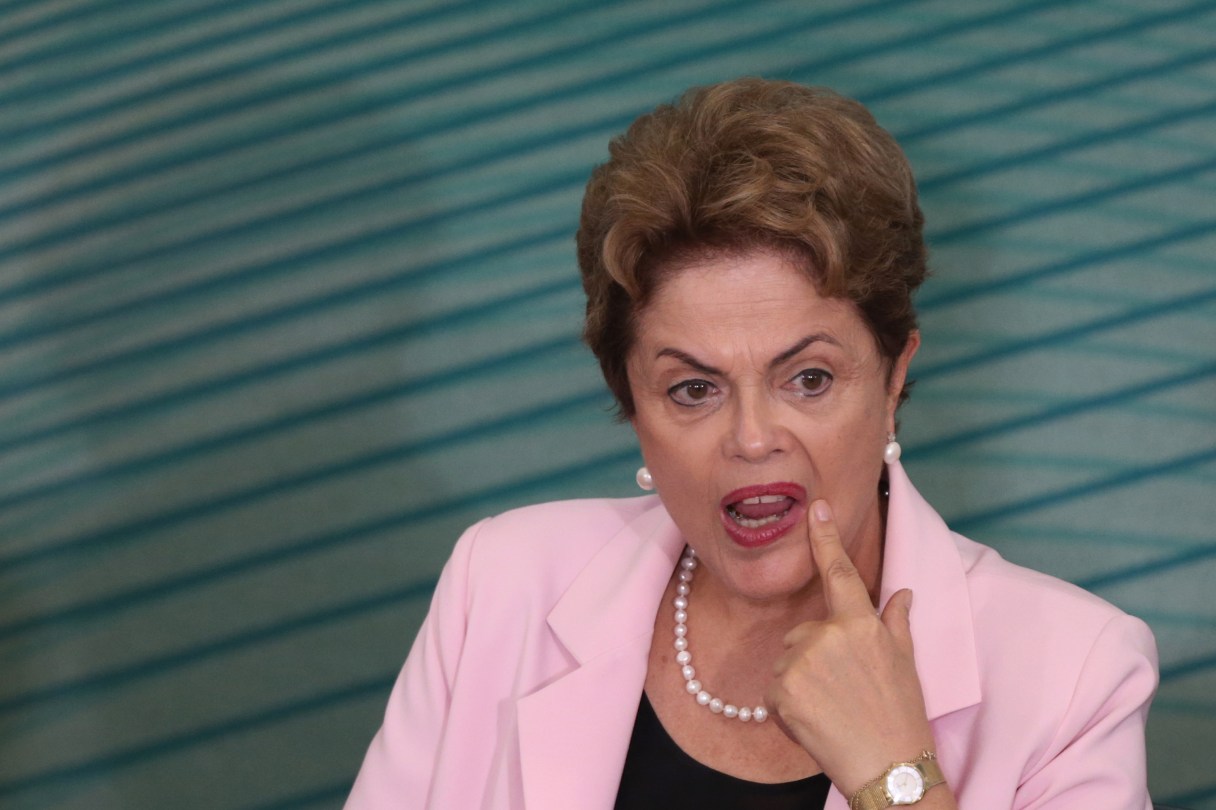
The news keeps getting worse for the once-ballyhooed Brazilian economy, compounding the delicate political situation for President Dilma Rousseff, who polls show is the nation’s most unpopular president since the 1985 return to democracy.
Rousseff is trying to fight off widespread calls for her impeachment or resignation, which gives her scant political capital to force austerity measures through Congress to halt across-the-board economic hemorrhaging.
Brazil’s woes were stoked by the recent years’ collapse in commodity prices, due largely to lessening demand from China’s slowing economy. Economists also blame failure to reform taxes and labor markets over the past decade of good times, and the collapse of an economic model that relied on domestic consumption.
“It wasn’t just that Brazil consumed all its commodity income it took in from 2007 to 2011, it’s that it consumed all of it plus more by borrowing overseas,” said Neil Shearing, the New York-based chief emerging markets economist for Capital Economics.