
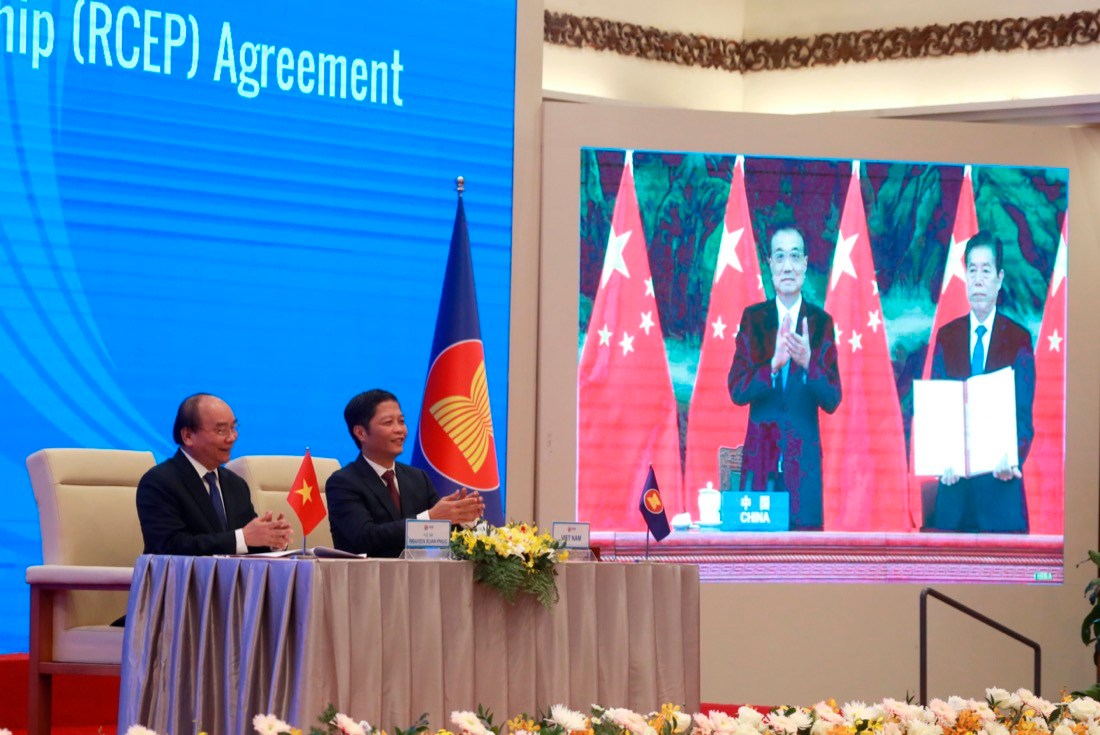
China and 14 other countries agreed Sunday to set up the world’s largest trading bloc, encompassing nearly a third of all economic activity, in a deal many in Asia are hoping will help hasten a recovery from the shocks of the pandemic.
The Regional Comprehensive Economic Partnership, or RCEP, was signed virtually on Sunday on the sidelines of the annual summit of the 10-nation Association of Southeast Asian Nations.
“I am delighted to say that after eight years of hard work, as of today, we have officially brought RCEP negotiations to a conclusion for signing,” said host country Vietnam’s prime minister, Nguyen Xuan Phuc.
“The conclusion of RCEP negotiation, the largest free trade agreement in the world, will send a strong message that affirms ASEAN’s leading role in supporting the multilateral trading system, creating a new trading structure in the region, enabling sustainable trade facilitation, revitalizing the supply chains disrupted by COVID-19 and assisting the post-pandemic recovery,” Phuc said.
The accord will take already low tariffs on trade between member countries still lower, over time, and is less comprehensive than an 11-nation trans-Pacific trade deal that President Donald Trump pulled out of shortly after taking office.