
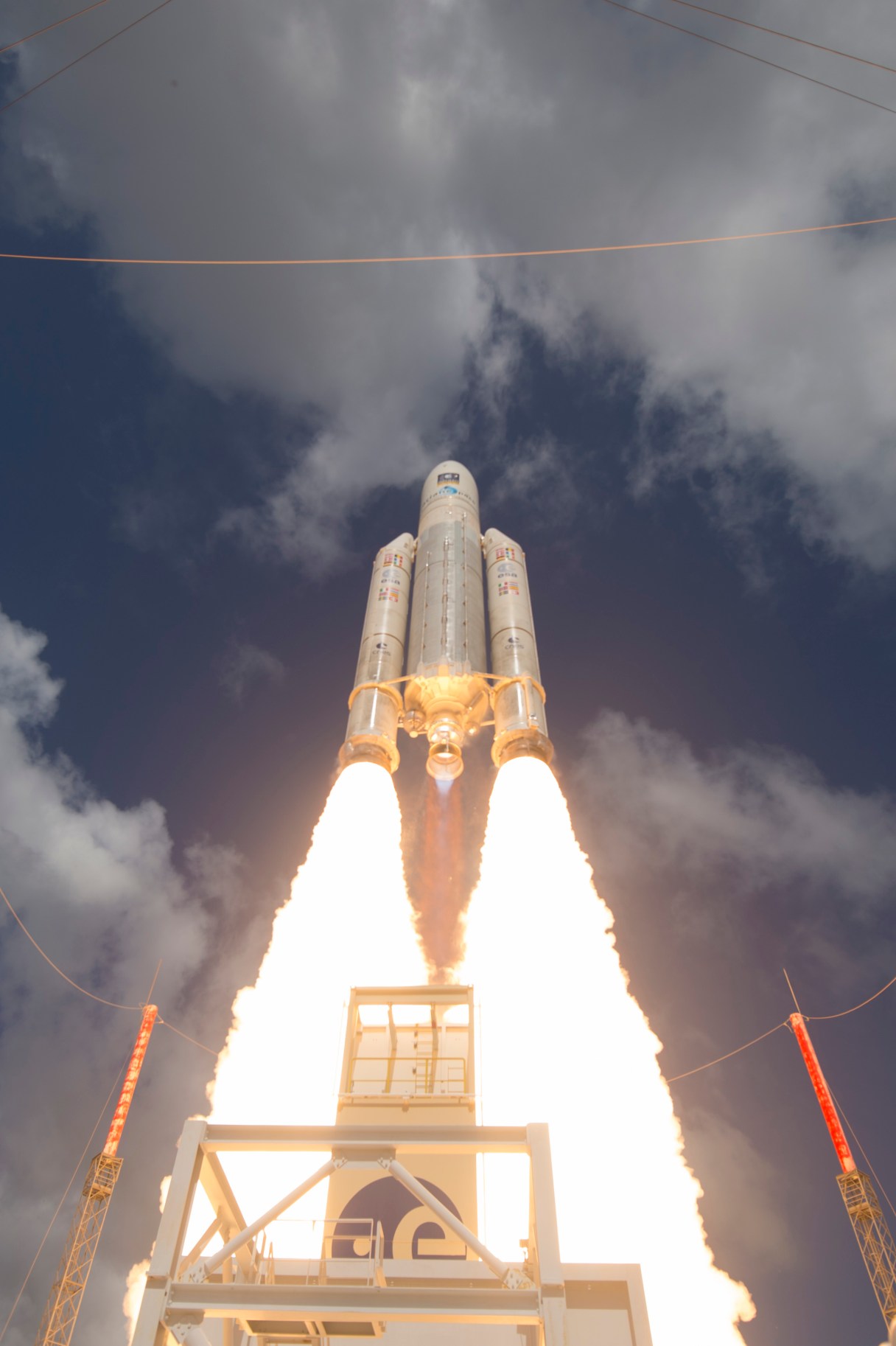
PARIS (AP) – The European Space Agency opened an investigation on Thursday into anomalies that have affected five of the first 18 Galileo satellites in orbit.
The agency, which launched the navigation system last December, said however that the failures are not affecting the satellites’ proper functioning.
The Galileo system, named after the Italian engineer and astronomer, is designed to provide commercial and government customers with more precise location data than GPS.
The European agency said in a statement that a total of nine onboard atomic clocks have failed, but insisted it “is confident that the clock issues will be resolved.”
Each Galileo carries four atomic clocks. The nonfunctioning ones are three rubidium devices and six passive hydrogen maser clocks, the agency said.