
JACKSONVILLE, Fla. (AP) – On a sweltering July morning, Rose Wilson struggled to breathe as she sat in her bed, the light from her computer illuminating her face and the oxygen tubes in her nose.
Wilson, a retiree who worked as a public health department nurse supervisor in Duval County for 35 years, had just been diagnosed with COVID-19-induced pneumonia. She had a telemedicine appointment with her doctor.
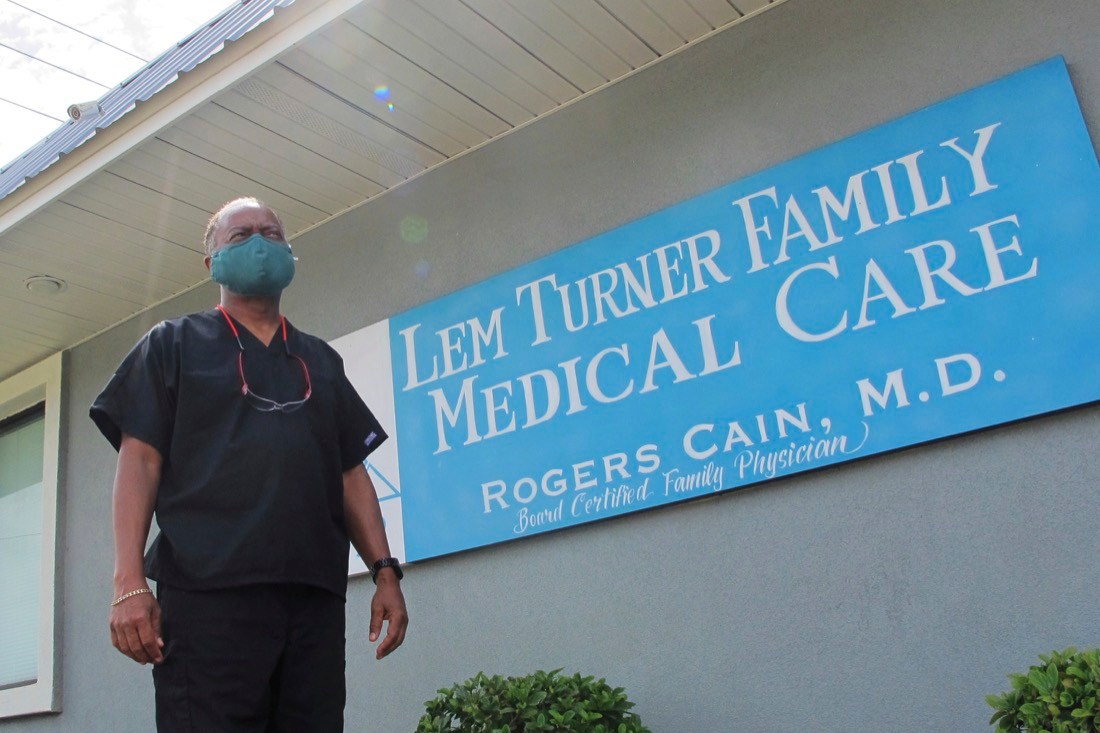
Staring back from her screen was Dr. Rogers Cain, who runs a tidy little family medical clinic a couple of blocks from the Trout River in north Jacksonville, a predominantly Black area where the coronavirus is running roughshod. Wilson, 81, was one of Cain’s patients who’d tested positive – he had seven other COVID patients that morning before noon. Three of her grown children had contracted the virus, too.
“It started as a drip, drip, drip in May,” said Cain, his voice muffled by his mask. “Now it’s more like a faucet running.”
Cain and Wilson are nervous. Over the past two decades, both watched as the county health department was gutted of money and people, hampering Duval’s ability to respond to outbreaks, including a small cluster of tuberculosis cases in 2012. And now they face the menace of COVID-19 in a city once slated to host this week’s Republican National Convention, in one of the states leading the latest U.S. surge.