
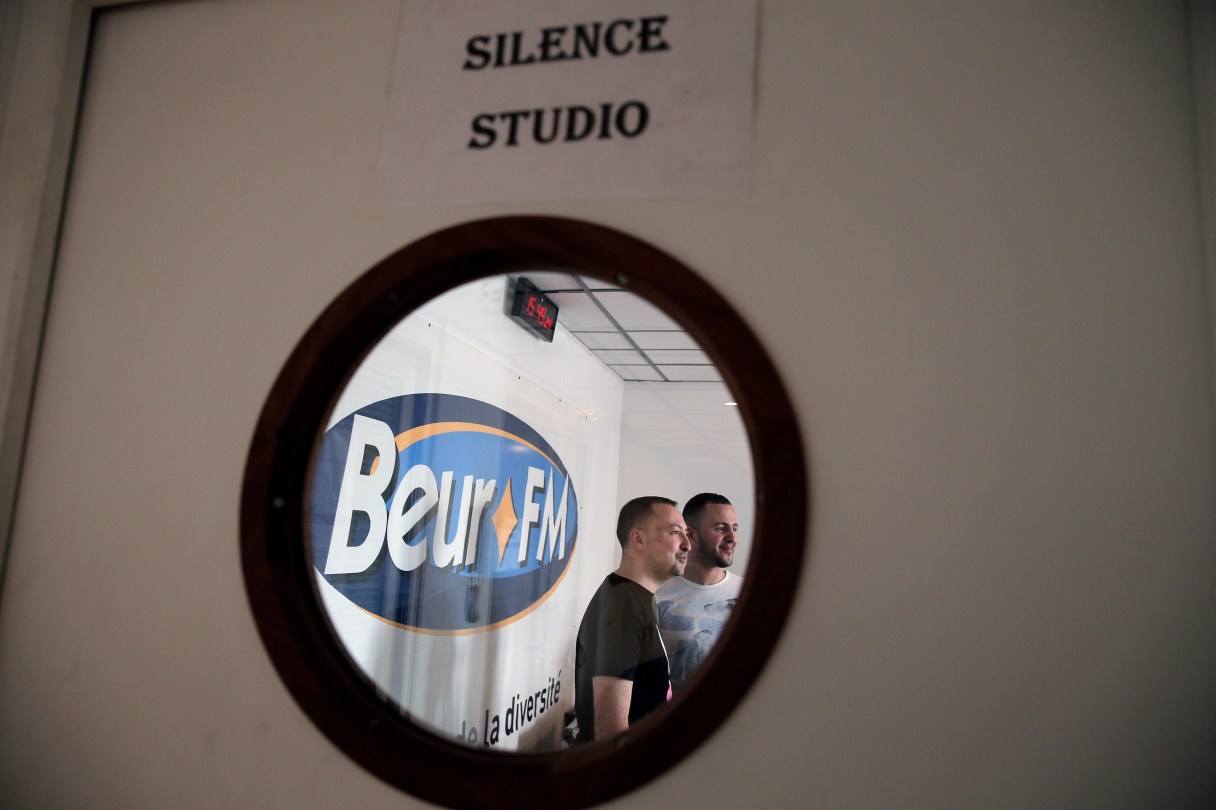
CHARENTON-LE-PONT, France (AP) – It’s called “Beur FM” – after a slang term for Arab people – and has become the voice of France’s Islamic community in the wake of the Charlie Hebdo attacks.
The radio station gives daily doses of talk, music and news, normally catering to the Muslim population. But since terror struck the heart of Paris in January, Beur FM has become a staple for listeners of all walks of life who are hungry for answers about the violence – and how to reconcile alienated immigrants with mainstream society.
On air since 1992, the station has achieved widespread prominence only in recent months as the French turn to it for insights into what could have motivated three Frenchmen of immigrant roots to kill in the name of religion.
The station hasn’t clocked a sharp rise in listeners – the current audience stands at about 400,000 listeners a day – but saw a marked rise in retweets, Facebook likes and other social media attention following the attacks, according to marketing director Nabil Bougouss. It’s also drawing in a broader range of fans, including Jews and other non-Muslims, he said.
Charlie Hebdo had received threats over the years for publishing caricatures of the Prophet Muhammed. But few expected the spasm of violence that erupted in its offices Jan. 7, when two brothers of Algerian origin burst in shouting “Allahu Akbar” and gunned down 11 people including the editor-in-chief.