
Thursday, November 12, 2026Nov 12

Militant gains illustrate plight of Syrian Kurds

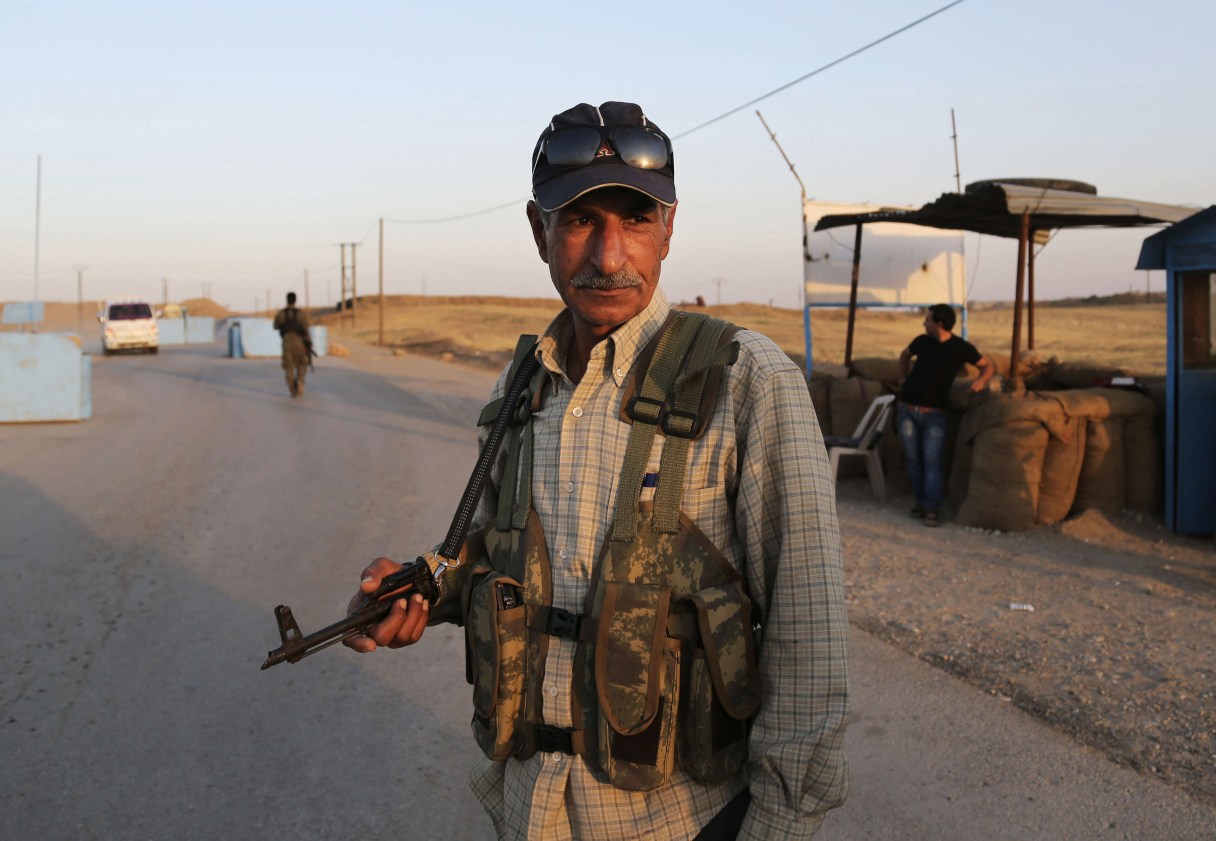
FILE - In this Sunday, Aug. 10, 2014 file photo, Syrian Kurdish Peshmerga fighters stand guard at a refugee camp in Derike, Syria. Islamic State militiamen backed by tanks defiantly marched on in Syria, capturing 21 Kurdish villages even as the international community strains to assemble a coalition that might destroy them. (AP Photo/Khalid Mohammed, File)
FILE - In this Sunday, Aug. 10, 2014 file photo, Syrian Kurdish Peshmerga fighters stand guard at a refugee camp in Derike, Syria. Islamic State militiamen backed by tanks defiantly marched on in Syria, capturing 21 Kurdish villages even as the international community strains to assemble a coalition that might destroy them. (AP Photo/Khalid Mohammed, File) FILE - In this Sunday, Aug. 10, 2014 file photo, Syrian Kurdish Peshmerga fighters stand guard at a refugee camp in Derike, Syria. Islamic State militiamen backed by tanks defiantly marched on in Syria, capturing 21 Kurdish villages even as the international community strains to assemble a coalition that might destroy them. (AP Photo/Khalid Mohammed, File)

BEIRUT (AP) – Islamic State militiamen backed by tanks defiantly advanced Thursday in Syria, capturing more than 20 Kurdish villages as the international community strains to assemble a coalition that might destroy them.

The gains highlighted the plight of Syria’s Kurds, who have been some of the most successful against the Islamic extremists. But unlike U.S.-backed Iraqi Kurds, they seem largely on their own in a devastated country where the enemy’s enemy is not necessarily a friend.

The main Kurdish force in Syria, known as the People’s Protection Units or YPK, is viewed with suspicion by mainstream Syrian rebels and their Western supporters because of perceived links to President Bashar Assad’s government.

NATO member Turkey is also wary of the group, which it believes is affiliated with the Kurdish PKK movement that waged a long and bloody insurgency in southeast Turkey.

“This is a complicating factor in the equation,” said Fawaz Gerges, a Middle East expert at the London School of Economics.