
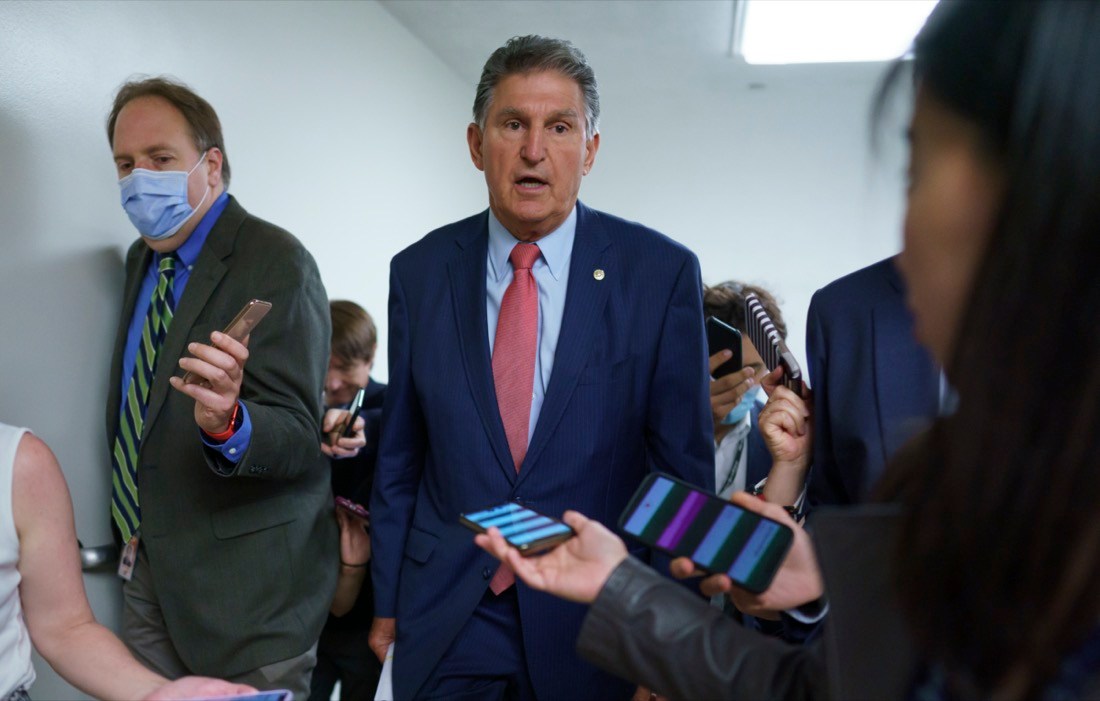
WASHINGTON (AP) – A key Democratic senator says he will not vote for the largest overhaul of U.S. election law in at least a generation, leaving no plausible path forward for legislation that his party and the White House have portrayed as crucial for protecting access to the ballot.
“Voting and election reform that is done in a partisan manner will all but ensure partisan divisions continue to deepen,” Sen. Joe Manchin of West Virginia wrote in a home-state newspaper, the Charleston Gazette-Mail.
He wrote that failure to bring together both parties on voting legislation would “risk further dividing and destroying the republic we swore to protect and defend as elected officials.”
The bill would restrict partisan gerrymandering of congressional districts, strike down hurdles to voting and bring transparency to a murky campaign finance system. Among dozens of other provisions, it would require states to offer 15 days of early voting and allow no-excuse absentee balloting.
Democrats have pushed the legislation as the antidote to a wave of restrictive state voting laws sweeping the country, many inspired by former President Donald Trump’s false claims of fraud in his 2020 election loss. Senate Majority Leader Chuck Schumer, D-N.Y., has pledged to bring the election bill to a vote the week of June 21, testing where senators stand. But without Manchin’s support, the bill has no chance of advancing. Republicans are united against it.