
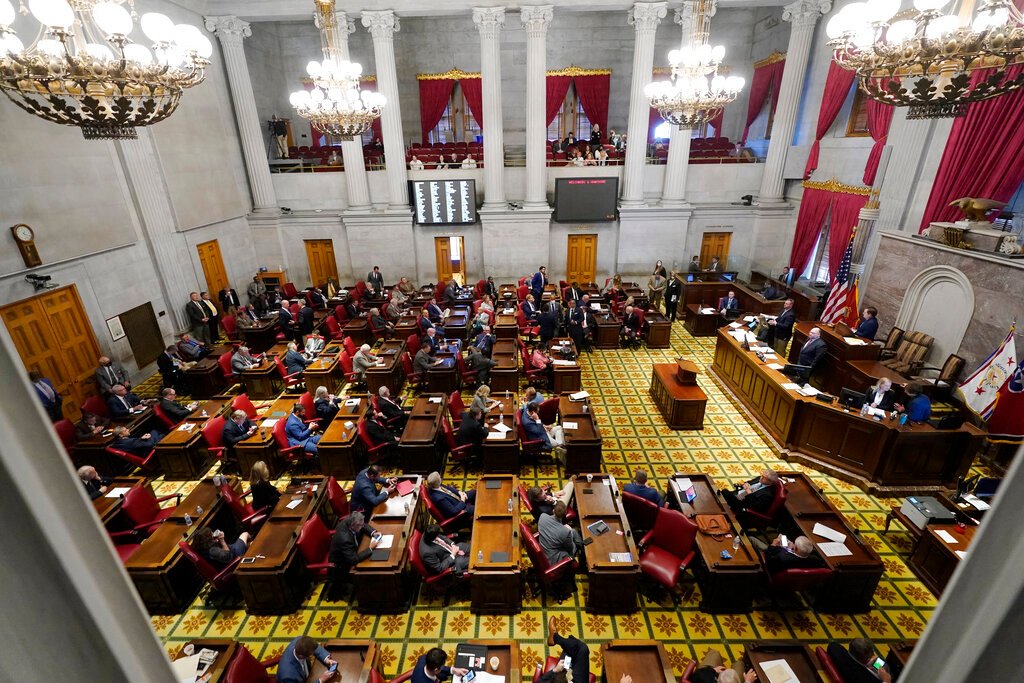
NASHVILLE, Tenn. (AP) – Tennessee business leaders unhappy with recent efforts by the Republican-led Legislature to unravel COVID-19 prevention requirements hope to convince lawmakers to revisit some changes when they reconvene in January.
Two prominent business groups say they are especially troubled by a provision empowering citizens to sue businesses they believe slighted them with coronavirus vaccination requirements, which the bill largely bans for companies and government entities.
So far, Republican lawmakers who spearheaded the bill have given a cool reception to the call to revisit it by the Tennessee Chamber of Commerce and Industry and the state’s National Federation of Independent Business chapter.
The dispute, while largely couched in delicate language, offers a rare glimpse at a public rift between groups that tend to be closely aligned. Republican leaders are usually eager to highlight their close ties to business and tout Tennessee as a low-tax, low-regulation haven for companies.
Those alliances were tested during the three-day special session, which ended after an hourslong October standoff. Lawmakers met behind closed doors after manufacturers including Ford Motor Co. – for whom lawmakers had just approved an economic development package for a massive new Tennessee electric vehicle and battery production project – opposed the bill’s change that would let most businesses implement mask requirements only in rare, dire public health scenarios.