
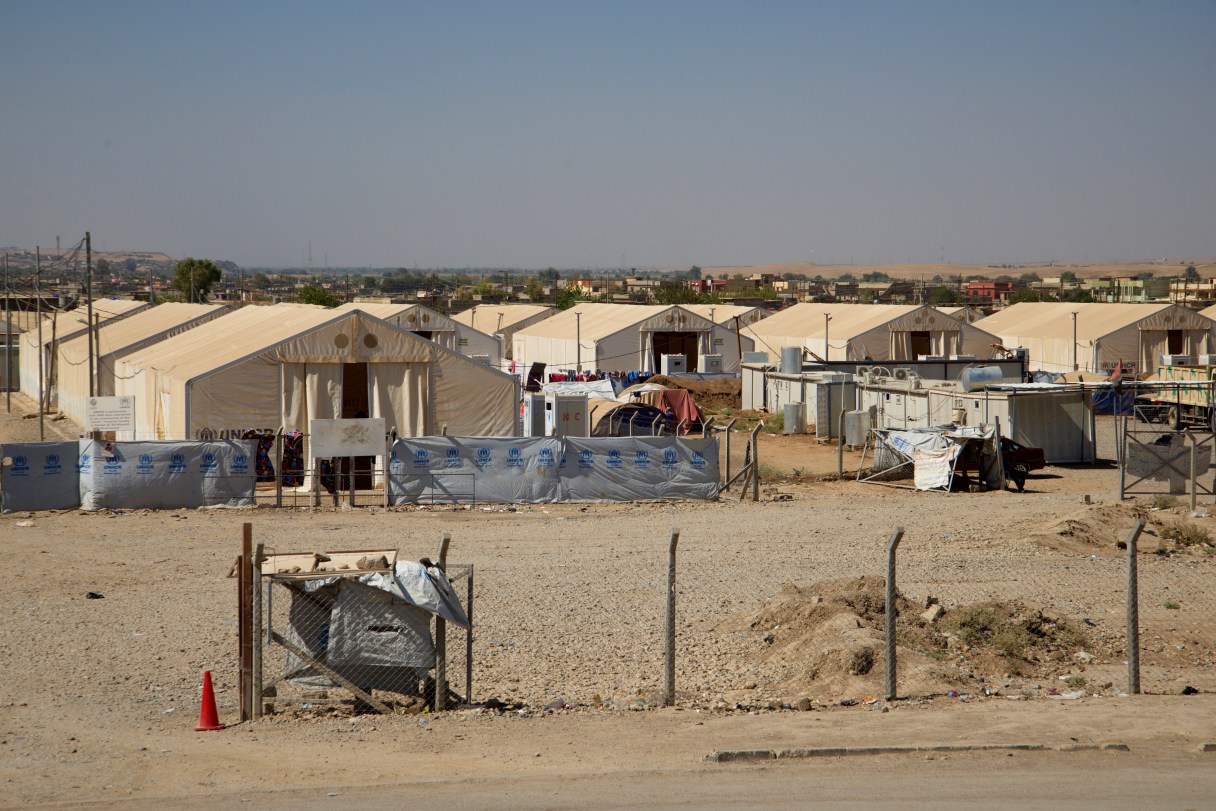
MOSUL, Iraq (AP) – Iraqi forces are holding more than 1,300 foreign women and children, the families of Islamic State fighters, at a camp for displaced people in northern Iraq.
The 1,333 individuals, from 14 countries, surrendered to Kurdish forces at the end of August after an Iraqi offensive drove the extremist group from the northern town of Tal Afar, near Mosul, Iraqi security officials said. The officials spoke on condition of anonymity in keeping with military protocol.
They say the women and children will not be charged with crimes and will likely be repatriated to their home countries. Most hail from Central Asia, Russia and Turkey, but the group also includes people from as far away as Japan and South Korea.
Tens of thousands of foreigners traveled to Iraq and Syria to live in the IS group’s self-styled Islamic caliphate. The territory under their control has rapidly shrunk over the past two years as Iraqi and Syrian forces have retaken several cities and towns.
“We couldn’t practice our religion in Azerbaijan. We couldn’t wear the niqab (a veil that covers the face) because there were intelligence officers everywhere,” said Feyruza, who is originally from Dagestan in Russia.