
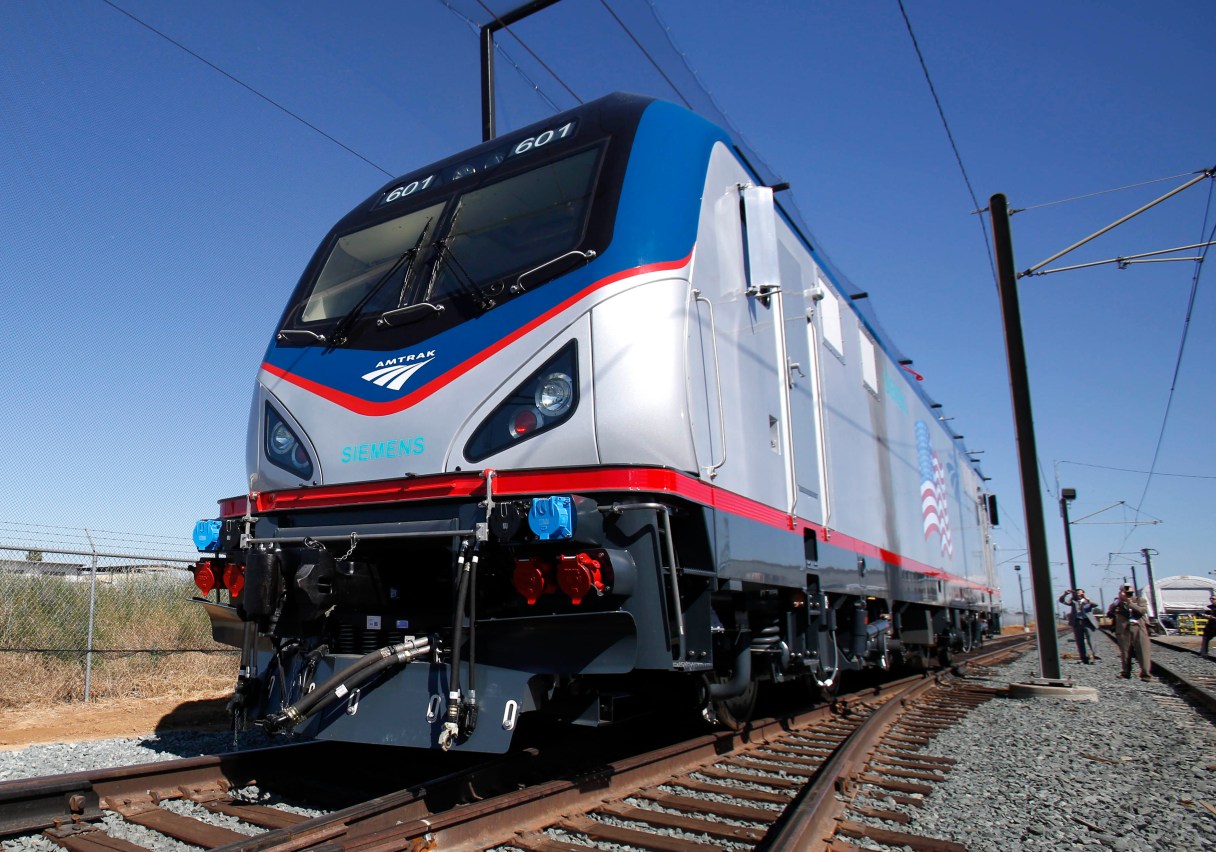
NEWARK, N.J. (AP) – The introduction of 70 new locomotives on Amtrak’s most heavily traveled line three years ago has contributed to a reduction in engine-related delays of nearly 25 percent, the national passenger railroad said Thursday.
The last of the ACS-64 locomotives, called the Amtrak Cities Sprinter, is being rolled out this month. They were put into service beginning in the summer of 2013 to replace an aging fleet that had been in operation for 20 to 30 years and had been driven an average of 3.5 million miles.
The new engines are used on Amtrak’s Northeast Corridor line between Washington, D.C., and Boston, and its Keystone service between Philadelphia and Harrisburg, Pennsylvania.
Statistics provided by Amtrak show there were 1,138 locomotive-related delays in the 10 months ending in July 2013. That number dropped nearly 25 percent, to 857 delays, for the similar period ending last month.
“Anything brand new should operate better than the old stuff, but what we’ve experienced so far is significantly better than what we expected,” Amtrak chief operating officer D.J. Stadtler said.