
Saturday, November 14, 2026Nov 14

Greenland ice loss 40 trillion pounds bigger than thought

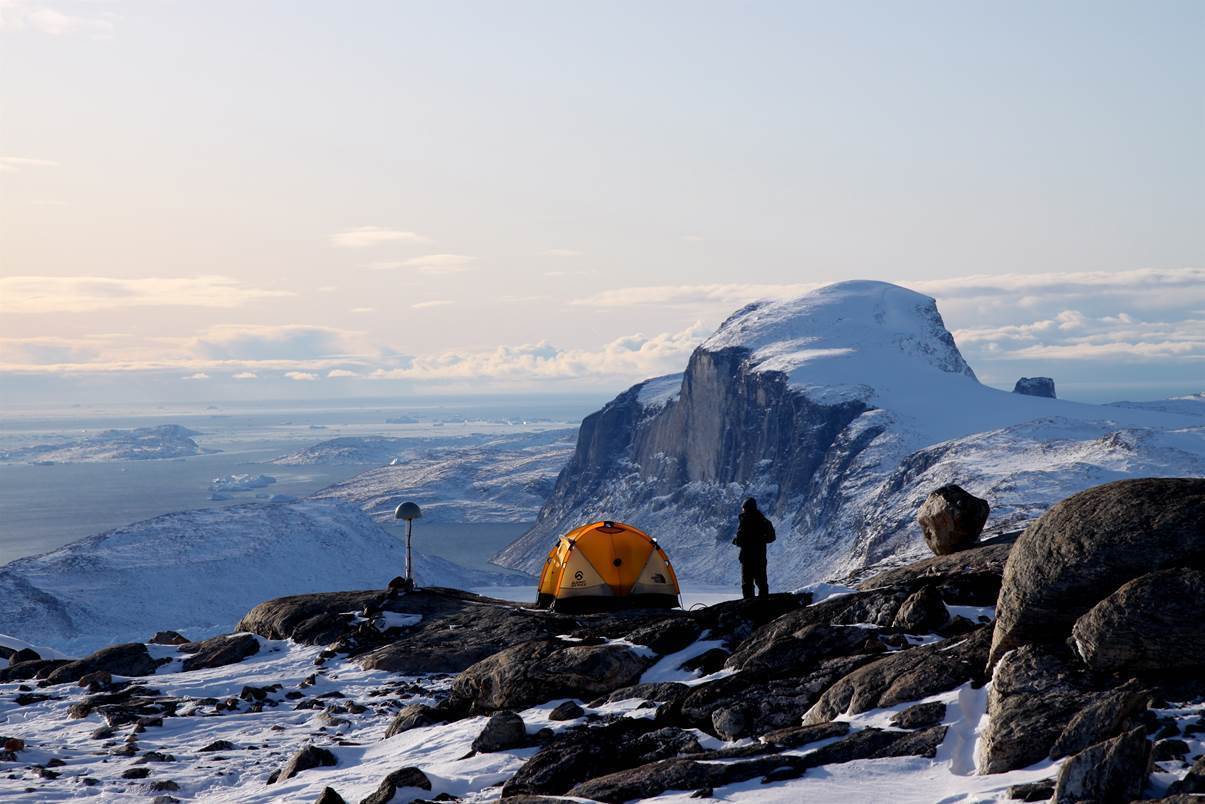
In this photo provided by Michael Bevis, The Ohio State University, the Greenland Global Positioning System (GPS) Network (GNET)  in Greenland. Greenland is losing about 40 trillion pounds more ice a year than scientists had thought, according to a new study that uses GPS to help estimate how much is melting there. A team of scientists used all sorts of devices to measure how much the ground is uplifting under Greenland’s melting ice sheet and found it is more than scientists had thought. (Michael Bevis, The Ohio State University via AP)
In this photo provided by Michael Bevis, The Ohio State University, the Greenland Global Positioning System (GPS) Network (GNET) in Greenland. Greenland is losing about 40 trillion pounds more ice a year than scientists had thought, according to a new study that uses GPS to help estimate how much is melting there. A team of scientists used all sorts of devices to measure how much the ground is uplifting under Greenland’s melting ice sheet and found it is more than scientists had thought. (Michael Bevis, The Ohio State University via AP)

WASHINGTON (AP) – Greenland is losing about 40 trillion pounds more ice a year than scientists had thought, according to a new study that used GPS to help estimate how much is melting.

So instead of losing on average 550 trillion pounds of ice each year between 2003 and 2013, Greenland lost about 590 trillion pounds , said co-author Michael Bevis of Ohio State University in a study published Wednesday in the journal Science Advances . That’s about a 7.6 percent difference.

The Empire State Building weighs 730 million pounds, so 40 trillion pounds a year is the equivalent to more than 50,000 Empire State Buildings.

“If you look at the last 15 years since we’ve been having these measurements, it’s clearly getting worse, the ice loss,” Bevis said. “It is pretty scary.”

Overall, though, it is still “a small percentage. I don’t think it changes the picture of what’s going on,” cautioned study co-author Beata Csatho at the University of Buffalo. The extra ice loss adds a tiny amount – one-sixtieth of an inch (0.4 mm) a decade – to global sea level rise, Bevis said. Greenland melt adds a fifth of an inch – 0.54 mm- a decade, he said.