
Friday, October 30, 2026Oct 30

This story is free to read.

EXPLAINER: How is ‘reasonableness’ key to Chauvin’s defense?

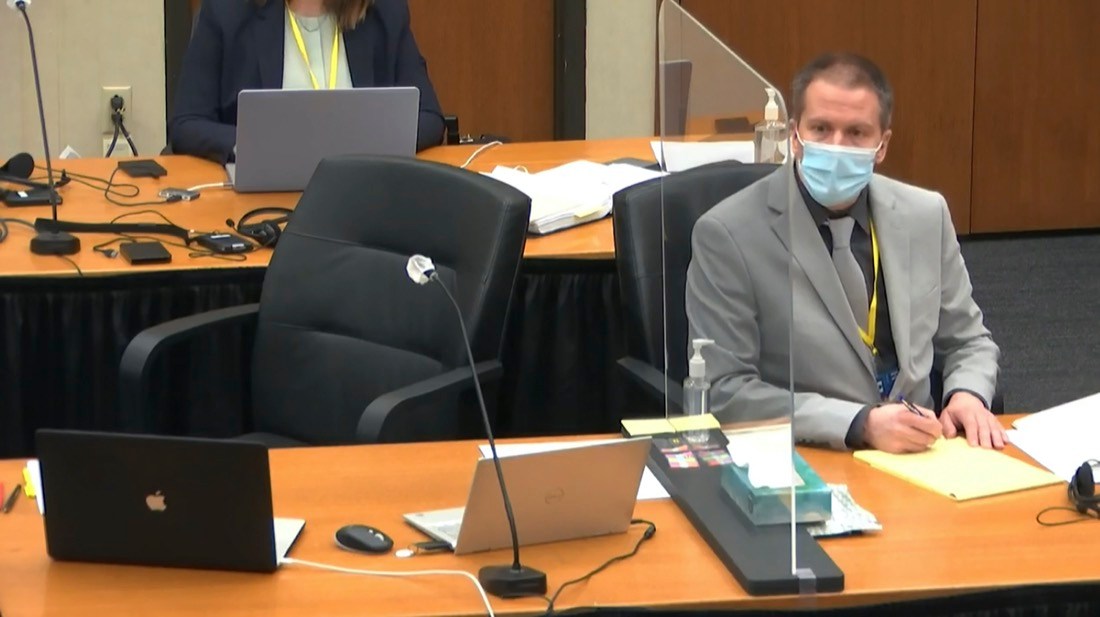
In this image from video, defendant, former Minneapolis police Officer Derek Chauvin, listens as Hennepin County Judge Peter Cahill presides Friday, April 9, 2021, at the Hennepin County Courthouse in Minneapolis, Minn. Chauvin is charged in the May 25, 2020 death of George Floyd. (Court TV via AP, Pool)
In this image from video, defendant, former Minneapolis police Officer Derek Chauvin, listens as Hennepin County Judge Peter Cahill presides Friday, April 9, 2021, at the Hennepin County Courthouse in Minneapolis, Minn. Chauvin is charged in the May 25, 2020 death of George Floyd. (Court TV via AP, Pool) In this image from video, defendant, former Minneapolis police Officer Derek Chauvin, listens as Hennepin County Judge Peter Cahill presides Friday, April 9, 2021, at the Hennepin County Courthouse in Minneapolis, Minn. Chauvin is charged in the May 25, 2020 death of George Floyd. (Court TV via AP, Pool)

CHICAGO (AP) – Attorneys and witnesses have used the words “reasonable” or “unreasonable” often at the trial of the former Minneapolis police officer charged with murder and manslaughter in George Floyd’s death.

It’s no coincidence. The concept of reasonableness has been crucial at trials of officers ever since the landmark Graham v. Connor ruling 32 years ago by the U.S. Supreme Court.

Here is a look at the issue and the key role it’s likely to play as Derek Chauvin’s trial draws to a close.

WHAT WAS GRAHAM V. CONNOR ABOUT?

Before the Graham v. Connor ruling in 1989, lower courts were often at odds about how to determine whether an officer on trial used an unreasonable, and therefore illegal, amount of force.