
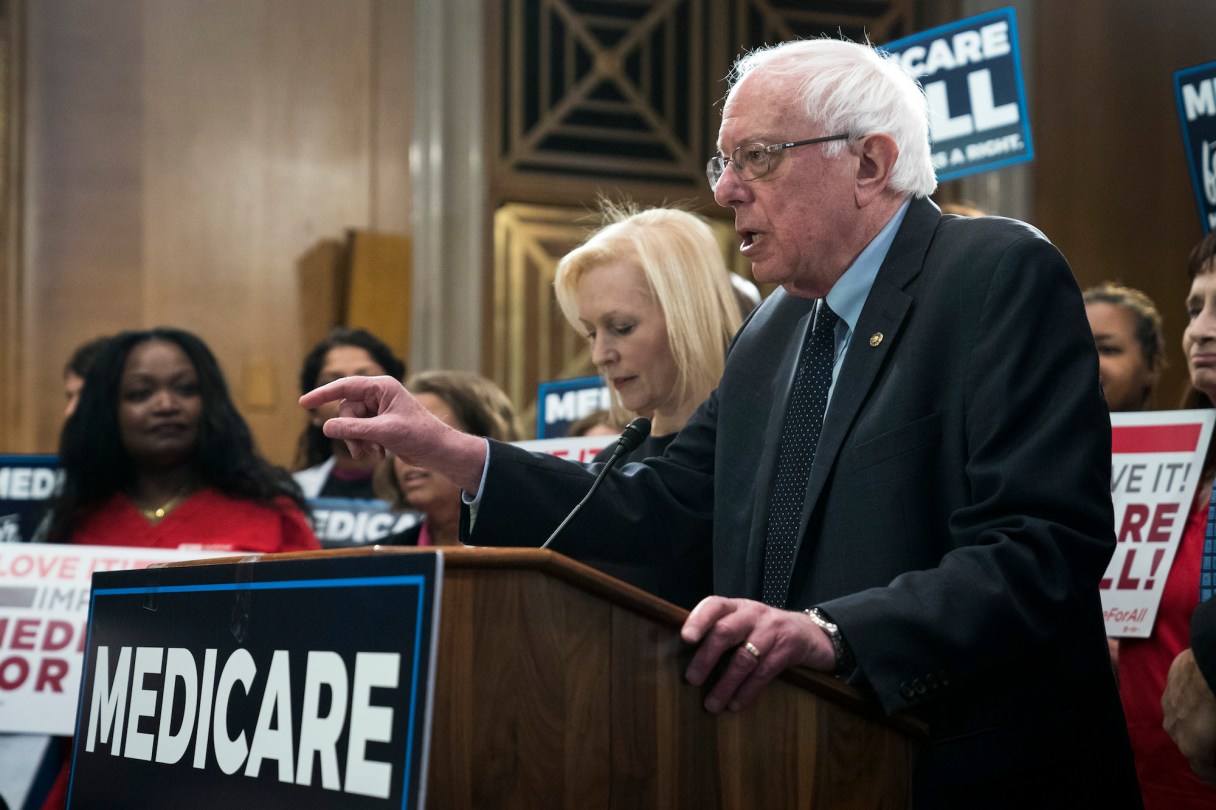
The 2020 presidential race looks increasingly like it will be the Medicare-for-all election, as an increasing number of Democratic primary candidates – including Sens. Kamala D. Harris and Bernie Sanders – sign on to the slogan. The policy ought to be an easy sell, given that Medicare polls so well and American insurers so badly.
Except no, it’s not going to be easy at all – at least not when vague talk about Medicare-for-all turns to the specifics of a system that could rationalize the myriad insanities of the fragmented U.S. health-care system and get a handle on its exorbitant costs. That would inevitably mean bulldozing most private insurance to build something simpler and more straightforward. Unfortunately, people are actually pretty attached to their own little corner of the country’s collective disaster.
You wouldn’t know it to read most of the news coverage, or to listen to politicians, but that is one of the more consistent results in health-care polling: Over and over again, roughly seven out of every 10 Americans report that they’re fairly satisfied with the quality of their personal coverage.
If that’s surprising, it’s because most Americans aren’t nearly so sanguine about everyone else’s coverage. Only about a third of people say the general quality of health-care coverage in America is good, and this worries them a great deal. But they tend to think that they themselves are doing just fine. Arguably, the reason they hate the system so much is that they’re fond of their own coverage and fear losing it.
Consider the political explosion when the Affordable Care Act went into effect, and a relatively small number of people lost their insurance plans. In vain did the Obama administration shout that the old insurance was “junk” and consumers would like the new plans much better; livid citizens stormed the offices of their nearest representative. Within weeks, the administration was scrambling to allow existing insurance to continue under Obamacare, and President Barack Obama was forced to apologize.