
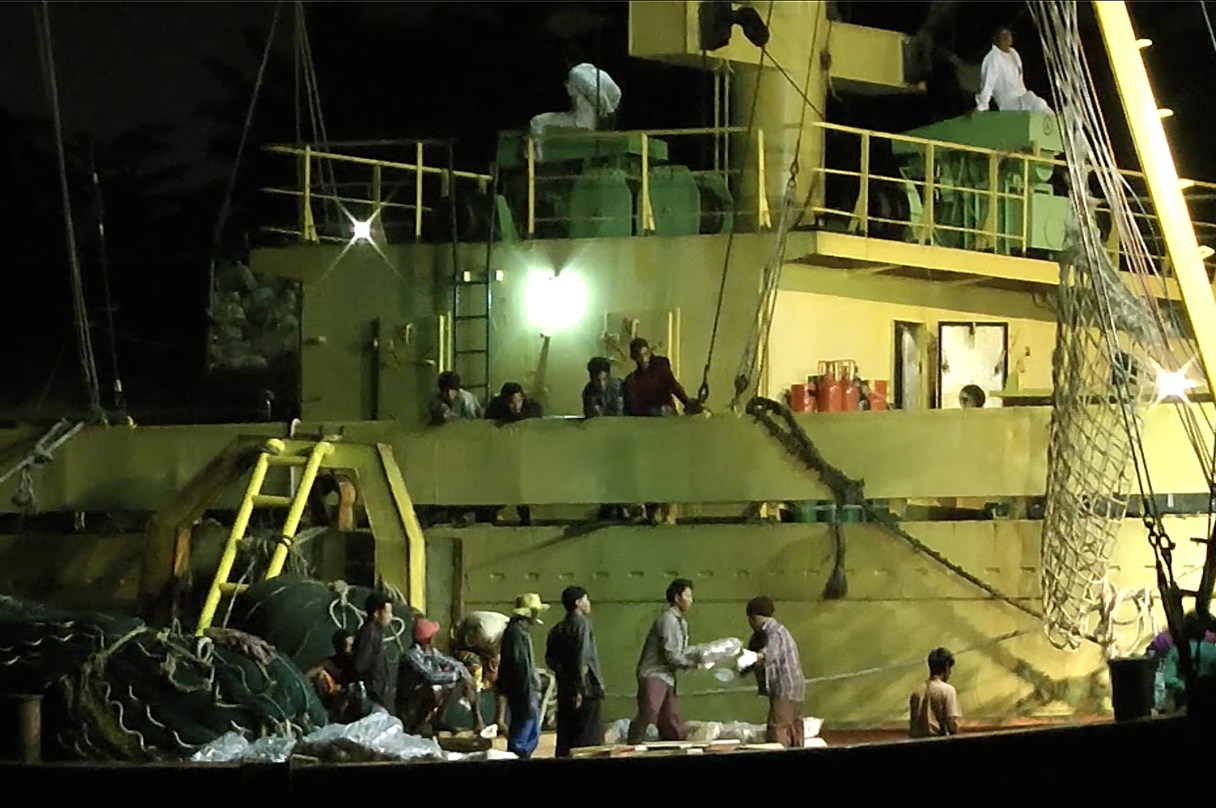
BENJINA, Indonesia (AP) – The Burmese slaves sat on the floor and stared through the rusty bars of their locked cage, hidden on a tiny tropical island thousands of miles from home.
Just a few yards away, other workers loaded cargo ships with slave-caught seafood that clouds the supply networks of major supermarkets, restaurants and even pet stores in the United States.
But the eight imprisoned men were considered flight risks – laborers who might dare run away. They lived on a few bites of rice and curry a day in a space barely big enough to lie down, stuck until the next trawler forces them back to sea.
“All I did was tell my captain I couldn’t take it anymore, that I wanted to go home,” said Kyaw Naing, his dark eyes pleading into an Associated Press video camera sneaked in by a sympathetic worker. “The next time we docked,” he said nervously out of earshot of a nearby guard, “I was locked up.”
Here, in the Indonesian island village of Benjina and the surrounding waters, hundreds of trapped men represent one of the most desperate links criss-crossing between companies and countries in the seafood industry. This intricate web of connections separates the fish we eat from the men who catch it, and obscures a brutal truth: Your seafood may come from slaves.