
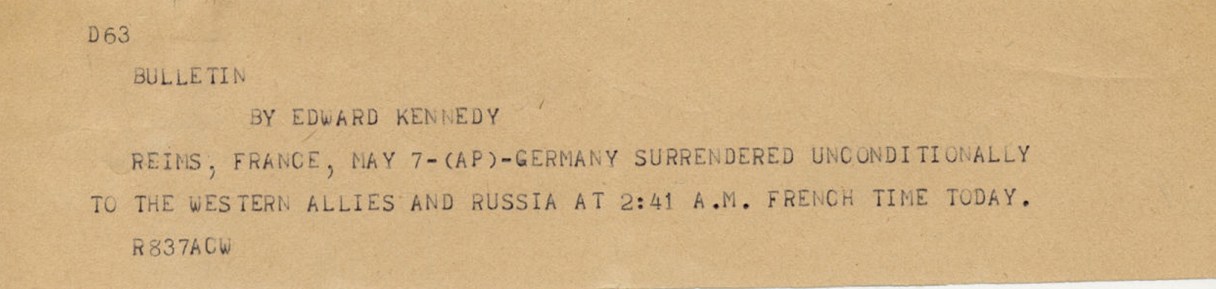
EDITOR’S NOTE: On May 7, 1945, AP Paris bureau chief Edward Kennedy broke one of the biggest stories of that century: the unconditional surrender of Germany to the Allies at a former school house in Reims, France.
Instead of receiving praise, Kennedy was quietly dismissed.
The reason: The veteran reporter was accused of breaking a pledge that he and 16 other correspondents had made to keep the surrender secret for a time, as a condition of being allowed to witness it. This was done so Russian dictator Josef Stalin could formally announce the defeat in Berlin.
Kennedy viewed the embargo as a political security issue, rather than a military one, and felt compelled to report the surrender, especially after learning that German radio had already broadcast the news.
In 2012, almost 50 years after Kennedy’s death, then-AP President and CEO Tom Curley apologized for the way the company had treated the journalist.