
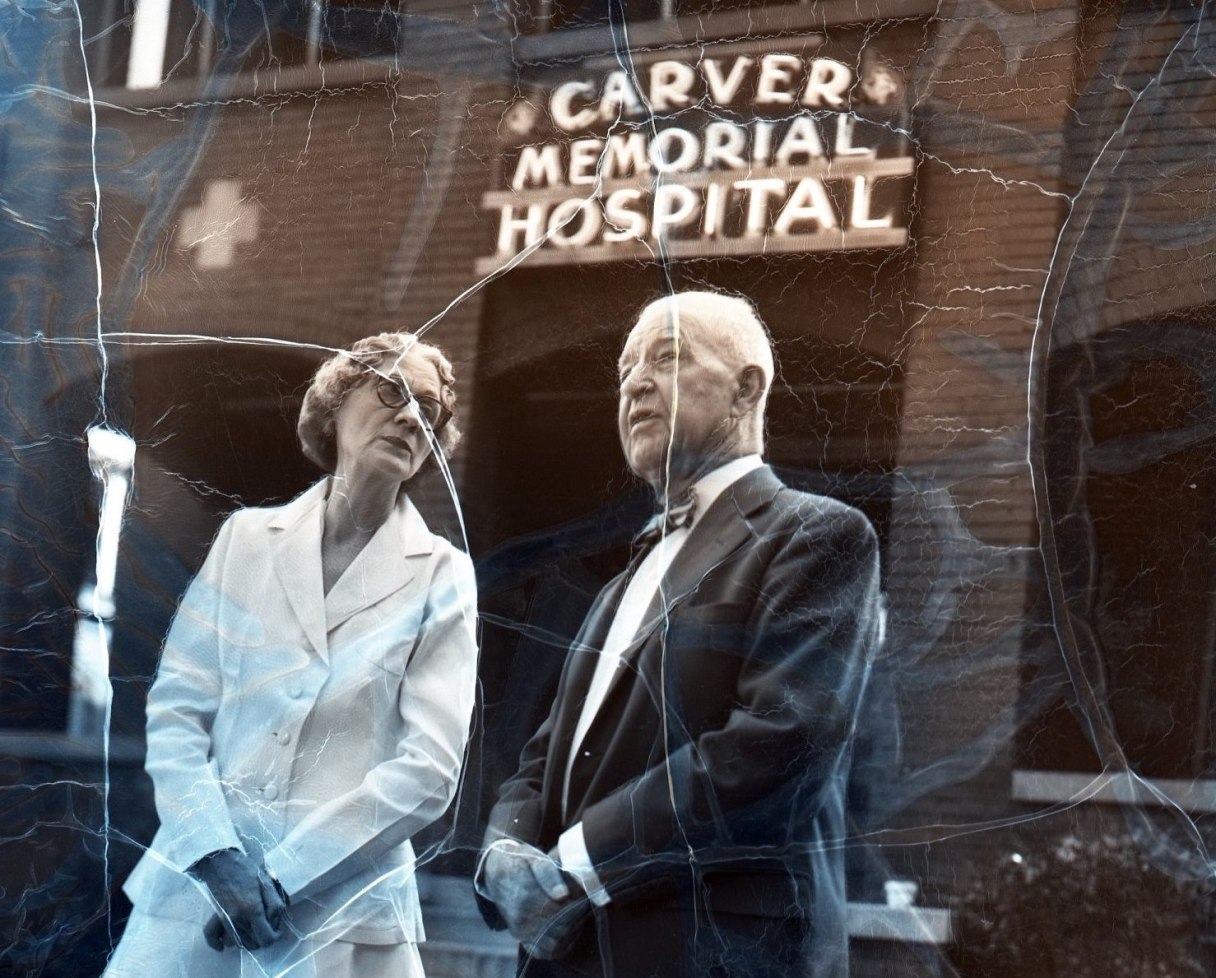
 Chattanooga’s Carver Memorial Hospital served the Black community in Chattanooga for 15 years after World War II, an era when some hospitals in the South were still racially segregated. Photo by Delmont Wilson from the Chattanooga Free Press collection at ChattanoogaHistory.com.
This 1949 photograph of Carver Memorial Hospital on West Ninth Street recalls an era when health care facilities in Chattanooga were still segregated by race.
The hospital, named after Black scientist and inventor Dr. George Washington Carver, served the Black community here for 15 years starting in 1947, an era when Black doctors were not allowed to follow their patients to nearby Erlanger Hospital due to segregation policies.
The caption to the photo, which is part of the Chattanooga Free Press collection at ChattanoogaHistory.com, has been lost; and, with it, the identity of the man and woman pictured.
The photo was from a collection of negatives donated by the newspaper to the Chattanooga History Center.
“Plastic-based film has a limited lifespan – even when stored in ideal conditions,” said ChattanoogaHistory.com curator Sam Hall, noting the deterioration visible in the photo. “This underscores the importance of digitizing negatives before they are lost.”