
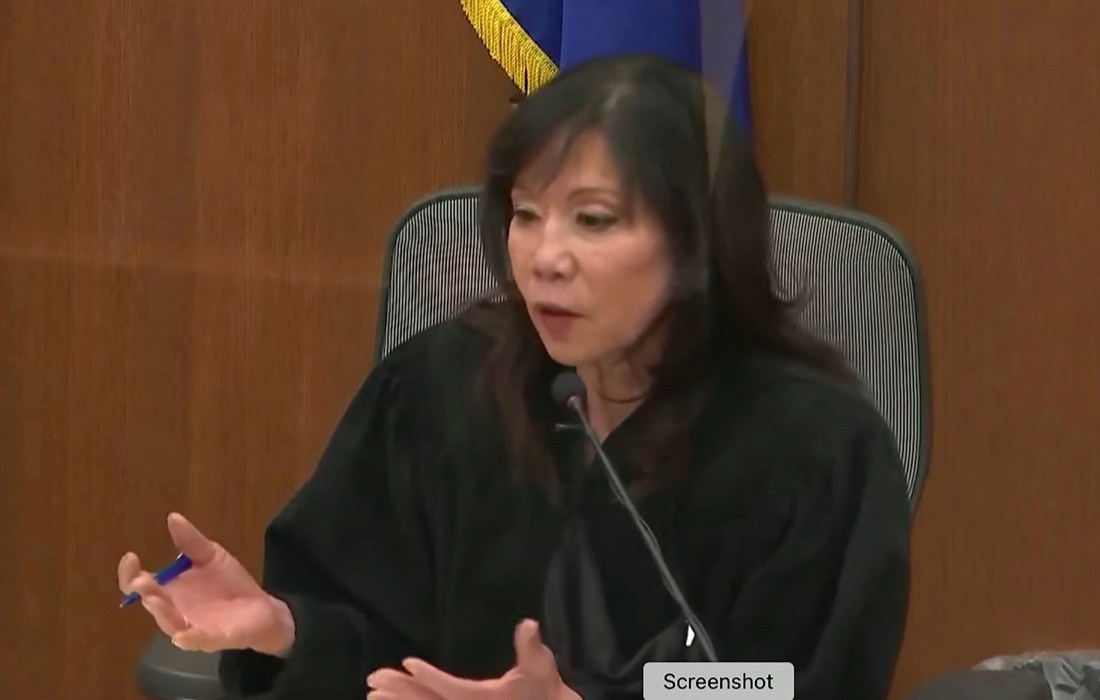
MINNEAPOLIS (AP) – Attorneys and a judge hammered out jury instructions Monday for the trial of a white Minnesota police officer who fatally shot Black motorist Daunte Wright, with the judge denying defense requests that would have made the instructions more expansive for the former officer’s benefit.
Kim Potter, 49, is charged with first-degree and second-degree manslaughter in Wright’s April 11 death in Brooklyn Center, a Minneapolis suburb. Potter, who resigned two days after the shooting, has said she meant to use her Taser on Wright after he tried to drive away from officers while they were trying to arrest him, but that she grabbed her handgun instead.
Her body camera recorded the shooting.
Opening statements are scheduled for Wednesday.
Judge Regina Chu went with standard jury instructions to define second-degree manslaughter, which involves culpable negligence. For first-degree manslaughter, she said she would use language defining recklessness from jury instructions in an earlier case, which she said is the controlling law. She resisted defense efforts to substitute broader language that might have given Potter more of an advantage.