






What sounds more fun: A formal debate among three attorneys running for Hamilton County Criminal Court judge or a battle involving a longtime property assessor, a bi-vocational pastor and a county commissioner?
Residents who went to Puckett’s restaurant Thursday morning for the Greater Chattanooga Area Chamber of Commerce’s forum with the candidates got a little taste of each.
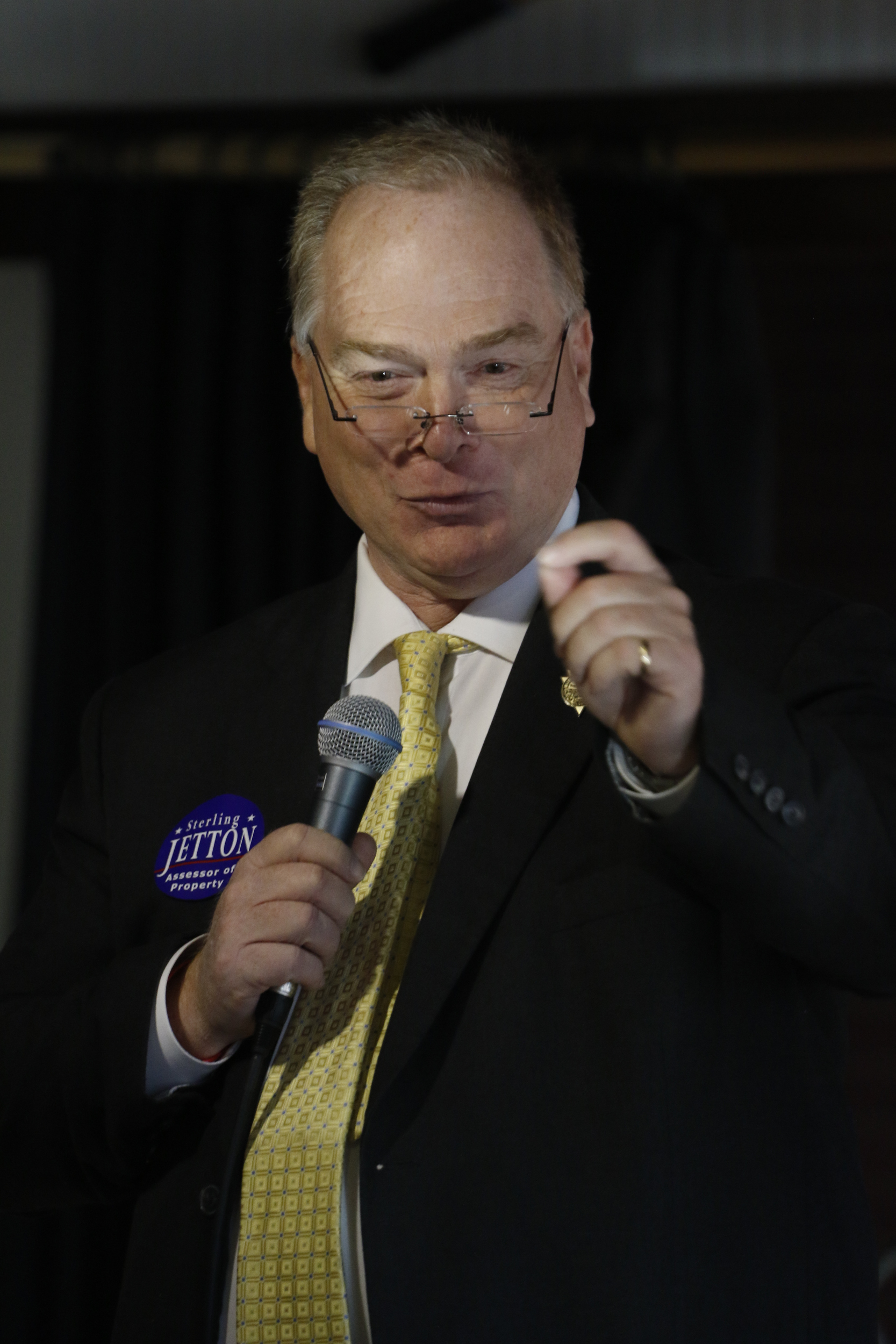
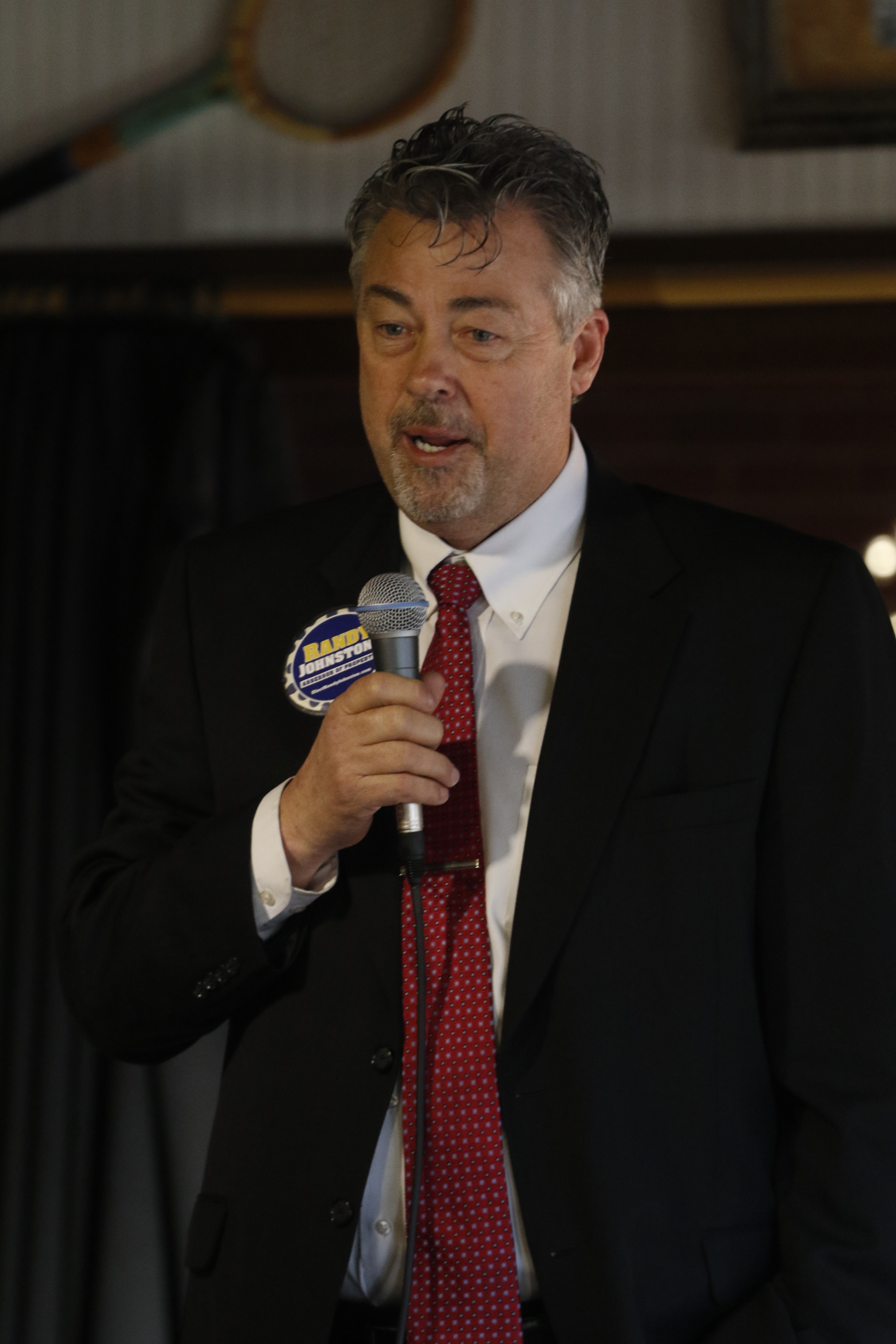
With early voting beginning Wednesday, Randy Johnston, Marty Haynes and Sterling Jetton convened inside the downtown restaurant to convince the crowd why they should become the next assessor of property in Hamilton County.
Johnston highlighted his 31 years as an assessor, his transparency and his approachability, promising everyone his cellphone number if elected.
“You know what this really was?” he asked the crowd. “A job interview.”
Haynes, a county commissioner, emphasized his small-business success and how past property assessors had similar backgrounds. He emphasized the importance of technology, and how assessors should carry laptops in their cars like sheriff’s deputies do, since downtown is rapidly expanding. And he feuded with Jetton, a former member of the assessor’s office who left to become a full-time pastor.
On the heels of Johnston, Jetton said he wanted to launch a mentorship program that pairs younger workers with older, wiser ones. Then he mentioned how the office must work conservatively if it wants to implement changes.
“It’s according to how much county commissioners give us,” Jetton said, motioning to Haynes. “So if he gives us money we’ll get it done.”
Jetton said it’s not enough for the office to post clean, easy information online – a point Haynes made earlier in the forum.
“It takes someone with leadership ability, as well as good temperament,” Jetton said.
All of this culminated in the business of bi-vocational pastoring, when someone ministers to a church without being dependent on it for income.
Asked whether he would continue to pastor his church, Jetton said, “Oh, that’s a great question. I’m going to go to church this Sunday no matter what.”
The conversation snowballed when Johnston reminded everyone the position is a full-time job. Jetton left the assessor’s office, Johnston said, because in juggling both, he was “cheating both.”
“You know,” Jetton responded, “it’s been fun being attacked as a bi-vocational pastor the last six weeks.”
“I don’t see Marty Haynes questioning his pastor,” he continued.
“I have all the endorsements,” Jetton said. “I don’t park in any illegal parking. And I haven’t challenged anybody who worked with me to say you better not vote against me.”
Haynes responded that of the 66 vocational pastors in the area, none serve in a countywide position. Jetton retorted that Greg Beck, one of Haynes’ colleagues, works for the city, the county, and pastors for a church. “You will never be ashamed of this assessor of property,” Jetton said.
Earlier in the forum, the judicial candidates also laid out their views.
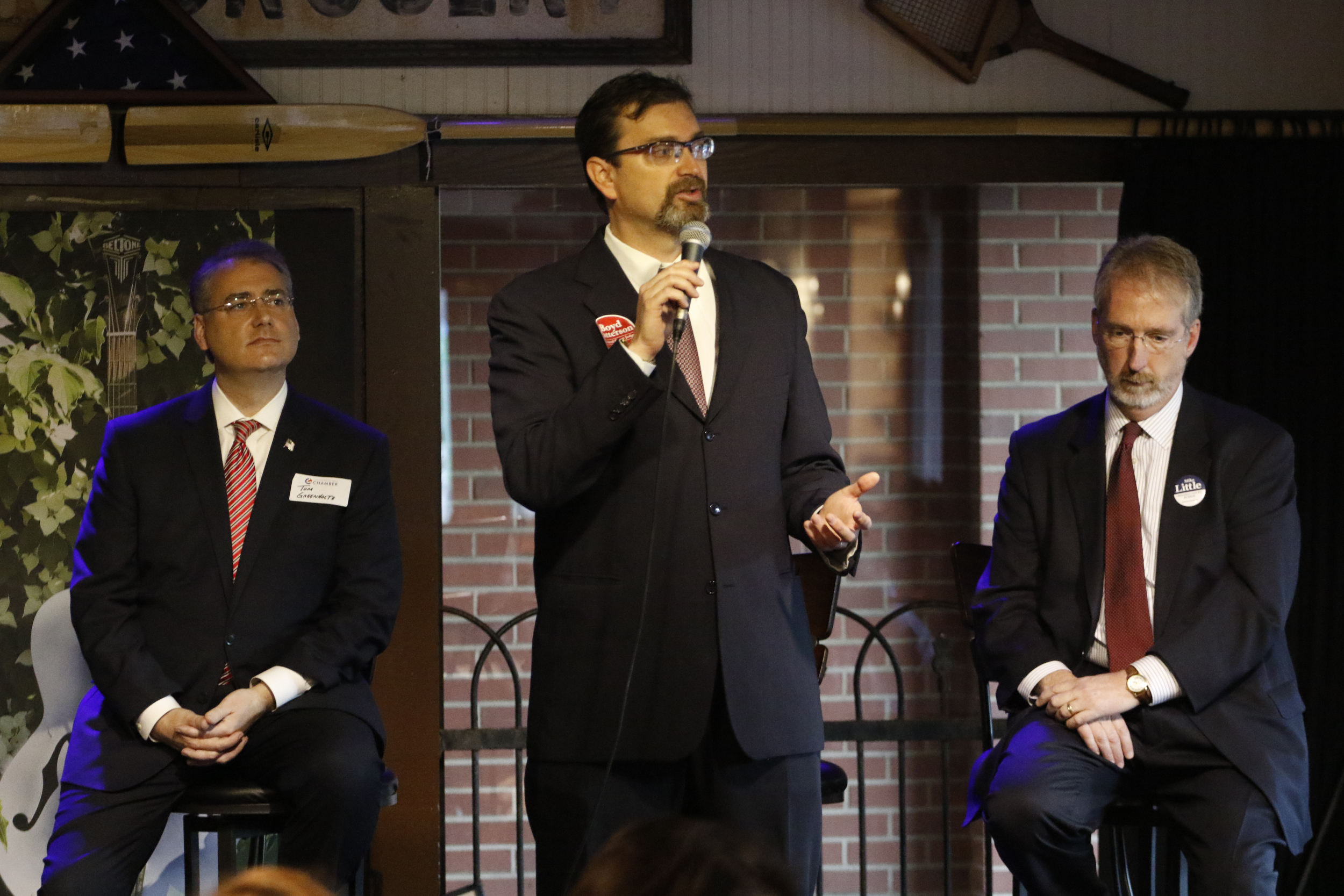
Judge Tom Greenholtz said he’s overseen 160 guilty pleas, 111 probation periods, and two first-degree murder trials since he was appointed to the bench in September. But more crucial to the community, he said, is understanding the causes of crime.
Vandalism and theft crimes, for instance, are motivated by addiction, Greenholtz said, which he hopes to combat through the expansion of Drug Court.
Boyd Patterson said his 12 years as a prosecutor, his involvement in the Juvenile Court and Mental Health Court, his years of counseling delinquent youth, his desire to innovate with technology and use phone apps that track gang members, make him the best candidate.
Patterson said combating crime is multifaceted, and Drug Court is one piece of the puzzle. A lack of training or education often accounts for repeat behavior among young males, who are the most likely to commit crimes, he said.
Thus, “you have to bombard young males especially with opportunities to increase their abilities to learn, earn and get that positive pro-social admiration outside of something like a gang.”
Mike Little, the assistant public defender, said his 18 years in criminal defense, his experience working 50 state and federal trials, and his background as a bailiff in Division II all combined to make him the ideal choice. Little said he was interested in Drug Court and that a judge should consider alternative sentencing in cases.
Early voting begins Wednesday for the March 1 primary, which decides the judicial winner since there is no Democratic candidate. As of Monday, there are 236,220 registered voters in Hamilton County – which is about 20,000 more people than at the time of the last presidential election in 2012.
Contact staff writer Zack Peterson at zpeterson@timesfreepress.com or 423-757-6347 with story ideas or tips. Follow @zackpeterson918.