
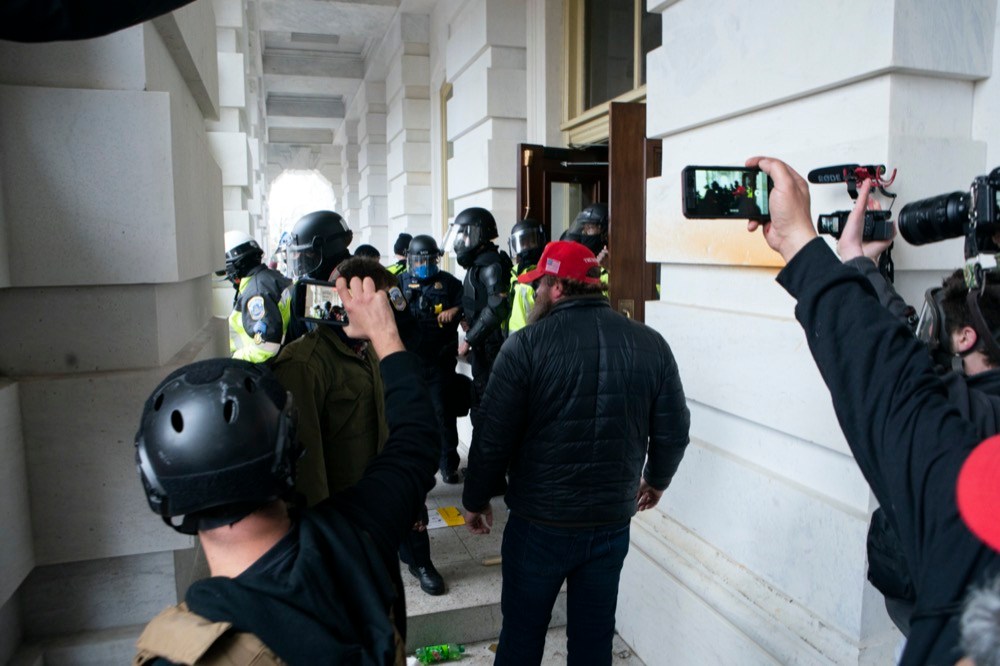
PHOENIX (AP) – They flaunted their participation in the Jan. 6 riot at the U.S. Capitol on social media and then, apparently realizing they were in legal trouble, rushed to delete evidence of it, authorities say. Now their attempts to cover up their role in the deadly siege are likely to come back to haunt them in court.
An Associated Press review of court records has found that at least 49 defendants are accused of trying to erase incriminating photos, videos and texts from phones or social media accounts documenting their conduct as a pro-Donald Trump mob stormed Congress and briefly interrupted the certification of Democrat Joe Biden’s election victory.
Experts say the efforts to scrub the social media accounts reveal a desperate willingness to manipulate evidence once these people realized they were in hot water. And, they say, it can serve as powerful proof of people’s consciousness of guilt and can make it harder to negotiate plea deals and seek leniency at sentencing.
“It makes them look tricky, makes them look sneaky,” said Gabriel J. Chin, who teaches criminal law at the University of California, Davis.
One such defendant is James Breheny, a member of the Oath Keepers extremist group, who bragged in texts to others about being inside the Capitol during the insurrection, authorities say. An associate instructed Breheny, in an encrypted message two days after the riot, to “delete all pictures, messages and get a new phone,” according to court documents.