
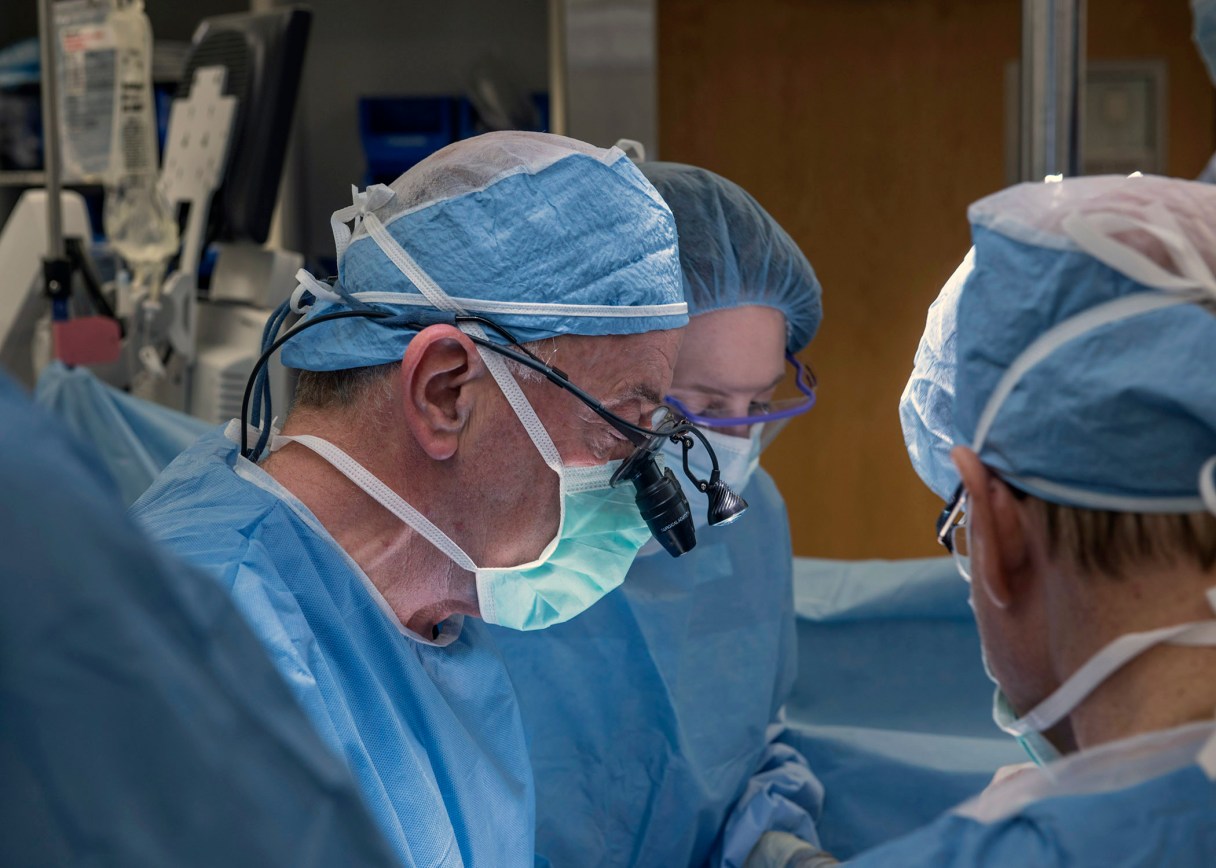
WASHINGTON (AP) – The nation’s first uterus transplant has failed, the Cleveland Clinic announced Wednesday, saying doctors had removed the organ.
A 26-year-old woman received the transplant on Feb. 24 and seemed to be doing well, even appearing briefly at a news conference on Monday with her surgeons.
But the woman suffered a sudden complication that required surgical removal of the uterus the following day, the hospital said. The patient, identified only as Lindsey, is recovering from that operation, as doctors and pathologists try to determine what went wrong. No information about the complication was provided.
In a statement the hospital attributed to Lindsey, she said her doctors “acted very quickly to ensure my health and safety. Unfortunately I did lose the uterus to complications. However, I am doing okay and appreciate all of your prayers and good thoughts.”
Other countries have tried womb transplants, and have reported some failures. Sweden reported the first successful birth in 2014, with a total of five healthy babies from nine transplants so far. The experimental technique is a new frontier that might one day offer women born without a uterus or who lost it to disease a chance at pregnancy, an alternative to adoption or surrogacy.