
By Associated Press 10 min read
WASHINGTON – Communications of Donald Trump’s transition officials – possibly including the incoming president himself – may have been scooped up in legal surveillance but then improperly distributed throughout the intelligence community, the chairman of the House intelligence committee said Wednesday.
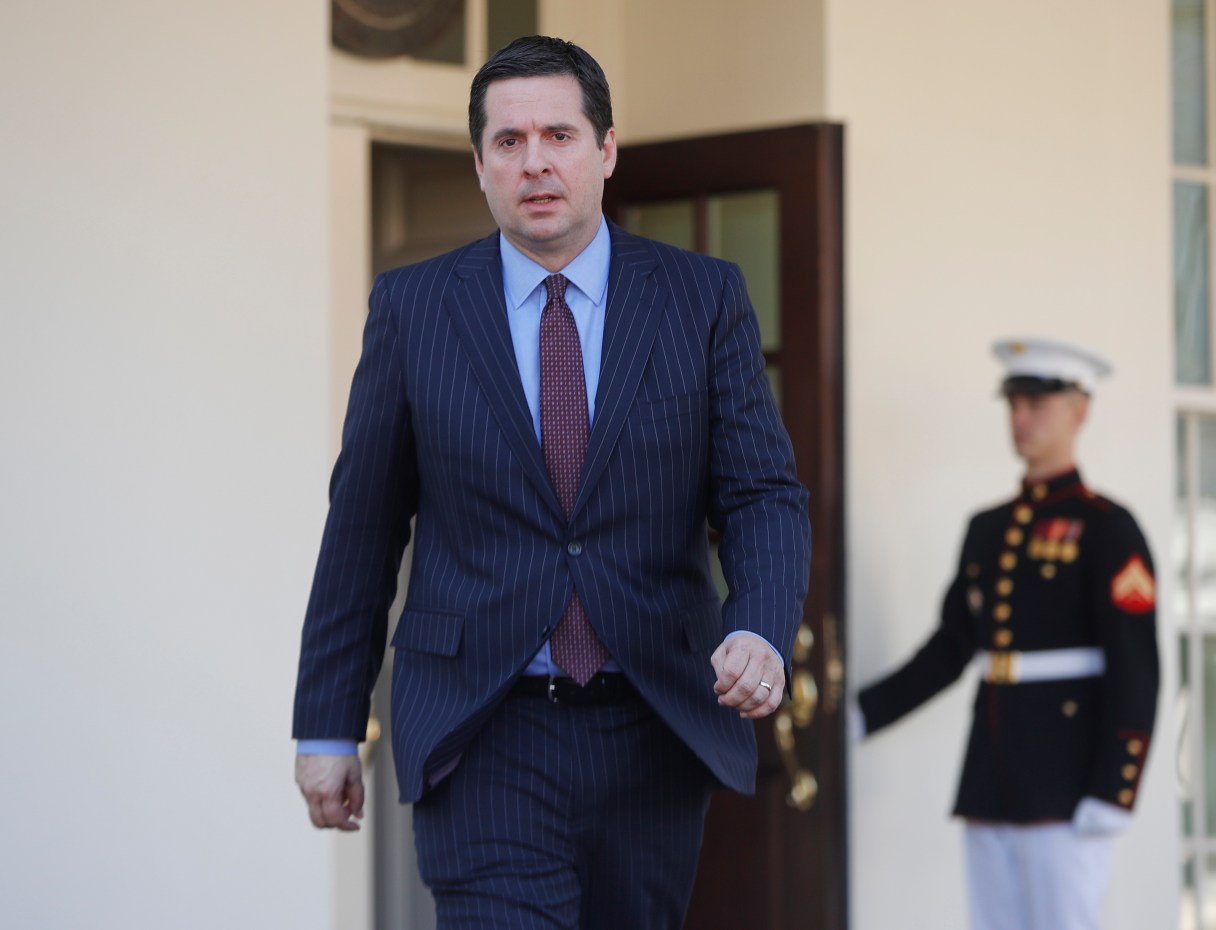
In an extraordinary set of statements to reporters, Republican Rep. Devin Nunes said the intercepted communications do not appear to be related to the ongoing FBI investigation into Trump associates’ contacts with Russia or any criminal warrants.
President Trump’s first 100 days
- Congress OKs short-term spending bill, averting government shutdown over weekend
- Trump tells NRA: ‘You have a true friend’ in White House
- Trump: National monuments a ‘massive federal land grab’
- Local anti-Trump activists target state GOP elected officials
- Trump administration says Iran complying with nuclear deal
- Trump declares U.S.-Russia relations may be at ‘all-time low’
- Gorsuch sworn into Supreme Court, restores conservative tilt
- U.S. strike on Syria is widely hailed, but angers Russia
- U.S. launches missile attack against Syria
- House intelligence committee chair steps aside
- White House says ‘reality’ changing with regard to Syria
- U.S. vows to uphold Russia sanctions until it respects pledges
- As GOP schism grows, Trump attacks fellow Republicans
- Trump revives threat to change libel laws
- Senate GOP needs Pence to break tie on family planning funds
- Trump administration seeks delay in ruling on climate plan
- Trump vows efforts to fight nation’s opioid addiction crisis
- House sends bill to Trump blocking online privacy regulation
- House sends bill to Trump blocking online privacy regulation
- White House eyeing $18 billion list of social program cuts
- Watchdog to examine cost, security of Trump’s Florida trips
- White House looks to bounce back after health care loss
- Trump signs legislation rolling back Obama-era regulations
- Trump’s border wall with Mexico faces all kinds of obstacles
- Trump attacks conservative lawmakers over health bill
- Trump, GOP leaders pull troubled health care bill off House floor
- Trump OKs Keystone pipeline, calling it ‘great day’ for jobs
- House GOP leaders delay vote on health care repeal bill
- Big GOP donors spending millions to stop Trump health care bill
- Trump feels ‘somewhat’ vindicated after Nunes intelligence briefing
- Comey: FBI probing Trump-Russia links, wiretap claims bogus
- GOP leaders propose health bill changes to help older people
- Trump to meet Iraqi premier as anti-IS policy takes shape
- Trump says Dems ‘made up’ allegations of Russia interference
- While Trump talks tough, U.S. quietly cutting nuclear force
- Trump says Germany owes ‘vast sums’ to NATO
- House panel gets Justice Department information about Trump’s wiretap claim
- Trump would end subsidies for rural airline service
- Trump OKs changes in GOP health care bill, winning support
- President Trump, German Chancellor Merkel talk job training
- Trump’s proposed budget features steep cuts to fund military, homeland security and aid veterans
- President Trump defends wiretapping claims at joint news conference with German Chancellor Merkel
- Trump budget cuts could cut $2 million of block grants for Chattanooga
- Trump pledges to fight ‘terrible’ court ruling blocking latest travel ban order
- President Donald Trump speaks at rally in Nashville
- Trump’s first budget boosts military, cuts domestic programs
- Trump arrives at The Hermitage for historic visit to Andrew Jackson’s home
- Trump announces challenge to Obama-era fuel standards
- White House meeting on Saudi underscores kingdom’s influence
- President Trump to lay wreath at Andrew Jackson’s ‘s tomb at Hermitage in Nashville
- Trump White House sees influence of shadowy ‘deep state’
- Busload of local Trump supporters heading for president’s Nashville rally
- Trump earned $153 million and paid $36.5 million in taxes in 2005
- 14 million would lose coverage under GOP plan, according to Congressional Budget Office
- Justice Department asks for more time on wiretapping evidence
- House committee wants evidence for Trump’s wiretap claim
- Tax credits work differently in ‘Obamacare’ and GOP plan
- Trump administration dismissing congressional budget experts
- Trump on charm offensive with former rivals
- No more love for WikiLeaks from Trump after CIA hacked
- Trump’s promises vs. the Republican plan on health care
- As president, Trump seeks answers on his own wiretap mystery
- New travel ban eases some legal questions but not all
- House GOP releases bill replacing Obama health care overhaul
- Trump tours private school in Florida, promoting choice
- Environmental programs face deep cuts under budget proposal
- Officials: New Trump order drops Iraq from travel ban list
- Trump looks to refocus his presidency in address to Congress
- Trump budget to increase defense spending by $54 billion
- Trump toasts nation’s governors ahead of health care talks
- Trump condemns anonymous sources as staff demands anonymity
- White House bars major news outlets from gaggle
- A look at the legal path ahead for the Trump travel ban
- White House expects Justice crackdown on legalized marijuana
- Trump vows to fight ‘epidemic’ of human trafficking
- Conservatives learn dealing with Trump can be complicated
- Trump administration lifts transgender student bathroom guidance
- Millions targeted for possible deportation under Trump rules
- Trump Month Two: Talks on health care and on tax overhaul
- Trump praises new African American museum during first visit
- Trump denounces anti-Semitism in newly forceful condemnation
- Trump tries to move past controversies, toward legislating
- Revived by rally, Trump turns back to governing
- Outside of Washington, Trump slips back into campaign mode
- Trump gets out of Washington for campaign-style events
- Trump praises his ‘fine-tuned machine,’ says media dishonest
- Trump ushers in changes in Obamacare, could lead to higher annual deductibles
- A month into presidency, Trump prepares for a campaign rally
- Trump White House wrestles with a crush of crises
- Trump says U.S. will deal with North Korea ‘very strongly’
- North Korean missile launch is Trump’s latest test
- AP FACT CHECK: Are immigration raids result of Trump policy?
- Trump cites voter fraud in NH without providing evidence
- Trump says he might give travel ban a tweak or a makeover
- Trump responds to ruling on travel ban: ‘SEE YOU IN COURT’
- U.S. appeals court refuses to reinstate Trump’s ban on travelers from seven Muslim-majority nations
- Trump says media ‘doesn’t want to report’ extremist attacks
- White House expresses confidence travel ban will be restored
- U.S. judge temporarily blocks Trump’s travel ban nationwide
- Trump moves to scale back financial regulations
- State Department says fewer than 60,000 visas canceled under Trump’s order
- U.S. sanctions target two dozen people and companies in Iran following ballistic missile test
- Trump pledges to end political limits on churches
- Congress scraps Obama rules on coal mining, guns
- Trump tweets that Iran is ‘on notice’ for firing missiles
- Trump to Mexico: Take care of ‘bad hombres’ or U.S. might
- Trump praises Douglass, other famous African Americans
- Trump honors fallen Navy SEAL during unannounced trip
- Speaker defends Trump’s order, warns of protests
- Local attorneys see widespread confusion over Trump’s immigration order
- Trump supporters say they are happy with immigration order
- Veterans protest travel ban, saying it hurts interpreters
- Trump fires acting attorney general over executive order defiance
- White House: Immigration order ‘small price’ for safety
- Corker, Alexander call Trump’s immigration ban ‘poorly implemented’ and ‘confusing’
- Judge grants temporary stay after Trump immigration ban
- Trump’s crackdown on refugees, citizens from 7 majority-Muslim countries takes effect
- Trump signs ‘new vetting measures’ to guard against terror
- Trump wants to slash EPA workforce and budget, official says
- Trump will pay for border wall with 20 percent tax on Mexican imports, spokesman says
- Trump poised to seek new military options for defeating IS
- Trump signals changes to U.S. interrogation, detention policy
- Trump calls for probe into unsubstantiated voter fraud claim
- Draft order would halt refugee processing for Syrians
- Trump intends to announce his Supreme Court pick on Feb. 2
- Trump warns he’s ready to ‘send in the Feds’ to Chicago
- Trump moves to build border wall, cut sanctuary city funds
- EPA contract freeze, media blackout leave states confused
- Trump dogged by insecurity over popular vote, media coverage
- Trump moving forward with border wall, weighs refugee cuts
- Trump expands anti-abortion ban to all U.S. global health aid
- President Trump moves to advance Keystone XL, Dakota Access oil pipelines
- Trump administration places horse ‘soring’ ban on hold
- Trump tries to streamline manufacturing permits
- Trump moves to pull U.S. out of big Asia trade deal
- White House kicks off first full work day with daily briefing
- Trump freezes new regulations until his administration can review them
- Trump signs first executive order

Nunes, who served on Trump’s transition team, said he believes the intelligence collections were done legally but that identities of Trump officials and the content of their communications may have been inappropriately disseminated in intelligence reports.
“What I’ve read bothers me, and I think it should bother the president himself and his team,” Nunes said Wednesday after briefing Trump privately at the White House.
Nunes briefed reporters before sharing the information with Rep. Adam Schiff, the top Democrat on the House intelligence committee. Schiff decried Nunes’ handling of the matter, saying the chairman had created “profound doubt” about the credibility of their committee’s investigation.
You've used your free articles
You've read all of your free articles for now. Subscribe for unlimited access to every story.