
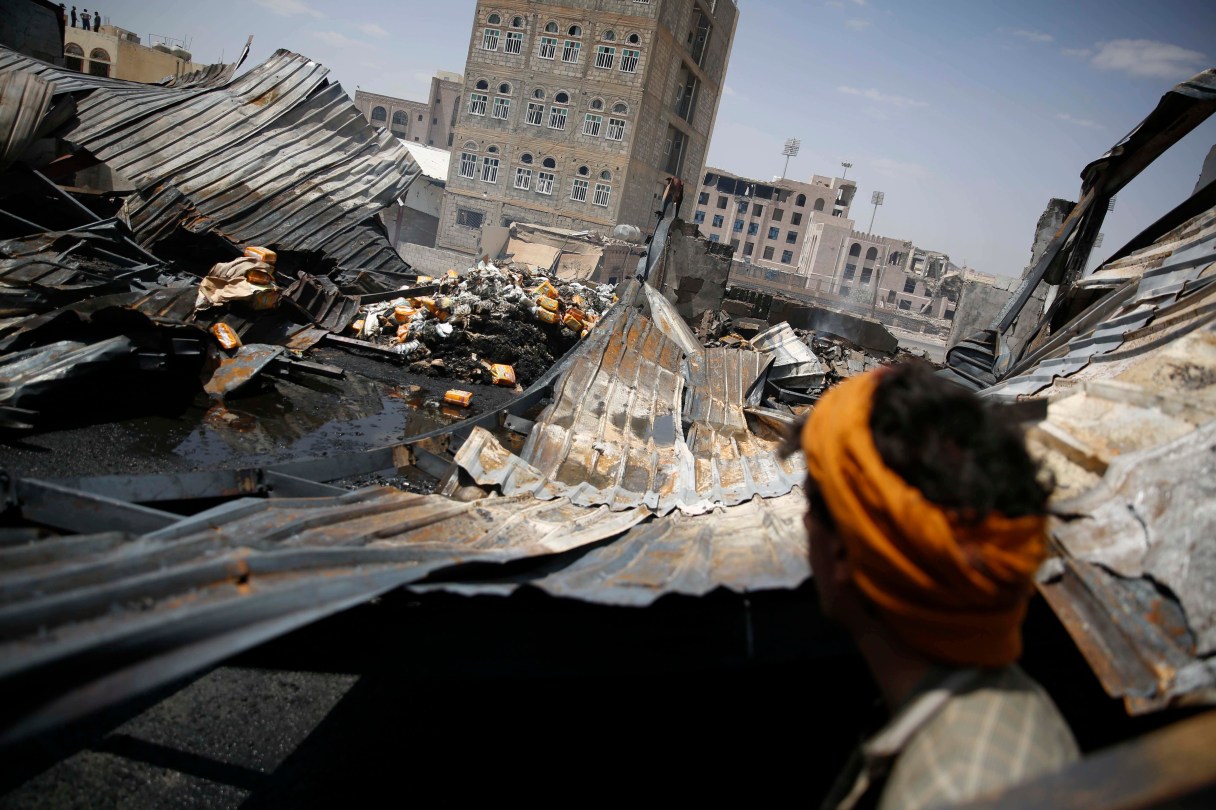
SANAA, Yemen (AP) – Businesses worth millions of dollars have sustained major destruction in Yemen’s year-long conflict either by the Saudi-led coalition targeting Shiite rebels or ground fighting and random shelling by the rival parties, an international rights group said Monday.
In a lengthy report, Human Rights Watch mainly blamed the coalition for the destruction of the factories saying that it documented airstrikes on 13 key facilities in Yemen since the beginning of the Saudi-led campaign in March 2015, through February 2016. The New York-based watchdog said those airstrikes killed a total of 130 civilians and left hundreds of Yemenis unemployed. The facilities that were hit had produced, stored, and distributed food, medicine, and electricity. It stated that 10 appear “unlawful” – meaning there were no military facilities in the vicinity, suggesting also that the airstrikes could amount to “war crimes.”
HRW said that “taken together, the attacks on factories and other civilian economic structures raise serious concerns that the Saudi-led coalition has deliberately sought to inflict widespread damage to Yemen’s production capacity.”
The bombings are coupled with a naval and air embargo imposed on Yemen since March last year, causing severe shortages of fuel, cash and basic necessities as Yemen depends on imports of its 90 percent of its food products.
An estimated 19 out of Yemen’s 22 governorates are facing severe food insecurity, according to the latest UN figures released on June 22. The latest figure prompted the UN humanitarian Coordinator for Yemen Jamie McGoldrick warns that Yemen is “one of the worst crises in the world and is continuing to get worse.”