
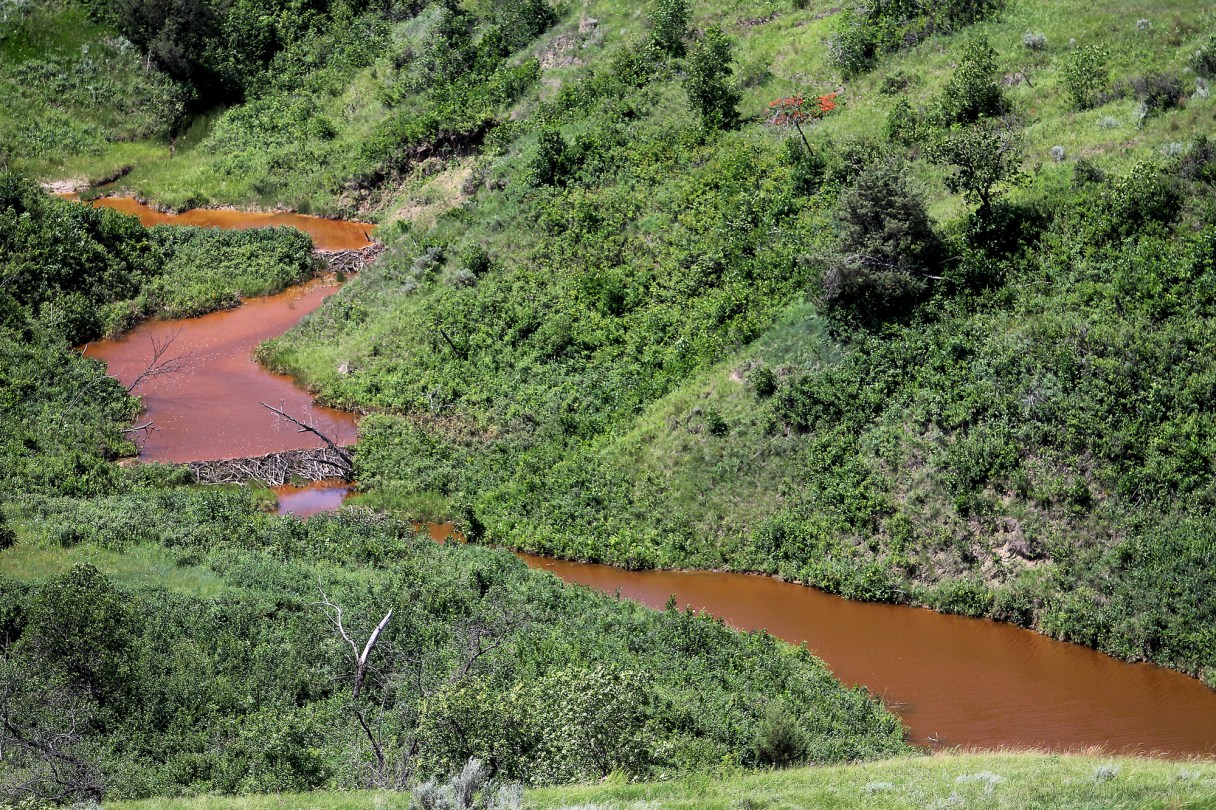
MANDAREE, N.D. (AP) – Growing up, Ruth Anna Buffalo would follow the dirt track behind her house into the rugged North Dakota badlands, swimming in creeks picketed with beaver dams, finding artifacts and climbing bluffs overlooking Lake Sakakawea. For the young, the lake and the land around it were a wonderland.
Buffalo’s grandfather, though, looked at the lake with pained eyes. Created by the U.S. Army Corps of Engineers’ building of the Garrison Dam in the 1940s and ’50s, it flooded out a significant portion of the Fort Berthold Indian Reservation and swallowed his town of Elbowoods. Families were forced to leave their homes for higher ground.
Now, drilling rigs are visible in the hills behind Buffalo’s childhood home in the small town of Mandaree and the trail to the lake is pockmarked with oil and gas development.
“It feels like this is the modern day flooding of our land,” Buffalo said.
For many Native Americans on Fort Berthold Indian Reservation – a land that accounts for 300,000 of the 1 million barrels of oil produced by North Dakota daily – there is a difficult balance between the potential prosperity that oil and gas development can bring and the preservation of a land considered by cultural and religious tradition to be sacred. That dilemma has been brought to the fore this month since 1 million gallons of saltwater, a byproduct of oil and gas production, spewed from an underground pipeline into the badlands near Mandaree.