
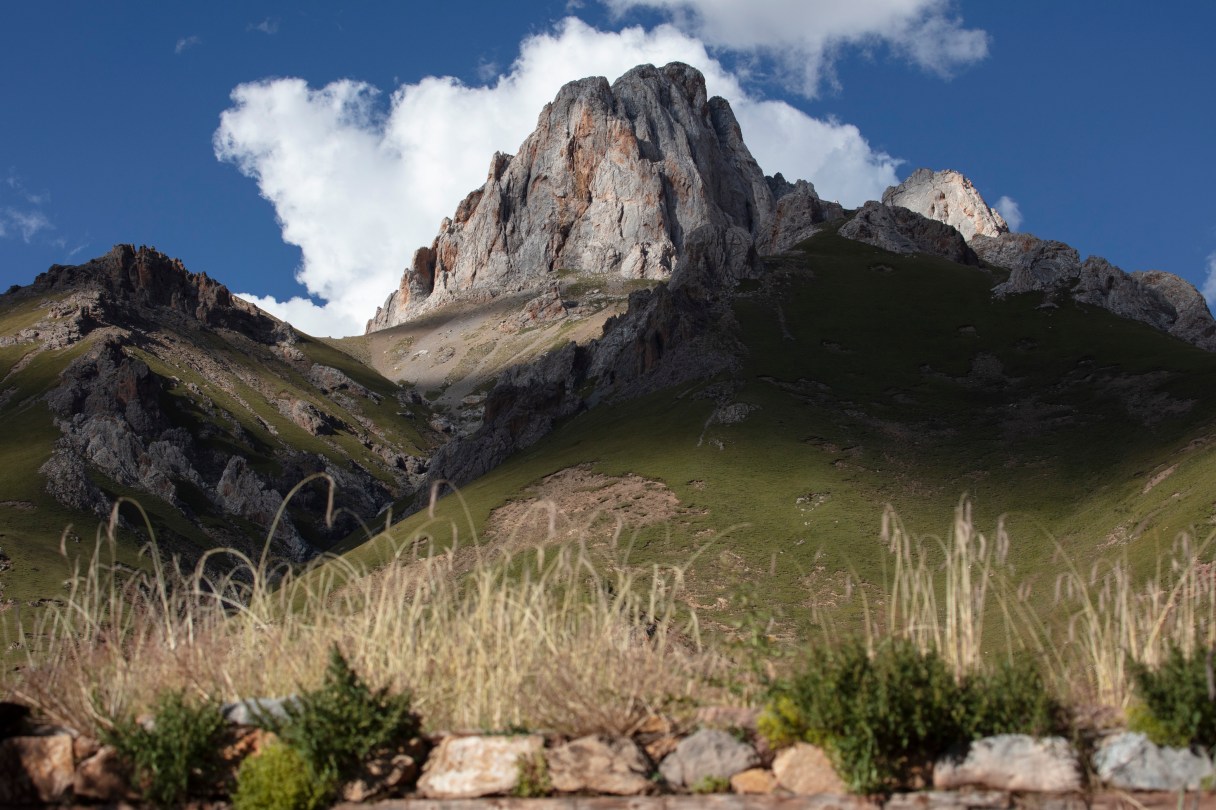
XINING, China (AP) – There’s a building boom on the Tibetan plateau, one of the world’s last remote places. Mountains long crowned by garlands of fluttering prayer flags are newly topped with sprawling steel power lines. At night, the illuminated signs of Sinopec gas stations cast a red glow over newly built highways.
Ringed by the world’s tallest mountain ranges, the region long known as “the rooftop of the world” is now in the crosshairs of China’s latest modernization push, marked by multiplying skyscrapers and expanding high-speed rail lines.
But there’s a difference: This time, the Chinese government wants to set limits on the region’s growth in order to implement its own version of one of the U.S.’s proudest legacies – a national park system.
In August, policymakers and scientists from China, the United States and other countries convened in Xining, capital of the country’s Qinghai province, to discuss China’s plans to create a unified system with clear standards for limiting development and protecting ecosystems.
Zhu Chunquan, the China representative of the International Union for the Conservation of Nature, a Switzerland-based scientific group, notes that the country’s economy has boomed over the past 40 years. But priorities are now expanding to include conserving the country’s key natural resources.