
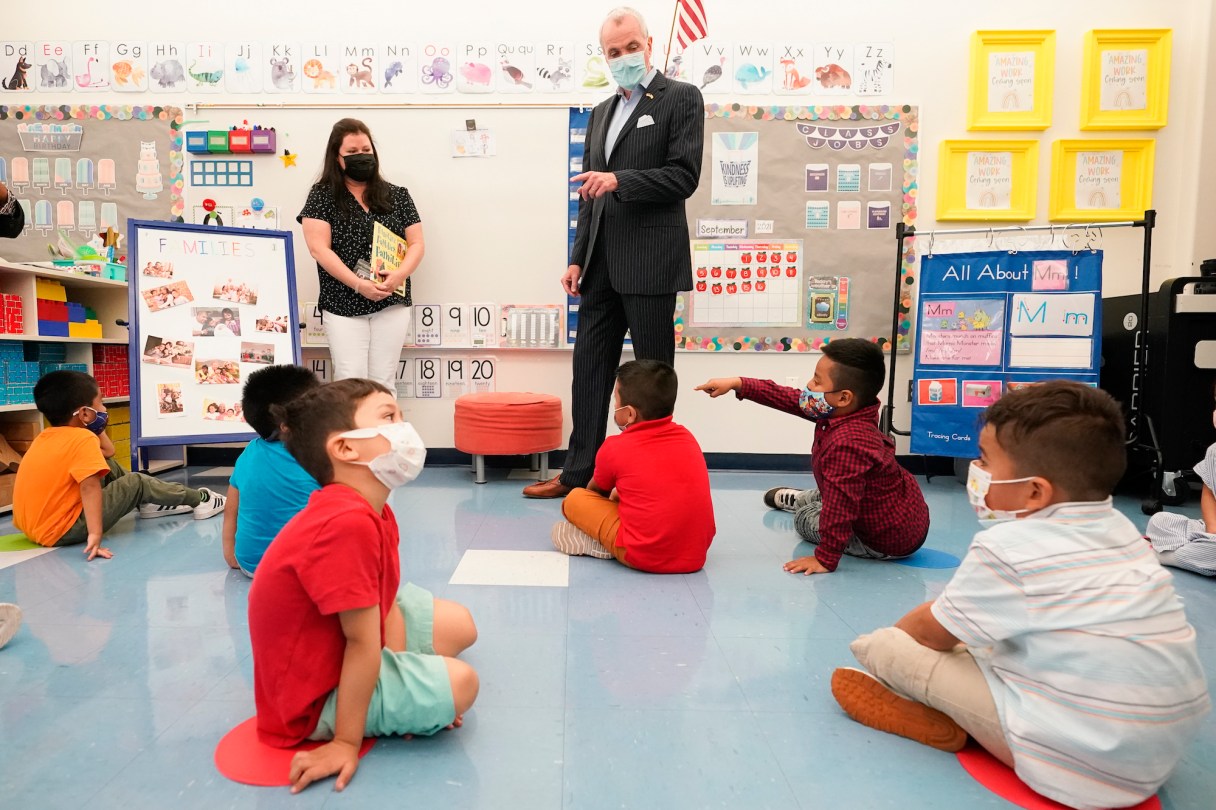
With the “Build Back Better” legislation stalled in the Senate, President Joe Biden is now considering smaller bills that include important parts of the plan, such as one proposal to spend $110 billion to make pre-kindergarten available to all 3- and 4-year-olds. Helping children to overcome limitations based on their family finances or backgrounds is an appealing idea. Recent evidence, however, raises serious questions about whether more preschool improves kids’ lives over the long term.
A number of studies show the positive effect of preschool on children during early elementary school, but many do not account for an important phenomenon: Children who start school behind their peers tend to catch up after several years. Therefore, we should question the assumption that if preschool-age children could simply spend more time in school, they will be better off.
These are difficult questions. Children from disadvantaged families appear to benefit more than most. But the problem with most empirical studies of pre-K programs is that parents who choose to enroll their children may do other things differently than parents who do not. Those other differences, rather than whether a child attended pre-K, could help explain differences in emotional and intellectual development.
One thing we do know is that preschool does not necessarily improve kids’ long-run fortunes. A controlled study of children who attended state-supported preschool in Tennessee followed nearly 3,000 children through sixth grade. Because those who attended pre-K were randomly selected, their backgrounds were not systematically different from those who did not attend. Surprisingly, by sixth grade, students who had attended pre-K performed worse on standardized tests, had more disciplinary problems and were more likely to use special education services.
While the quality of the specific program matters, the Tennessee program is considered as good as, or better than, most other state-funded programs. Its teachers are required to have a college degree and certification and are paid as well as public elementary school teachers.
Another important problem with the current proposal is that the rules to qualify for federal funding may lead to the exclusion of religious programs, which in many communities function as primary preschool options. To receive federal funding, faith-based organizations providing pre-K may be required to abide by Title 9 regulations, which could interfere with their ability to choose employees who share the same faith commitments. Such rules would likely discourage some pre-K programs from seeking federal funding.
(READ MORE: Chattanooga City Council approves creation of Department of Early Learning)
As a result, if Congress enacts legislation to pay for any child who attends a qualified preschool, faith-based schools may be unable to compete with those that are fully subsidized by the federal government.
This proposal, and others like it, is a classic example of good intentions masking bad policy. Well-designed pre-K programs may be beneficial to children from disadvantaged backgrounds who are in need of resources they cannot receive at home. But with a pile of evidence showing that government-subsidized day care and pre-K programs can result in worse behavioral, emotional and educational outcomes for some children, spending billions of dollars that we don’t have on the idea does not make sense.
Tracy C. Miller is a senior policy research editor with the Mercatus Center at George Mason University.
Tribune Content Agency