
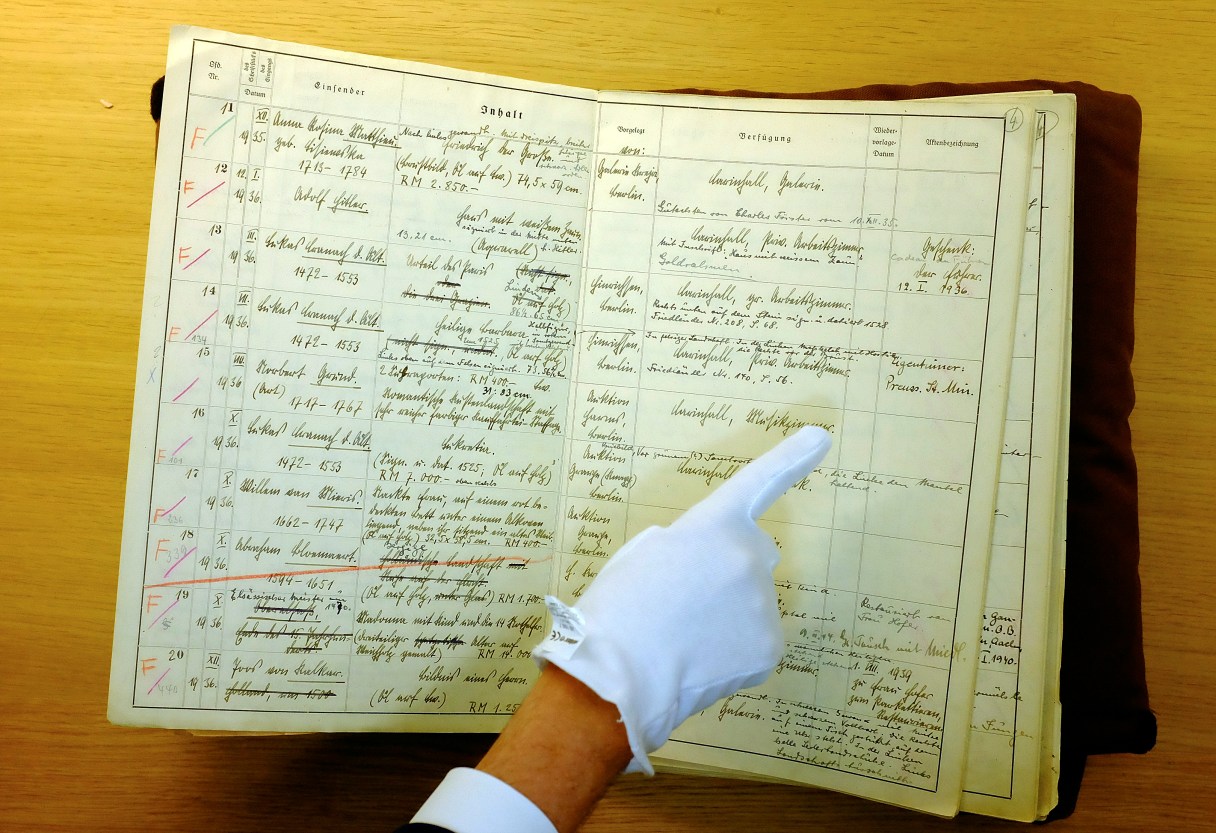
PARIS (AP) – France’s World War II archives have helped produce an unusual art book: a catalog of more than 1,000 paintings, tapestries and sculptures amassed by senior Nazi official Hermann Goering – many of them stolen from Jews deported to death camps.
It’s an effort to remind modern readers of Nazi crimes, as the number of Holocaust survivors dwindles and European far right groups are stirring up nationalist sentiment. The publication Wednesday could also revive efforts to return artworks stolen by the Nazis to Jewish families.
“Artworks should never be quarry,” French Foreign Minister Laurent Fabius wrote in a preface to the new book. “They constitute a common good of humanity. This truth is timeless; the publication of this work is an occasion to remember it.”
A portrait by Goya and a landscape by Sisley are among 1,376 works by Italian, Dutch, French and German masters that adorned Goering’s home in Carinhall near Berlin.
It also includes Goering’s carefully maintained ledger, with handwritten comments about the quality of the work and notes from Nazi officials about where they were taken and when. The ledger was among documents seized by French forces from Germany at the end of the war, according to the French Foreign Ministry.