
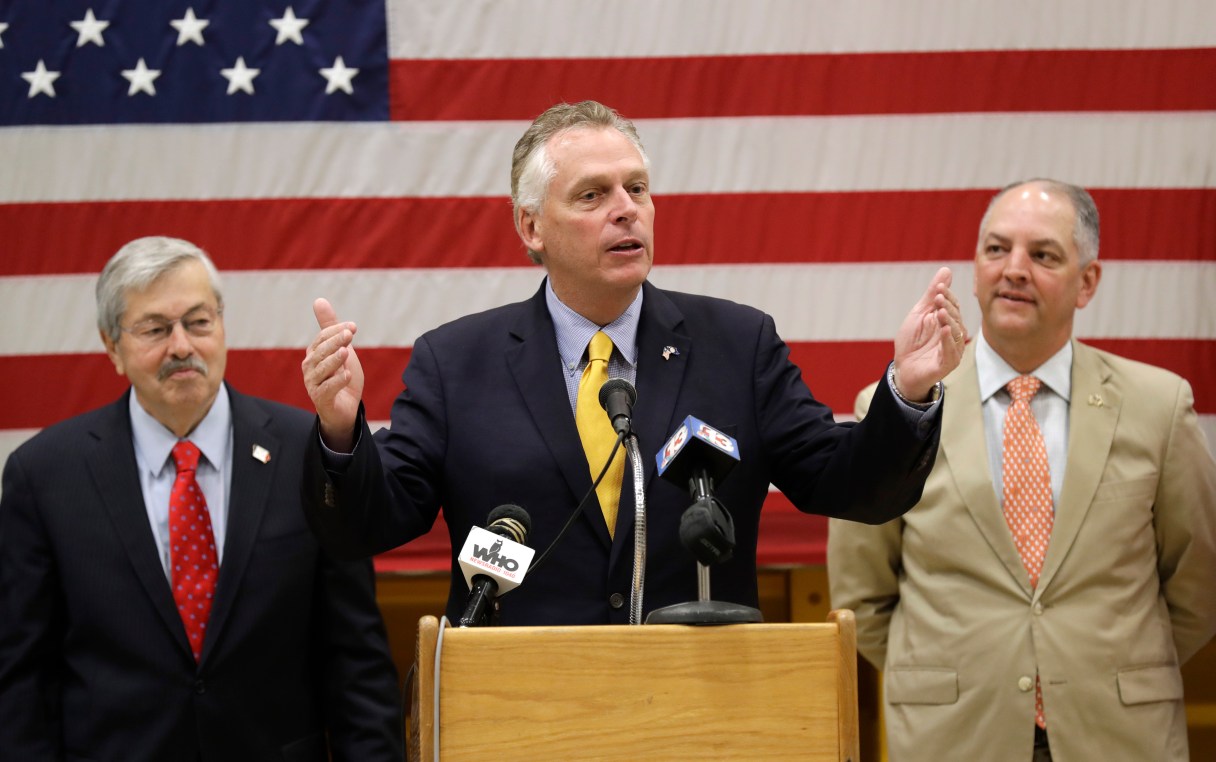
DES MOINES, Iowa (AP) – A bipartisan group of governors called on Congress to ratify the Trans-Pacific Partnership on Friday despite opposition from both leading presidential candidates.
The governors of Iowa, Virginia and Louisiana dismissed attacks on the agreement by presumptive nominees Republican Donald Trump and Democrat Hillary Clinton as misguided. They joined with U.S. Trade Representative Michael Froman, who is leading the Obama administration’s efforts to sell the plan to a skeptical Congress and public.
The group spoke at the EFCO Corp. in Des Moines, a maker of concrete support systems that are used to build buildings and bridges. The governors are in Iowa for the summer meeting of the National Governors Association.
The governors said the family-owned business that employs 500 people was a perfect example of a company that would benefit from the TPP’s passage. The company already exports to eight of the 12 countries in the deal, and would be able to compete for infrastructure work in developing countries such as Vietnam, Froman said.
The trade pact would more closely link the economies of 12 Pacific Rim countries, reducing tariffs on thousands of products and setting other rules for trade. Supporters say the agreement would increase exports and give the U.S. major influence over trade in Asia, warning that China will step in otherwise.