
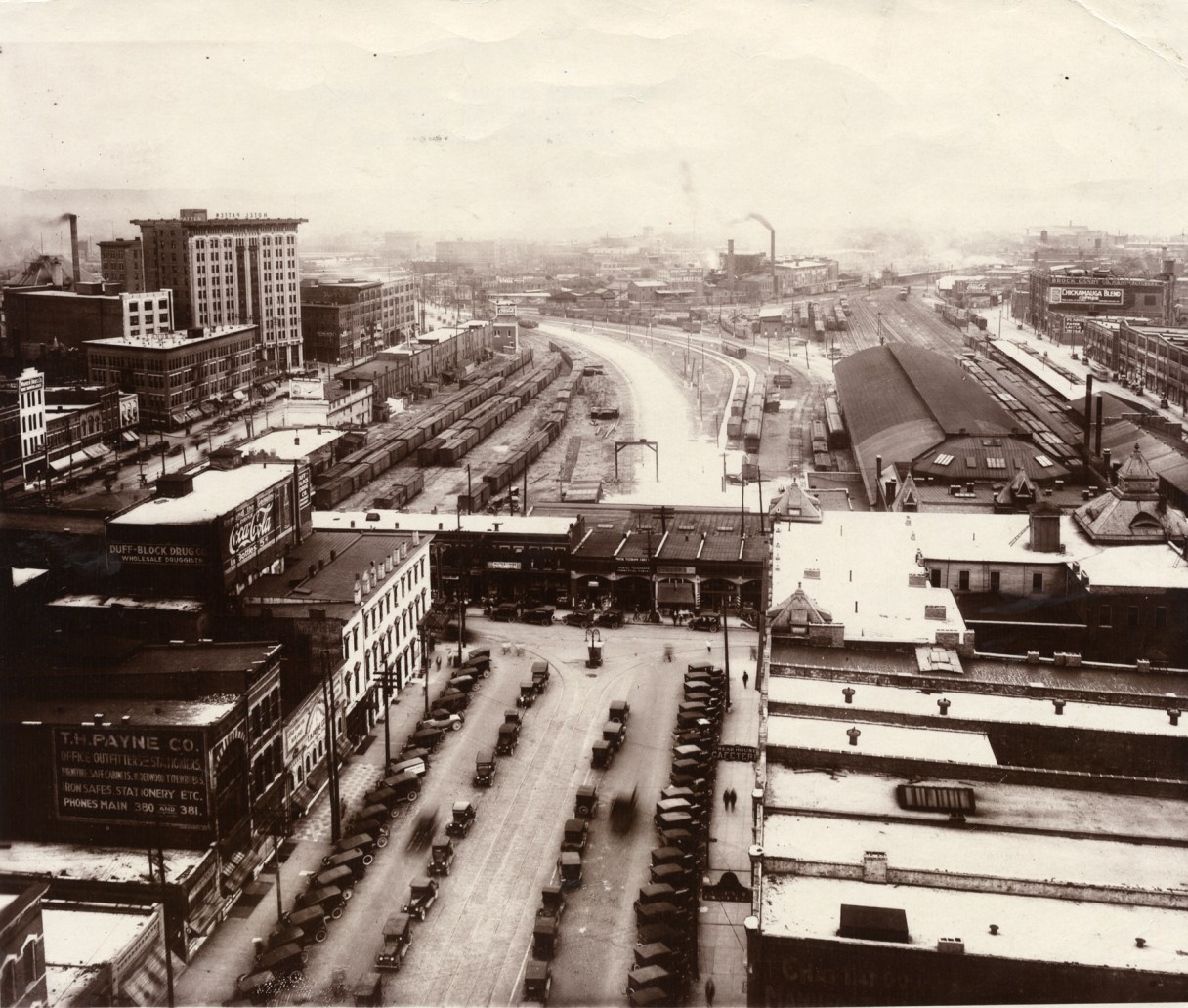
At first blush, the lives of Chattanoogans 100 years ago were strikingly different to 21st-century residents of the Scenic City.
In the opening days of 1915, the Market Street Bridge was less than a year into construction and was already being billed as overbudget. Chattanoogans would wait two more years before the completed span was ready to carry buggies and cars — of the motor and street varieties — across the Tennessee River.
And that river was still dangerously free-spirited. At 33 and still polio-free, then-U.S. Assistant Secretary of the Navy Franklin D. Roosevelt wouldn’t establish the Tennessee Valley Authority for nearly 20 years. Without man’s concrete-fisted control of its ebbs and flows, the river was given to sometimes-catastrophic floods, including a legendary one that swamped the city just two years later.
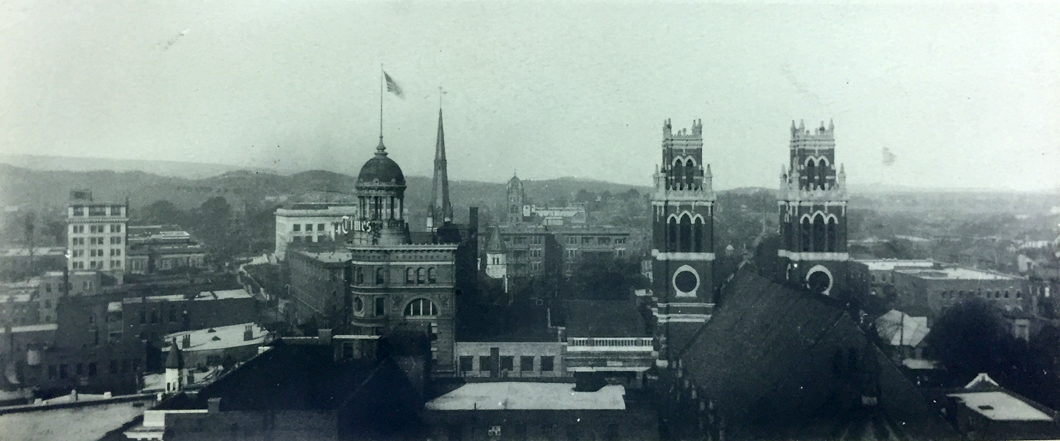 A view of Eighth Street shows the dome of the Chattanooga Times building, left, and Saint Peters and Paul Basilica.
On a single screen, the Alcazar Theatre on Market Street showed silent films — commonly called “photo plays” — accompanied by live orchestration. It vied for eyes with the nearby Majestic Theatre, which billed itself as “devoted to clean vaudeville.”
Mules and horses were a common sight on Market Street. The asphalt ribbon of Interstate 24 wouldn’t cup the city’s southern edge for another half century, and the Chattanooga Coca-Cola Bottling Co. had only been capping bubbly at its downtown plant for 15 years.