
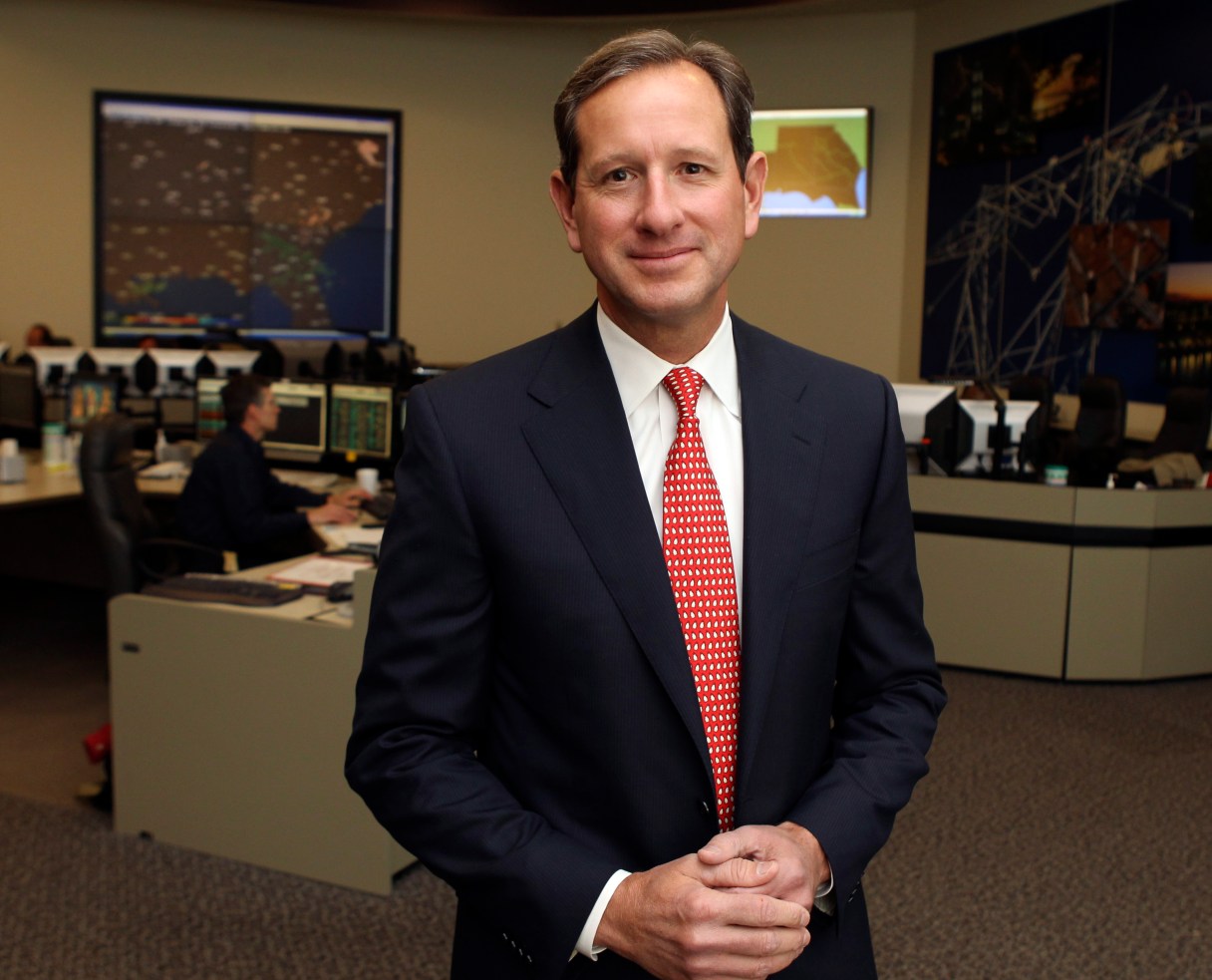
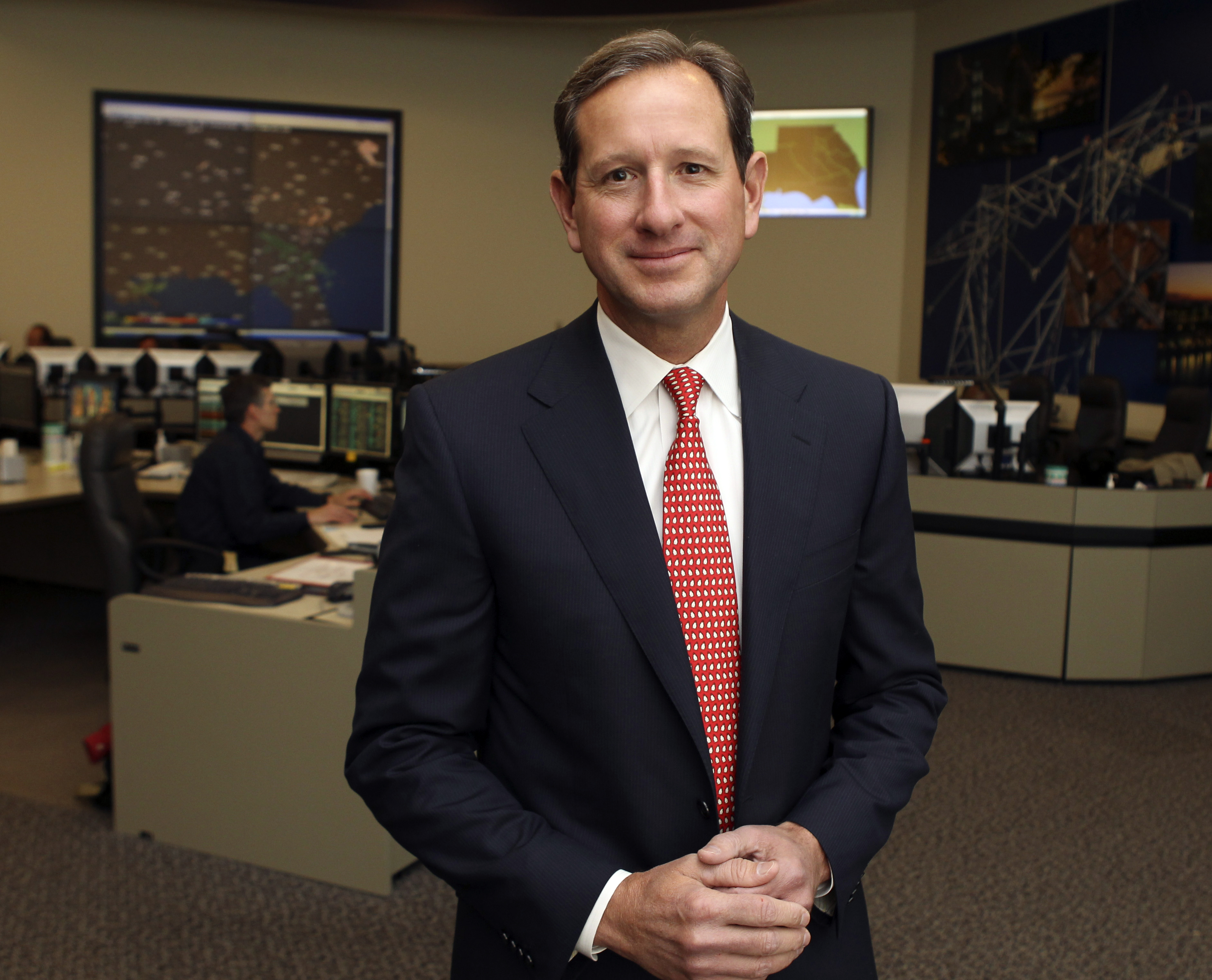
 Georgia Power CEO W. Paul Bowers poses in the company’s Transmission Control Center, Tuesday Jan. 4, 2011 in Atlanta. Bowers, defended the utility’s decision to hike rates starting this month, saying it was forced to upgrade the environmental controls on its power plants. But in the coming months, Bowers said he wants to unveil a new pricing scheme that would allow save consumers money by automatically turning off their air conditioners when electricity prices peak. He said part of his tenure will be spent overseeing the construction of two more nuclear reactors at Plant Vogtle. (AP Photo/John Bazemore)
ATLANTA – Georgia Power’s new president said Tuesday that the electric utility had to raise prices to meet stricter emissions rules and maintain its system, but he’s considering new ways to help customers cut costs.
W. Paul Bowers, 54, became president and CEO of the largest subsidiary in the Atlanta-based Southern Co.’s network on Dec. 31, just as its customers were hit with a rate increase that will add more than $14 to the monthly power bill for an average home.
Raising prices was necessary to comply with stricter environmental rules on coal-fired power plants, build a new gas-fired plant and maintain the company’s transmission network, Bowers told The Associated Press in an interview. Critics assailed Bowers’ company for raising rates during an economic downturn that pushed unemployment to 10.1 percent, although Bowers said his firm invested billions of dollars in its business even in a sour economy.
“We didn’t stop it because our customers expect the lights to stay on, they expect us to be compliant with environmental law and they want us to have power for the growth of the future,” Bowers said.
Last month, Georgia’s utility regulators at the Public Service Commission approved a settlement that not only hiked bills, but also gave Bowers’ company the ability to more quickly raise prices should its earnings fall below set targets. Normally, Georgia Power must file a new case with the commission to raise rates, a process that takes months, involves testimony, analysts and a greater say for critics.