
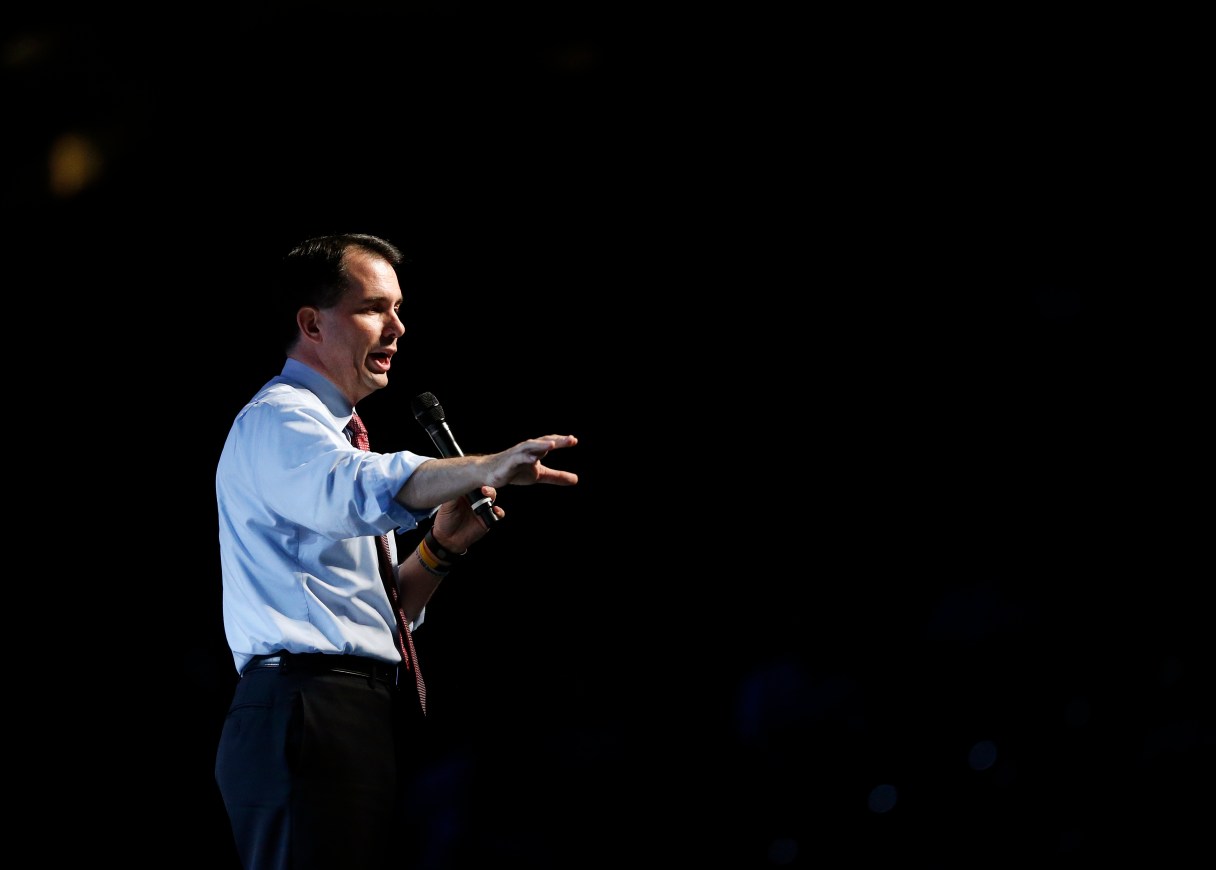
MADISON, Wis. (AP) – Wisconsin Gov. Scott Walker, who is to enter the 2016 Republican presidential contest on Monday, has a national profile largely due to his clashes with labor unions.
He enacted policies weakening their political power and became the first governor in U.S. history to defeat a recall election. Now, on the eve of his campaign launch, Walker’s task is to remind Republican voters about the four-year-old fight and the recall election sparked by his efforts to weaken unions – and a series of lesser-known triumphs he says set him apart from the crowded Republican field.
“If you could accomplish half of what he’s done in Wisconsin in Washington, D.C., you would go down as one of the greatest presidents ever,” said Walker’s top political adviser Rick Wiley.
Walker cut income and corporate taxes by nearly $2 billion, lowered property taxes, legalized the carrying of concealed weapons, made abortions more difficult to obtain, required photo identification when voting and made Wisconsin a right-to-work state.
His budget this year, which plugged a $2.2 billion shortfall when he signed it into law Sunday, requires drug screenings for public benefit recipients, expands the private school voucher program, freezes tuition at the University of Wisconsin while cutting funding by $250 million and removing tenure protections from state law.