
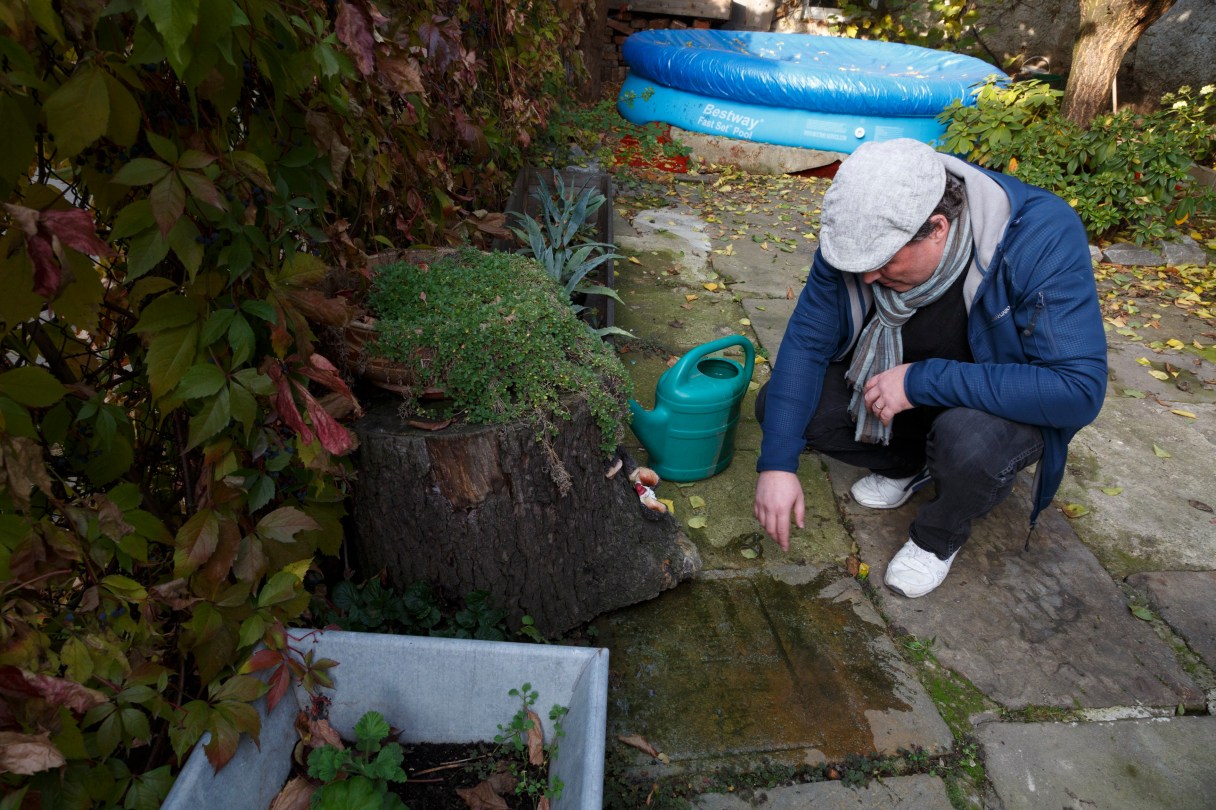
PROSTEJOV, Czech Republic (AP) – There was no mistaking what the stone slab was, only the spot where it lay was somehow not fitting. Instead of marking a place of the departed, the tombstone served as a doormat to a henhouse in a small Czech village.
Confronting the dark legacy of the Holocaust, a small team of researchers has been working to reassemble a Jewish cemetery in the eastern city of Prostejov that was destroyed during the Nazi occupation. The Nazi death machine wipe out 6 million Jews in the Holocaust, wiping out a third of world Jewry – and didn’t even let those already dead rest in peace.
The discovery of Prostejov’s lost graveyard was a result of efforts to find roughly 2,000 tombstones that were desecrated and disappeared more than 70 years ago in what was then Czechoslovakia. Dozens of Jewish cemeteries faced the same eradication as the one in Prostejov.
Turned upside down and after a bit of cleaning, the tombstone found at the entrance to the henhouse, in a village outside Prostejov, revealed a Hebrew inscription that was hidden for decades.
Bearing the name Juli Rosenthal, it reads: “Here lies a modest and righteous woman, Mrs. Yittel, the wife of our dear teacher Mr. Leib Rosenthal, may he be long alive, who passed away 76 years old.”