
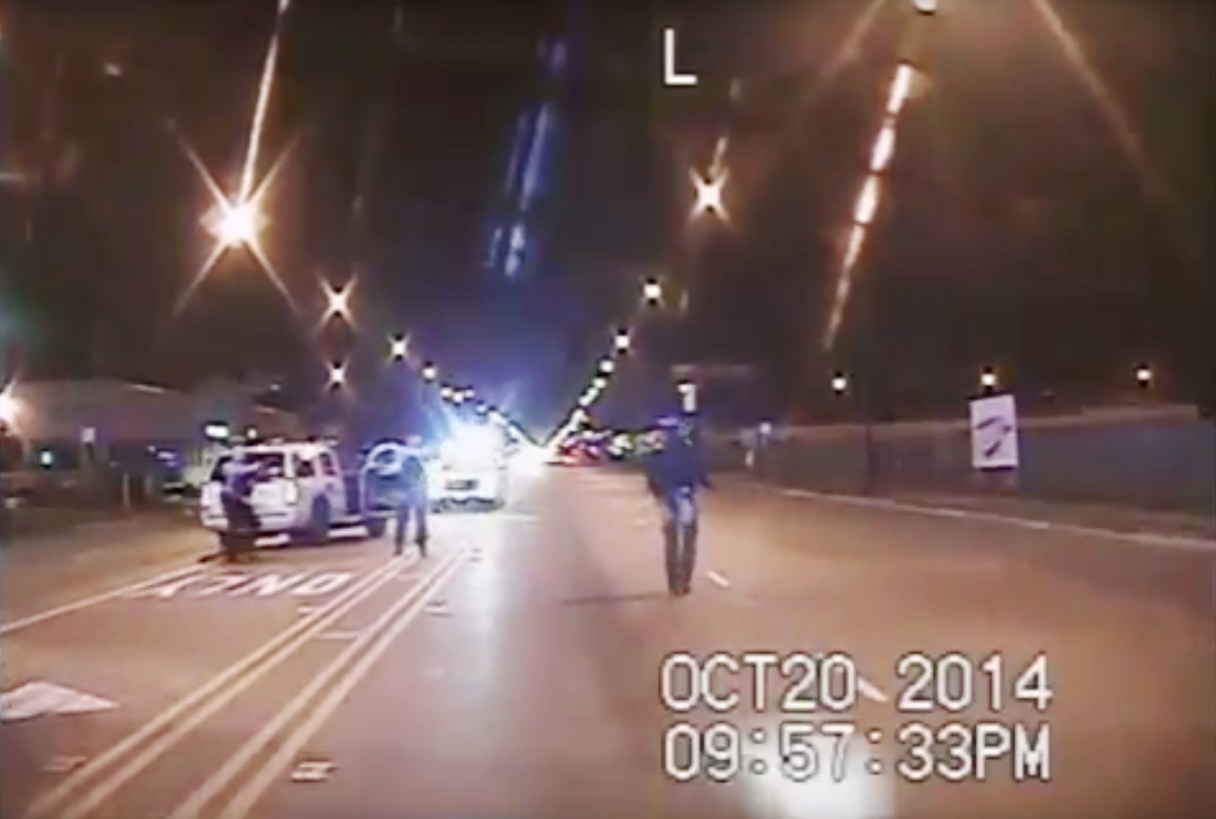
CHICAGO (AP) – There’s often little commonality when it comes to U.S. cities policies’ on how quickly to release videos of police officers shooting civilians under disputed circumstances, leaving many municipalities to create them on the fly or wait to act until political pressure or court rulings force the issue.
As a result, contested videos can emerge within days, months, years – or never. A long wait often only invites accusations that city leaders and police are seeking to hide some wrongdoing or endeavoring to cover something up.
“People will fill the void with something if they don’t see the videos – with speculation or rumors,” said Michele Earl-Hubbard, a Seattle-based attorney and advocate of government transparency. “If police want people to understand, your side of the story, you gotta get the images out.”
There are some indications that message is starting to sink in.
This week, Chicago Mayor Rahm Emanuel announced that he’s setting up a task force to examine, among other things, the city’s video-release policy amid public and political outcry. For more than a year, the city actively delayed releasing police dash-cam footage of white Officer Jason Van Dyke shooting black teenager Laquan McDonald 16 times in 2014 and continuing to fire as McDonald crumpled to the ground.