
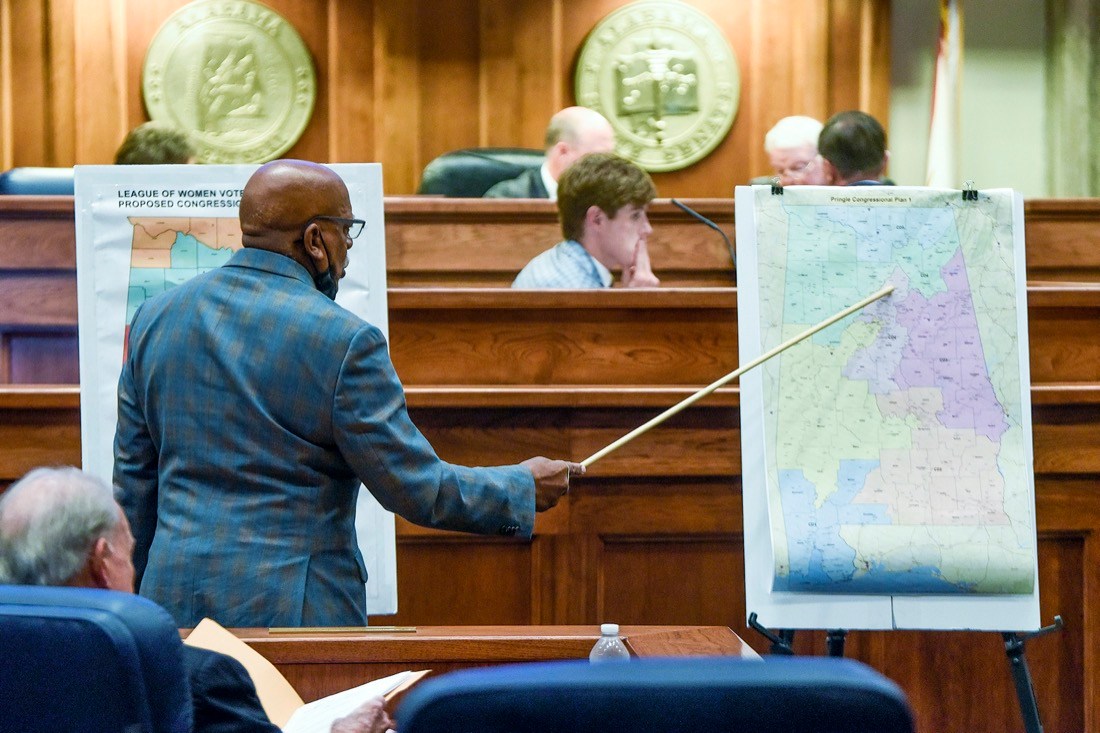
WASHINGTON (AP) – The Supreme Court put on hold a lower court ruling that Alabama must draw new congressional districts before the 2022 elections to increase Black voting power. The high court order boosts Republican chances to hold six of the state’s seven seats in the House of Representatives.
The court’s action, by a 5-4 vote announced Monday, means the upcoming elections will be conducted under a map drawn by Alabama’s Republican-controlled legislature that contains one majority-Black district, represented by a Black Democrat, in a state in which more than a quarter of the population is Black.
A three-judge lower court, including two judges appointed by former President Donald Trump, had ruled that the state had likely violated the federal Voting Rights Act by diluting the political power of Black voters by not creating a second district in which they made up a majority, or close to it.
Justices Brett Kavanaugh and Samuel Alito, part of the conservative majority, said the lower court’s order for a new map came too close to the 2022 election cycle.
Chief Justice John Roberts joined his three more liberal colleagues in dissent.