
Friday, October 30, 2026Oct 30

This story is free to read.

Ukraine war is backdrop in US push for hypersonic weapons

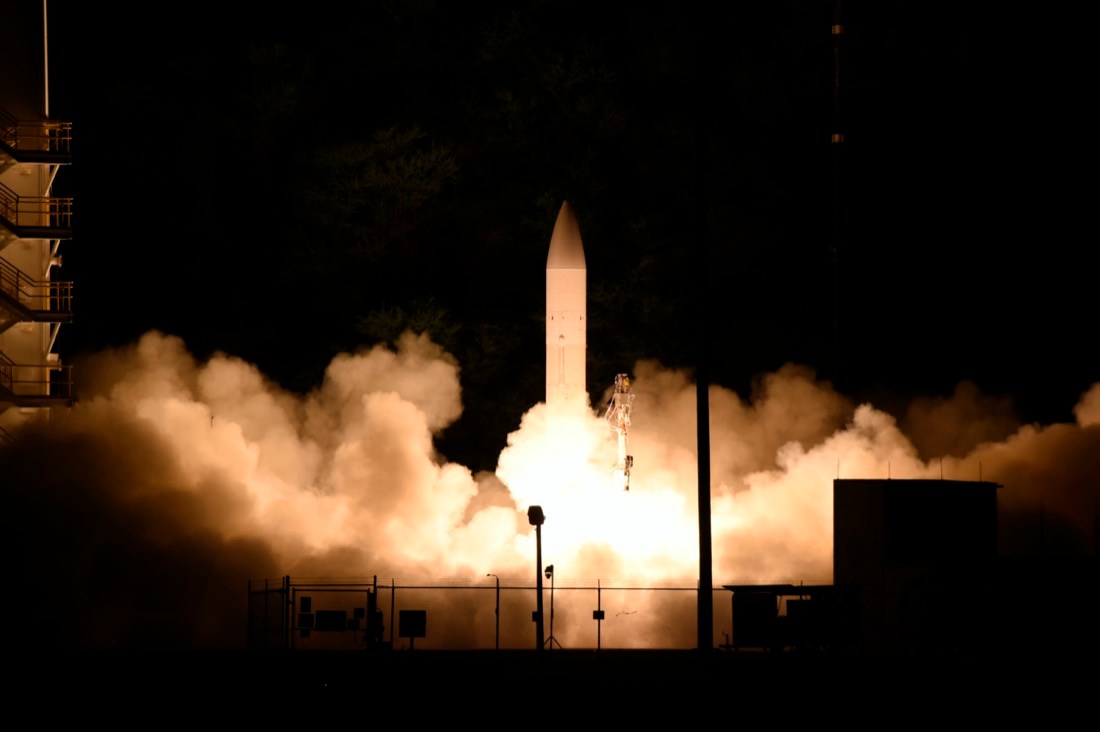
FILE - This handout photo provided by the U.S. Navy shows a common hypersonic glide body (C-HGB) launching from the Pacific Missile Range Facility, in Kauai, Hawaii, March 19, 2020, during a Department of Defense flight experiment. The department is working in collaboration with industry and academia to field hypersonic war-fighting capabilities. (Luke Lamborn/U.S. Navy via AP)
FILE - This handout photo provided by the U.S. Navy shows a common hypersonic glide body (C-HGB) launching from the Pacific Missile Range Facility, in Kauai, Hawaii, March 19, 2020, during a Department of Defense flight experiment. The department is working in collaboration with industry and academia to field hypersonic war-fighting capabilities. (Luke Lamborn/U.S. Navy via AP) FILE - This handout photo provided by the U.S. Navy shows a common hypersonic glide body (C-HGB) launching from the Pacific Missile Range Facility, in Kauai, Hawaii, March 19, 2020, during a Department of Defense flight experiment. The department is working in collaboration with industry and academia to field hypersonic war-fighting capabilities. (Luke Lamborn/U.S. Navy via AP)

PORTLAND, Maine (AP) – Lagging behind Russia in developing hypersonic weapons, the U.S. Navy is rushing to field its first, with installation on a warship starting as soon as late next year.

The United States is in a race with Russia and China to develop these weapons, which travel at speeds akin to ballistic missiles but are difficult to shoot down because of their maneuverability.

The Russian military says it already deployed hypersonic missiles, claiming on both Saturday and Sunday to have deployed them against targets in Ukraine marking the weapon’s first use in combat. The Pentagon couldn’t confirm a hypersonic weapon was used in the attacks.

The American military is accelerating development to catch up.

The U.S. weapon would launch like a ballistic missile and would release a hypersonic glide vehicle that would reach speeds seven to eight times faster than the speed of sound before hitting the target.