
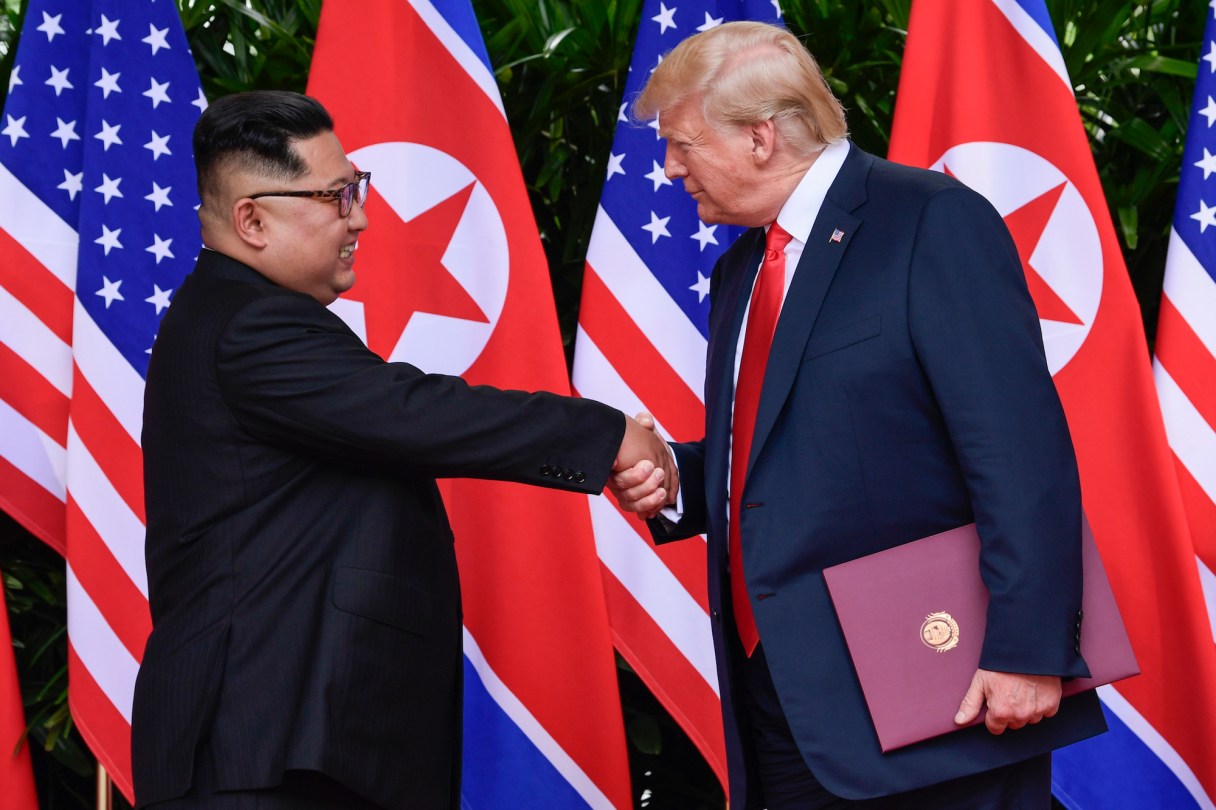
WASHINGTON – The showy first summit between President Trump and North Korean leader Kim Jong Un last June was draped in flags and bunting, but the decoration covered what turned out to be a mostly empty box that lacked a shared agreement on denuclearization.
Given this disappointing record, what’s realistically possible when the two leaders meet again in two weeks in Vietnam?
“Diplomacy is letting someone else have your way,” as the late Canadian Prime Minister Lester Pearson once observed. But that adage applies to Kim as much as Trump. The best outcome may simply be a roadmap that, by opening pathways and marking obstructions, makes both sides safer during a decade-long process toward the U.S. goal of “final, fully verified denuclearization.”
In the run-up to the Hanoi summit, some pragmatic ideas are being floated by experts in and out of the Trump administration. The premise of those discussions is that denuclearization won’t be a sudden stand-down but a phased process that, if it’s successful, will create its own momentum and ever-increasing security.
The baseline for U.S. officials is a recognition that, as Director of National Intelligence Dan Coats put it in congressional testimony last month: “North Korea is unlikely to give up all of its nuclear weapons and production capabilities, even as it seeks to negotiate partial denuclearization steps to obtain key U.S. and international concessions.”