
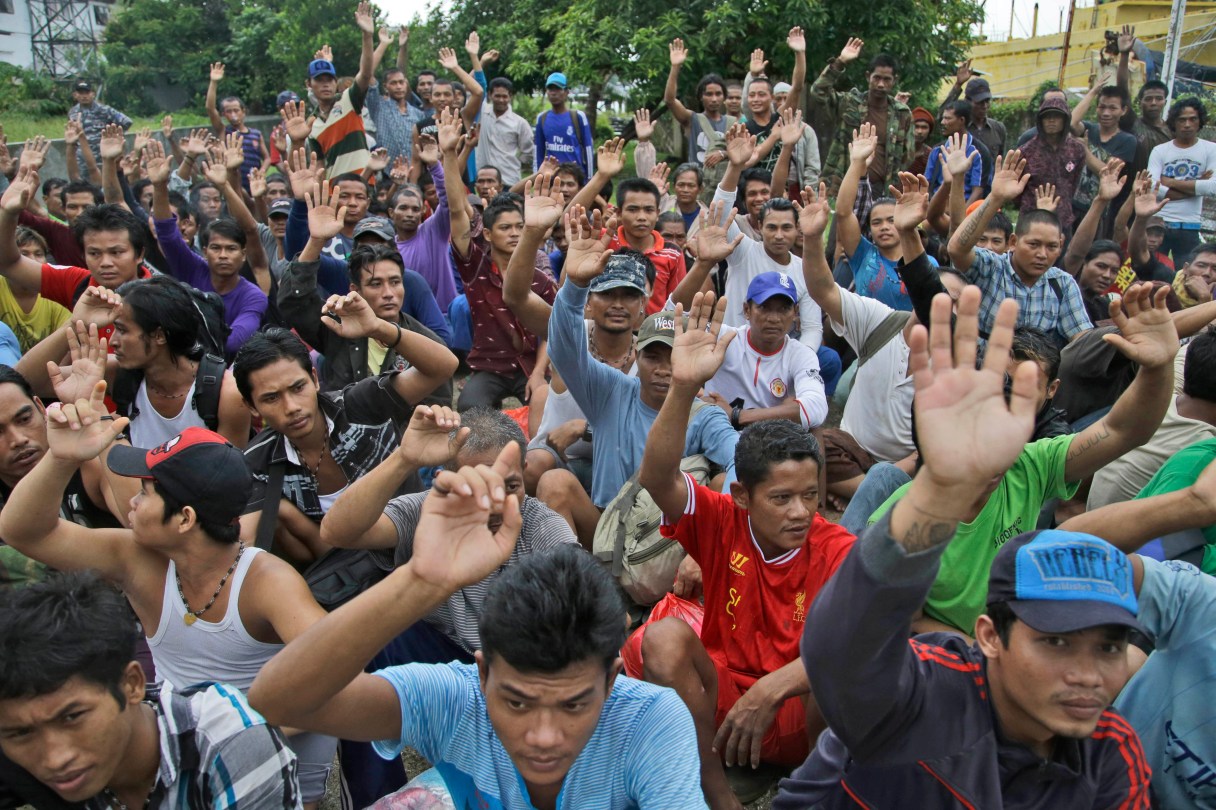
BENJINA, Indonesia (AP) – Hundreds of fishermen raced to be rescued Friday from the isolated Indonesian island where an Associated Press investigation found that many were enslaved to catch seafood that could end up in the United States and elsewhere.
Indonesian officials probing labor abuses told the migrant workers they were allowing them to leave for another island by boat out of concern for their safety. More than 300 fishermen emerged from nearby trawlers, villages and even the jungle to make the trip.
“I will go see my parents,” said Win Win Ko, 42, smiling to reveal a mouth full of missing teeth. “They haven’t heard from me, and I haven’t heard from them since I left.”
He left impoverished Myanmar four years ago on the promise of getting a good job in neighboring Thailand, but like many others stranded in the island village of Benjina, he was instead duped into getting on a fishing boat that took him thousands of miles from home with no return. He said his four teeth were kicked out by a Thai boat captain’s military boots because he was not moving fish fast enough from the deck to the hold below.
The current and former slaves began getting news about the rescue as a downpour started, and some ran through the rain. They sprinted back to their boats, jumping over the rails and throwing themselves through windows. They stuffed their meager belongings into plastic bags and rushed back to the dock, not wanting to be left behind.