
The 2021 college football season holds the promise of a return to normal after the COVID-19 pandemic led to cancellations, postponements and headache after headache last fall.
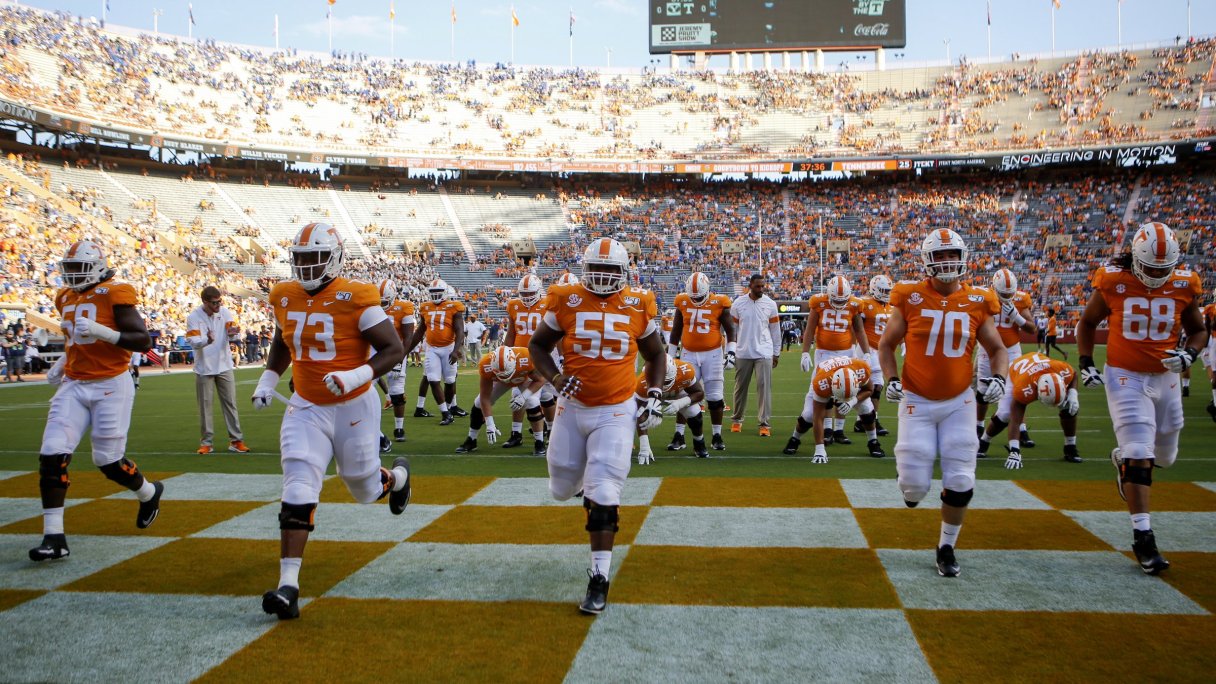
Across all levels and leagues, the games are on. Fans are getting ready to head back to venues allowing full capacity, including the University of Tennessee’s 102,455-seat Neyland Stadium, which will celebrate its 100th anniversary.
At the same time, college sports is entering a new era, a time with less restrictive transfer rules and players who are permitted for the first time to be paid endorsers.
And the pandemic is not over. While there are plenty of reasons to be optimistic that this season won’t be the struggle that 2020 was, there is still more than a little uncertainty about how this all plays out – off the field and on as No. 1 Alabama tries to win a second consecutive national title against a host of challengers.
“It’s an interesting time,” North Carolina coach Mack Brown said.
So was 2020 – in dubious fashion. At this time last year, not all 10 Football Bowl Subdivision conferences were on board with playing a fall schedule, and ultimately 118 FBS games were either canceled or postponed due to the coronavirus.
Vaccination rates among college football teams appear to be significantly ahead of the general adult population in the United States, though, and conferences have said teams will be forced to forfeit games this season if they can’t field a team because of COVID-19.
Health and safety protocols are still not uniform across all of major college football, but the common ground is this: Unlike last year, when everyone was being tested frequently for the virus, only unvaccinated players and team personnel will be subject to routine surveillance testing. Only unvaccinated individuals will be automatically quarantined if they come into contact with someone infected with the virus.
“That gives us a competitive advantage in my mind, as we should not miss any time as a football team due to COVID,” new Arizona coach Jedd Fisch said before the school proudly tweeted the team had reached 100% vaccination status.
Said Ole Miss coach Lane Kiffin, whose team also is 100% vaccinated: “I think it’s irresponsible to not to get the vaccine.”
Not every coach is taking this approach. Washington State’s Nick Rolovich initially said he did not plan to be vaccinated on a campus where it is mandatory for all students and employees before saying he would comply with a governor’s mandate.
Where the pandemic could have a deeper impact is with fans. The numbers have been rising lately for COVID-19 cases, hospitalizations and deaths. But schools have been touting a return to full capacity at their stadiums and tailgating on their campuses after a season of mostly empty venues.
“I’m really excited, man, just to get back in the Swamp finally with 90,000 screaming out there,” Florida defensive end Zach Carter said.
It seems unlikely those plans will change unless local governments step in, which happened last week in Hawaii, where the Rainbow Warriors’ Sept. 5 opener against Portland State will be played without fans. Oregon and Oregon State became the first Power Five schools to announce fans will need to show proof of either vaccination or a negative coronavirus test to attend their games.
Those hurdles are nothing new to the athletes on the field.
“I think disruptions that players had to deal with, and may still have to deal with in the future relative to our circumstance right now, (are) probably something that helps them be a little more resilient,” Alabama coach Nick Saban said.
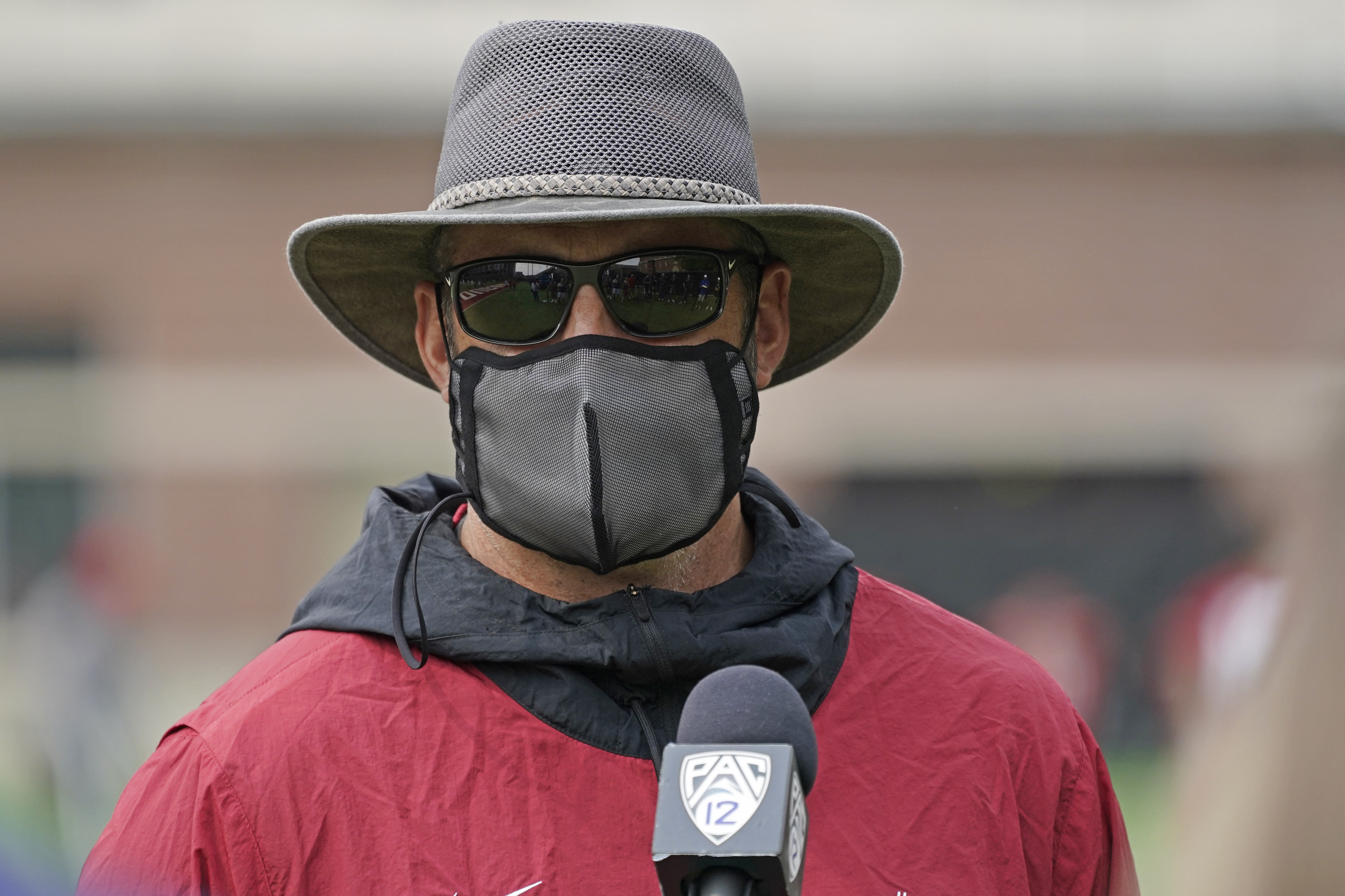 AP photo by Ted S. Warren / Washington State football coach Nick Rolovich recently said he intends to follow a state mandate requiring everyone working on college campuses to be vaccinated against COVID-19.
The pandemic also altered recruiting – a lengthy dead period didn’t end until June – and will have lingering effects on rosters. The NCAA froze eligibility for every football player who played through the uncertainty of the pandemic last season, essentially handing them another year to play if they wished.
The result is hundreds of players who would have otherwise had no choice but to move on after 2020 will be back playing in 2021, and they won’t count against the scholarship limit of 85. Other players are back after opting out of 2020.
Longtime Utah coach Kyle Whittingham described his roster, brimming with extra experienced players, as “the most unique since I’ve been a football coach.”
Then there are the transfers. For decades, football players would have to sit out their first season after switching schools within the same level. After an NCAA rule change in the spring, they can transfer one time and be immediately eligible to play, and this offseason was busy with more player movement than ever.
“Transfer portal’s changed everything. Super seniors coming back has changed everything,” North Carolina’s Brown said.
On July 1, the NCAA also lifted its ban on college athletes earning money from their names, images and likenesses, and football players started cashing in immediately.
Quarterbacks are endorsing fast food and offensive linemen are promoting barbecue joints. At Michigan, North Carolina, Ohio State and Texas, players will be making money from jersey sales. Every Miami football player was offered a deal to make $500 a month to promote a local gym, and a Utah-based company will pay every walk-on player at BYU the equivalent of tuition to promote its protein bars and snacks. Bryce Young, next up to be Alabama’s starting quarterback, has NIL deals lined up that could be worth $1 million, Saban said.
There are concerns about how all this money will affect team culture, competitive balance and corruption, but college sports is mostly trying to embrace the change.
And there is plenty of it right now.
A plan to expand the College Football Playoff from four to 12 teams is in the pipeline. There still appears to be support, but the Southeastern Conference’s planned addition of Oklahoma and Texas in 2025 seems to have leaders in other conferences stepping back to take in the full picture.
“There’s lots about the current playoff expansion proposal that is good,” Pac-12 commissioner George Kliavkoff said. “The real question is the details of that. The details unfortunately were worked out with a subset of the folks who have to sign off on it. The result is not every detail was covered and not every concern was addressed.”
Meanwhile, the NCAA is in the process of scaling back, starting with a rewrite of its constitution this fall. The result could be a national structure for college football that is shaped more than ever before by conferences.