
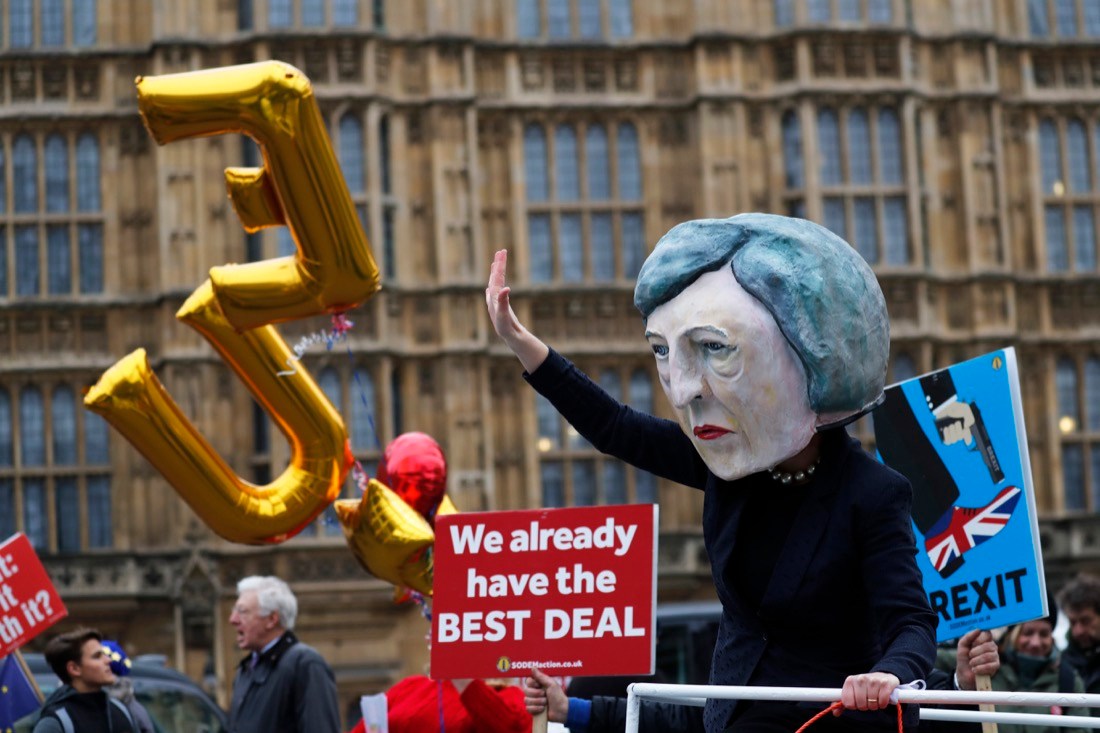
LONDON (AP) – British lawmakers on Tuesday overwhelmingly rejected Prime Minister Theresa May’s divorce deal with the European Union, plunging the Brexit process into chaos and leading to a no-confidence vote in her government.
Moments after the vote, May said it was only right to test whether the government still had lawmakers’ support to carry on. Lawmakers will vote Wednesday in a no-confidence motion from opposition leader Jeremy Corbyn that could trigger a national election.
The House of Commons’ 432-202 vote against May’s plan was widely expected, but it was still devastating for her fragile leadership. It came after more than two years of political upheaval – and was the biggest defeat for a government in the House of Commons in more than a century.
The vote means further turmoil for British politics only 10 weeks before the country is due to leave the EU on March 29. It is not clear if it will push the government toward an abrupt “no-deal” break with the EU, nudge it toward a softer departure, trigger a new election or pave the way for a second referendum that could reverse Britain’s decision to leave.
May, who leads a fragile Conservative minority government, has made delivering Brexit her main task since taking office in 2016 after the country’s decision to leave the EU.