
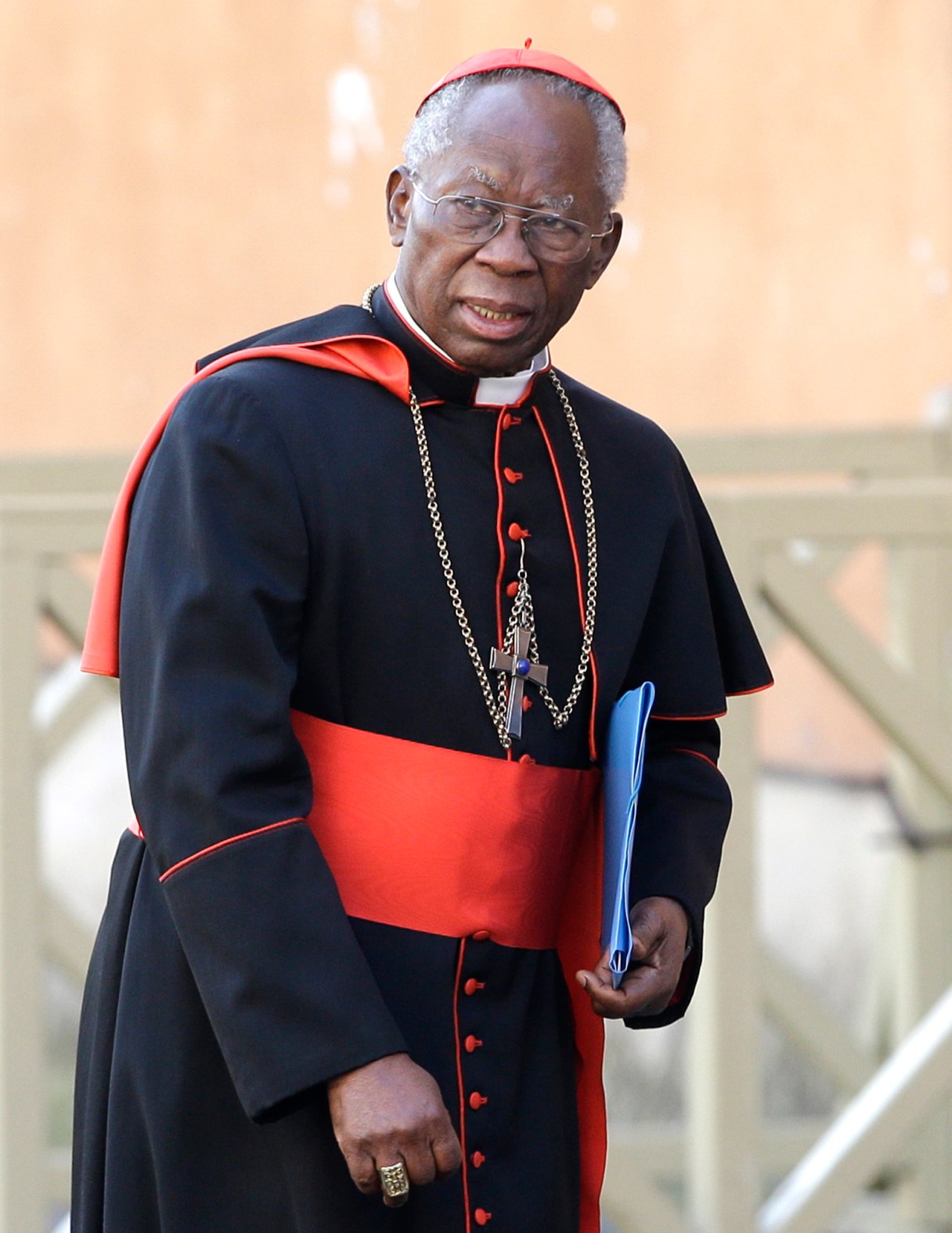
VATICAN CITY (AP) – From his spacious apartment overlooking St. Peter’s Square, Cardinal Francis Arinze has something of a privileged view of the theater unfolding behind closed doors in the Vatican, as bishops from around the world wrap up a three-week meeting on how to better minister to today’s Catholic families.
Once touted as the leading candidate for an African pope, the retired 82-year-old Arinze remains something of the eminence grise of the African prelates who have made their mark at this synod by holding fast to Catholic doctrine, and rejecting attempts by more liberal prelates to introduce wiggle room in Catholic ministry to gays and divorcees.
Just how successful the Africans have been will become clear on Saturday when the 270 bishops from around the world vote on a final document to be given to Pope Francis. The document is expected to cover everything from better marriage preparation, to sex education for children to whether divorced and civilly remarried Catholics can receive Communion.
In Africa, though, such issues that can make headlines in Europe and the U.S. matter little to families struggling to square Catholic marriage with the practice of polygamy, and to survive amid crushing poverty, war and violent, religious extremism.
“Most people in continental Europe or even North America, when they hear of a synod they think immediately of divorce-remarriage and will they receive Holy Communion. And they even mention homosexual unions,” Arinze said in an interview. “Africans say ‘Lord help us! Is that what you understand by family? This synod is on the fa-mi-ly.'”