
Friday, November 13, 2026Nov 13

Ivory for sale in Angola; big tuskers die in Kenya

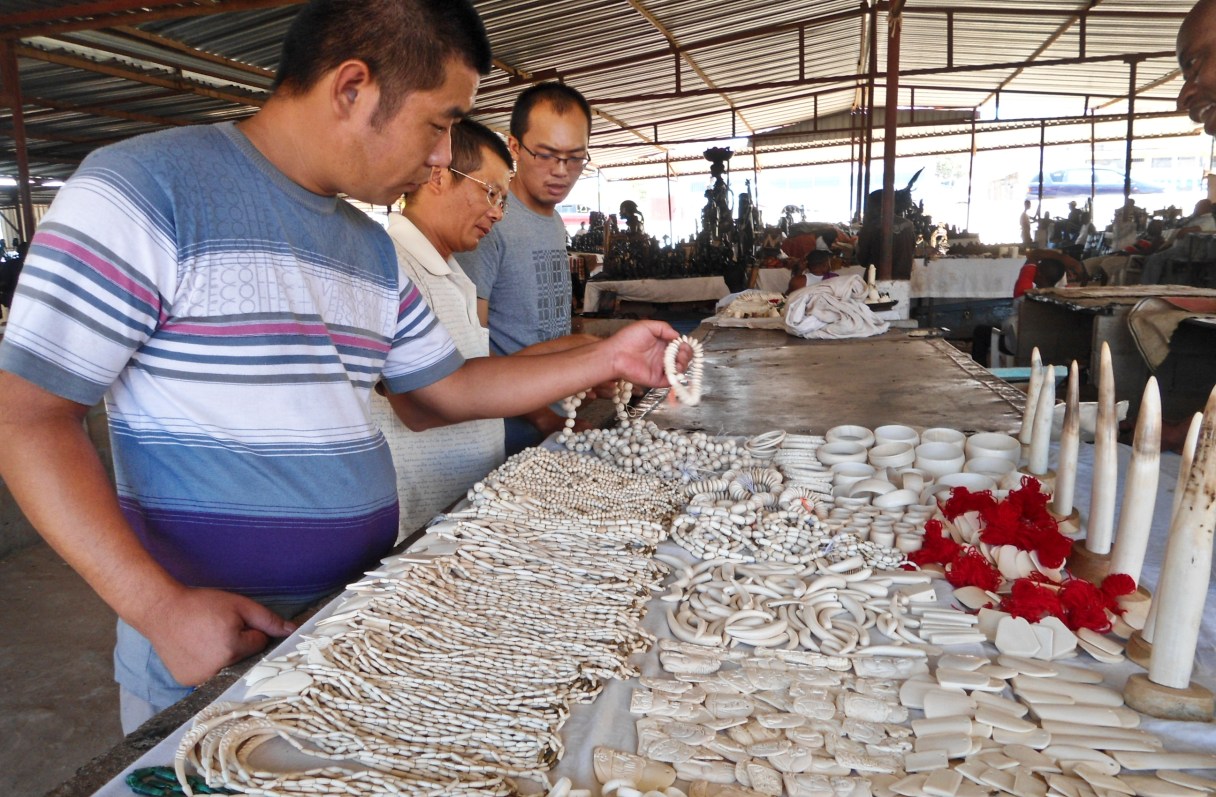
In this photo taken Sunday, March 2, 2014 and provided by Lucy Vigne, Chinese visitors look at souvenirs made of ivory for sale at the Benfica market on the outskirts of Luanda, Angola. The market on the outskirts of Angola’s capital sells more than 10,000 pieces of ivory, making it the largest market in southern Africa to openly sell illegal elephant tusks, according to two researchers who traveled to Luanda and surveyed the items of ivory for sale, seeking to raise awareness of the dangers the ivory trade poses to the existence of Africa’s elephants. (AP Photo/Lucy Vigne)
In this photo taken Sunday, March 2, 2014 and provided by Lucy Vigne, Chinese visitors look at souvenirs made of ivory for sale at the Benfica market on the outskirts of Luanda, Angola. The market on the outskirts of Angola’s capital sells more than 10,000 pieces of ivory, making it the largest market in southern Africa to openly sell illegal elephant tusks, according to two researchers who traveled to Luanda and surveyed the items of ivory for sale, seeking to raise awareness of the dangers the ivory trade poses to the existence of Africa’s elephants. (AP Photo/Lucy Vigne) In this photo taken Sunday, March 2, 2014 and provided by Lucy Vigne, Chinese visitors look at souvenirs made of ivory for sale at the Benfica market on the outskirts of Luanda, Angola. The market on the outskirts of Angola’s capital sells more than 10,000 pieces of ivory, making it the largest market in southern Africa to openly sell illegal elephant tusks, according to two researchers who traveled to Luanda and surveyed the items of ivory for sale, seeking to raise awareness of the dangers the ivory trade poses to the existence of Africa’s elephants. (AP Photo/Lucy Vigne)

NAIROBI, Kenya (AP) – The craft market just north of Angola’s capital sells paintings, hand-carved wooden animals and newly woven baskets. It is also sells more than 10,000 pieces of ivory, making it the largest market in southern Africa to openly sell elephant tusks, an illegal trade.

Across the African continent, in Kenya, two of the country’s biggest tuskers, as the continent’s largest bull elephants are called, were slaughtered by poachers. The phenomena are interconnected.

The international ivory trade is threatening to wipe out Africa’s elephants. Tens of thousands of elephants are being killed for their ivory tusks each year continentwide. And while experts say there has been a decline in elephant poaching, they say more needs to be done, as the deaths of the beloved pachyderms in Kenya show.

At the Benfica Market near Luanda, Angola, two animal researchers recently counted 10,026 pieces of ivory for sale – necklaces, bracelets, carved figurines and whole tusks. And that huge count didn’t include backup inventory the sellers kept nearby.

“I was flabbergasted because it was so big,” said Esmond Martin, one of two researches publishing a paper in an upcoming issue of TRAFFIC Bulletin, a wildlife trade journal. “It’s completely illegal.”