
Monday, November 16, 2026Nov 16

Relief package of billions can’t buy hospitals out of shortages

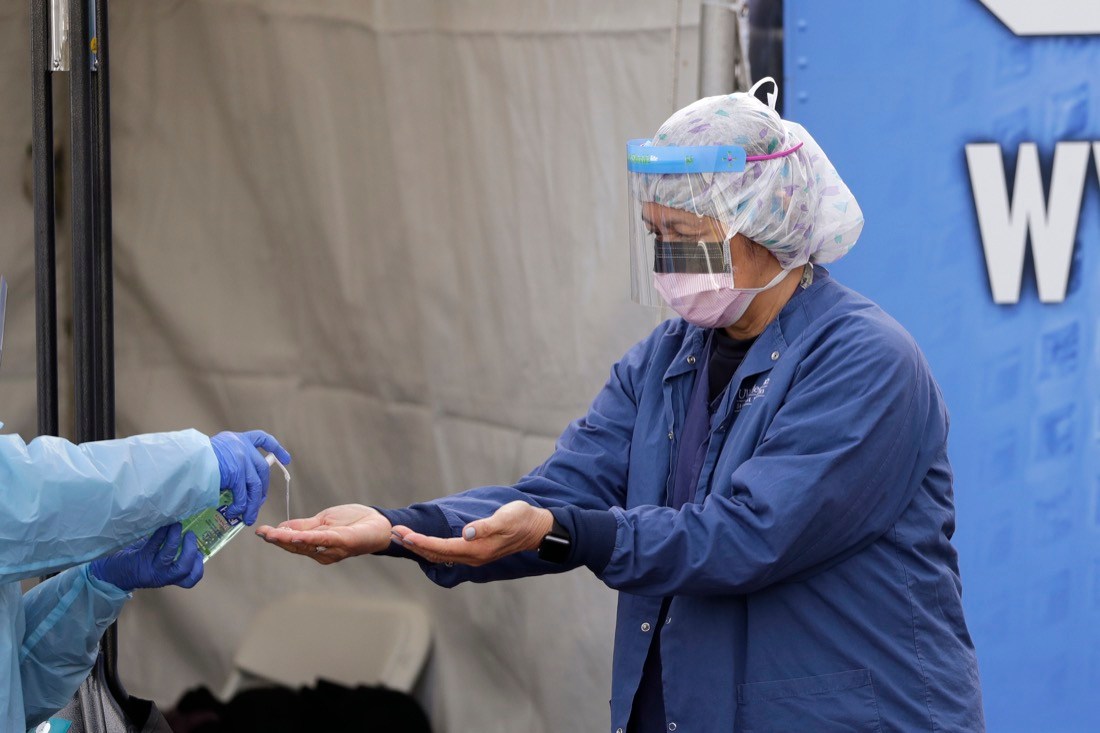
In this March 17, 2020, photo, Theresa Malijan, a registered nurse, has hand sanitizer applied on her hands after removing her gloves after she took a nasopharyngeal swab from a patient at a drive-thru COVID-19 testing station for University of Washington Medicine patients in Seattle. The Associated Press has found that the critical shortage of testing swabs, protective masks, surgical gowns and hand sanitizer can be tied to a sudden drop in imports of medical supplies. (AP Photo/Elaine Thompson)

The billions of tax dollars headed for hospitals and states as part of the $2.2 trillion coronavirus response bill won’t fix the problem facing doctors and nurses: a critical shortage of protective gowns, gloves and masks.

The problem isn’t a lack of money, experts say. It’s that there’s not enough of those supplies available to buy. What’s more, the crisis has revealed a fragmented procurement system now descending into chaos just as demand soars, The Associated Press has found.

Hospitals, state governments and the Federal Emergency Management Agency are left bidding against each other and driving up prices.

For more than a week, governors have pushed back against administration assurances that supplies are available now, bitterly complaining to President Donald Trump that there’s no coordination.

“It’s pretty much every state for itself,” said Virginia’s secretary of finance, Aubrey Layne, who is deeply involved with his state’s effort to buy medical supplies.