
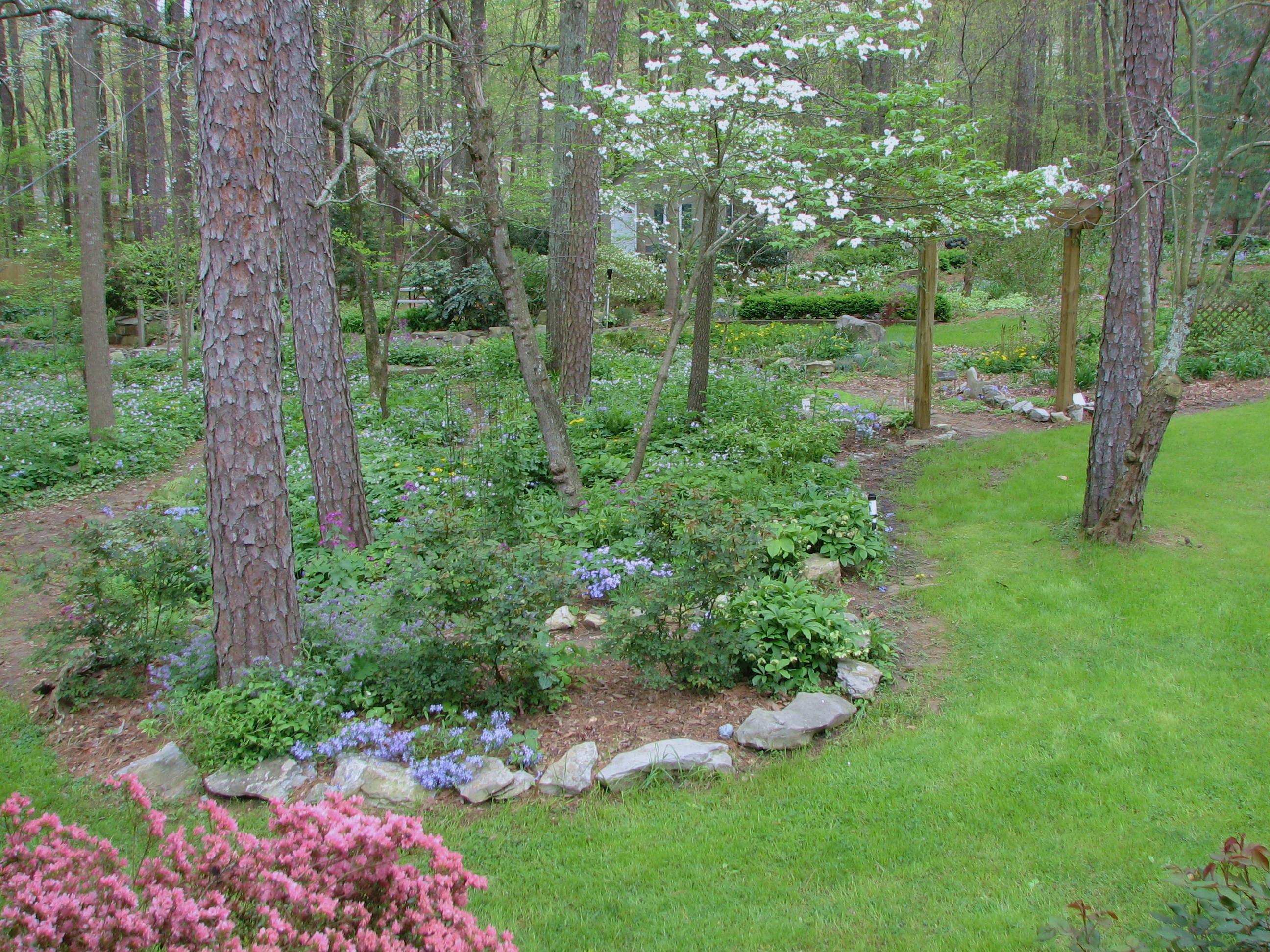
 Native plants are seen in an area garden.
 Bluebells
 Celandine poppy
Benefits of going native* Low maintenance: Native plants generally require less care because they are adapted to their region. That translates to less watering, fertilizing or use of chemicals than with non-native plants.* Healthier plants: Because native plants are acclimated to their region, they are less susceptible to most pests and diseases.* Working for a living: They provide food for wildlife species – nectar and/or pollen for bees and other insects and fruits/seeds for birds and small mammals. In contrast, many cultivators produce sterile flowers that lack nectar/pollen or that do not produce fruits and seeds.* Attractive to butterflies: Native plants are a great way to attract butterflies, hummingbirds and other birds to your home landscape because certain native plants have nectar-rich flowers. Many types of birds are attracted to seeds and fruits produced by native plants.* Foster a sense of place: By planting natives in your home landscape, you can highlight the vegetation of your region in an interesting and educational way.Source: Tim SpiraIF YOU GOWhat: Native Plant and Natural Landscaping Symposium.When: 8 a.m.-3:30 p.m. Saturday, March 9.Where: Chattanooga State Community College, Humanities Building auditorium, 4501 Amnicola Highway.Registration: $40 Wild Ones members in advance, $50 nonmembers in advance; $60 for everyone day of event. Walk-ups will be accepted as space allows.To Register: www.chattanooganatives.blogspot.comSYMPOSIUM SCHEDULE8 a.m. – Registration9 a.m. – Welcome9:10 a.m. – “Wildflowers and Plant Communities of the Southern Appalachians” by Tim Spira. Which native plants belong together in a harmonious community? Spira explains the multilayered plant life of this area and how knowing ways these plant communities support each other can reduce the need for constant intervention.10 a.m. – “Building a Native Plant Garden: Native Trees, Shrubs and Woody Vines in the Urban Environment” by Leon Bates. A well-designed landscape starts with a good infrastructure of native trees, shrubs and vines.10:50 a.m. – Break11:10 a.m. – “Adding More Beauty: Great Native Perennials for Your Garden” by Andy Sessions. Learn about native perennials that offer beauty, low maintenance, profuse blooming and insect and disease resistance.Noon. – Lunch (provided)12:50 p.m. – “Gardening for Nature: Promoting Biodiversity at Home,” by Lisa Wagner. Increasing biodiversity supports a wider range of wildlife. Learn what native plants encourage birds, butterflies and other creatures to visit your yard.1:40 p.m. – Break1:55 p.m. – “Managing Invasive Exotic Plants in a Natural Landscape” by Cherie Cordell. Despite best efforts, exotic pest plants like privets and exotic honeysuckles can be a constant challenge to control.2:45 p.m. – Q&A Panel: Dealing with Gardening Challenges of the Tennessee ValleySource: Tennessee Valley chapter, Wild Ones
“Natural landscaping” doesn’t mean yards overgrown in weeds.
It’s a form of gardening that’s growing in popularity as more homeowners discover the benefits of healthier plants for lower maintenance.
To teach novice and experienced gardeners more about the technique, the Tennessee Valley chapter of Wild Ones, a national nonprofit group that promotes native landscaping, will host the “Natural Landscaping: Getting More with Less” symposium on Saturday, March 9.
“A native plant is a species that occurs naturally in a particular geographic region or habitat without human intervention. Most native plants have been in an area for centuries or longer,” explains Tim Spira, a Clemson University professor who will be the featured speaker at the symposium