
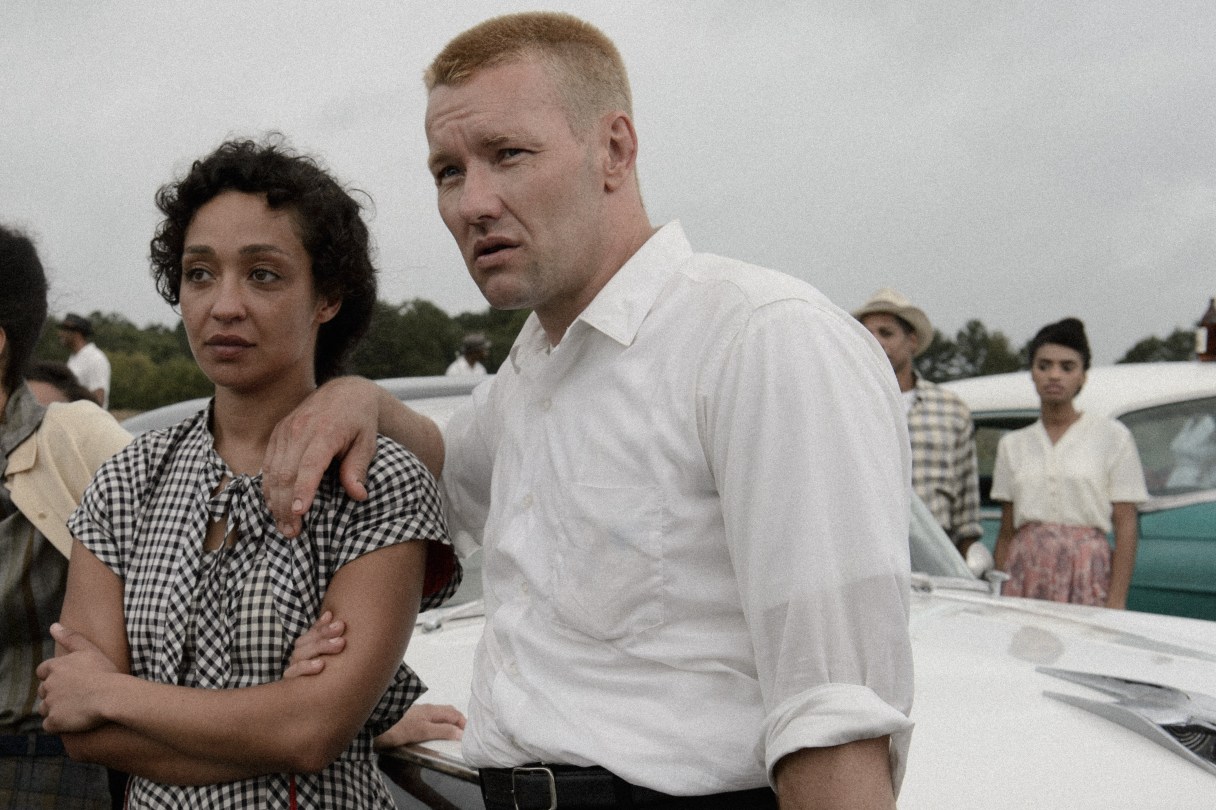
RICHMOND, Va. (AP) – Vintage cars lined the Virginia drag racing track where men and women wearing high-waisted pants and long skirts waited eagerly for popcorn at the concession stand and children darted in and out of the crowd. But as soon as the movie director yelled “cut,” the actors relaxed, chatted and pulled on coats to stay warm in between shots on a cold, rainy afternoon.
It was the final day of filming for “Loving,” which transformed the Richmond Dragway and other locations across Virginia into scenes from the 1950s and ’60s to tell the story of Richard and Mildred Loving – a couple with a bond so strong that it dismantled laws against interracial marriage, thrusting them into one of the most pivotal moments in American history.
Richard Loving, a white man, and Mildred Loving, a black woman, were thrown into a Virginia jail in 1958 for “unlawful cohabitation” a few weeks after getting married in Washington, D.C. They avoided a one-year jail sentence only by leaving the state. Although they never aspired to become political lightning rods, they wanted to come home. So they fought all the way to the U.S. Supreme Court, which struck down the Virginia law and those then in effect in roughly one-third of the states in 1967.
Filmmakers hope the Lovings’ story will send a strong message about marriage at a time when debates over who should be allowed to wed still linger. The film comes on the heels of the Supreme Court victory for same same-sex marriage advocates, who repeatedly invoked the story of the Lovings during their fight for legalization.
The Lovings “were kind of these perfect candidates to talk about an issue about marriage equality and marriage rights without ever really bringing it up,” said writer and director Jeff Nichols, best known for his film “Mud.”