
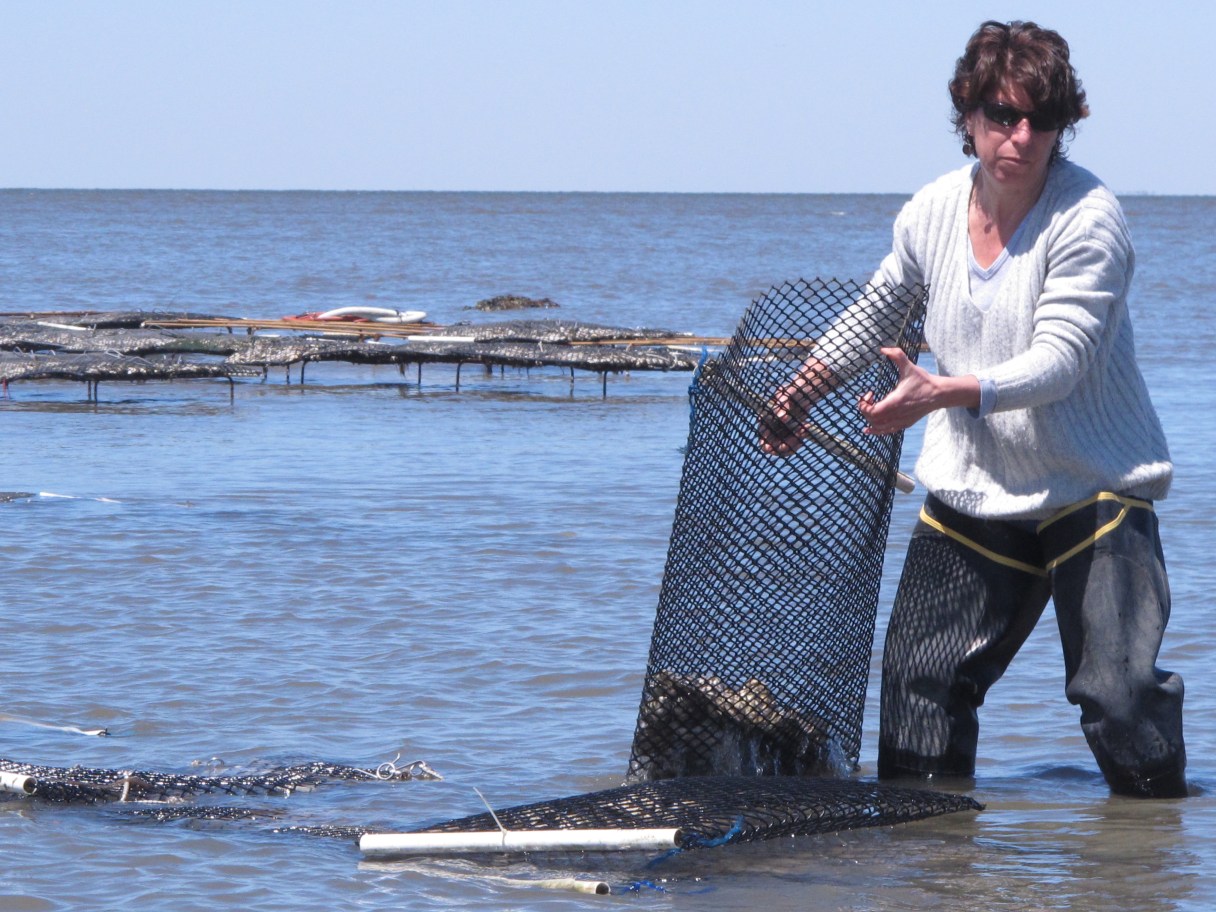
MIDDLE TOWNSHIP, N.J. (AP) – Oyster farming is the kind of business an environmentalist should love: it doesn’t use harmful chemicals or deplete natural resources, and the locally grown shellfish actually help clean the water.
It’s a green, sustainable industry that brings nearly $1 million a year to growers in the New Jersey Delaware Bay area and puts shellfish on restaurant plates around the northeast.
But when that industry sits on the lone feeding ground in the western hemisphere for the largest population of a threatened species of shorebird, things get complicated.
New Jersey’s oyster aquaculture industry is centered on the same Delaware Bay beaches that provide irreplaceable feeding grounds for the red knot on its annual 10,000-mile journey from South America to the Arctic. And that has environmentalists worried, particularly given the extensive efforts to restore Delaware Bay beaches damaged by Superstorm Sandy in 2012 that have succeeded in stabilizing the red knot population, albeit at lower levels.
A decision this month by the U.S. Fish and Wildlife Service allows oyster growers to expand their operations on the beaches, including some spots that host the largest concentrations of red knots. While the goal is to concentrate farming in the southern range of the beaches, which tend to be wider and have more space to share, additional growers can be approved to enter the northern zone, as well, where more of the birds congregate.