
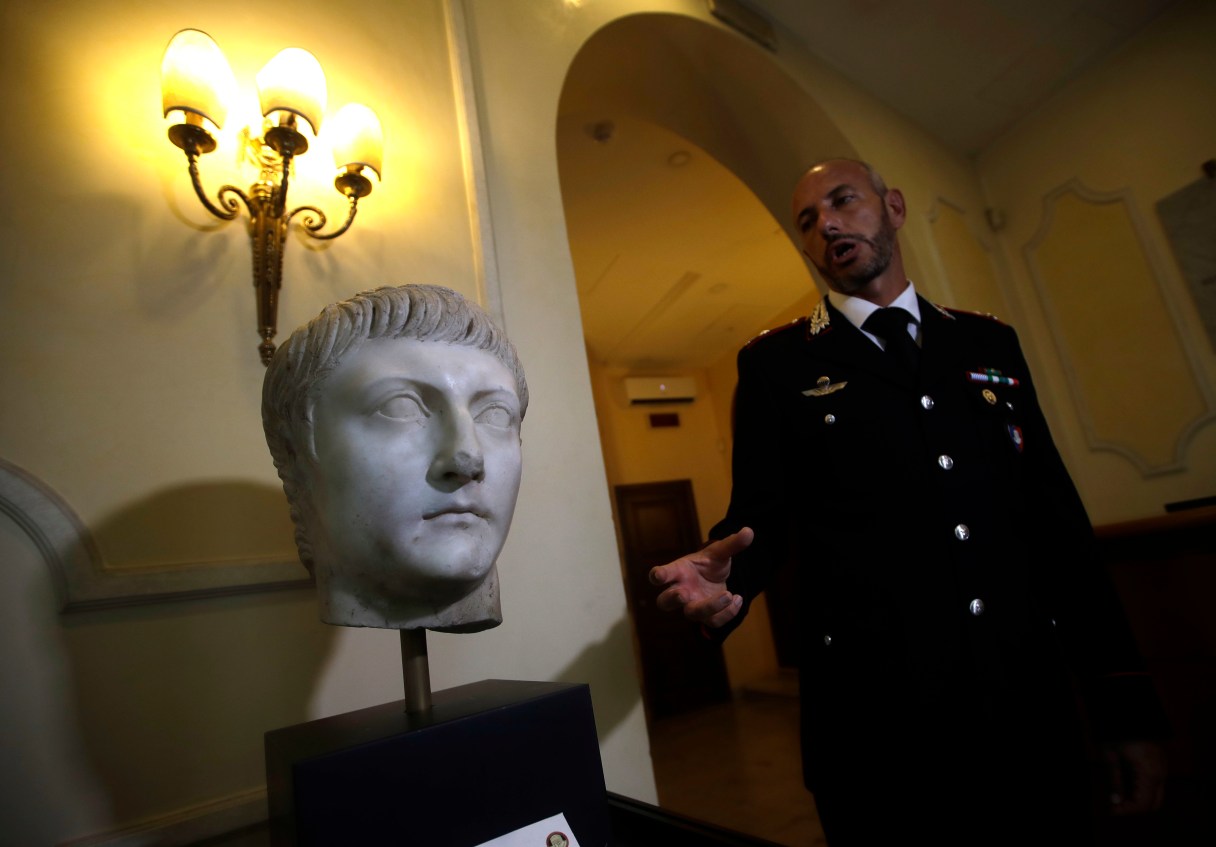
ROME (AP) – Italy is putting on display a 1st century marble head that an American museum returned after learning it was stolen during World War II from a southern Italian museum.
The Cleveland Museum of Art in Ohio acquired the sculpture depicting Roman Emperor Tiberius’ son Drusus in 2012.
Major Massimo Maresca of Italy’s national paramilitary police art squad said Friday the original working assumption had been that the piece had been stolen by Nazi troops and taken to Germany, the fate of many artifacts and artworks from countries occupied by Nazi Germany.
But “we were looking in the wrong place,” said Maresca, of the Carabinieri art squad, which has an excellent record of tracking down ancient artifacts illegally exported from Italy.
Instead, Maresca said, research determined that the piece, portraying Drusus, a general, with an aristocratic air, had been looted by Algerian soldiers from the museum in the southern town of Sessa Aurunca, near Caserta, in 1943, a chaotic time as Allied troops pressed their movement up the peninsula in the campaign against Nazi troops.