
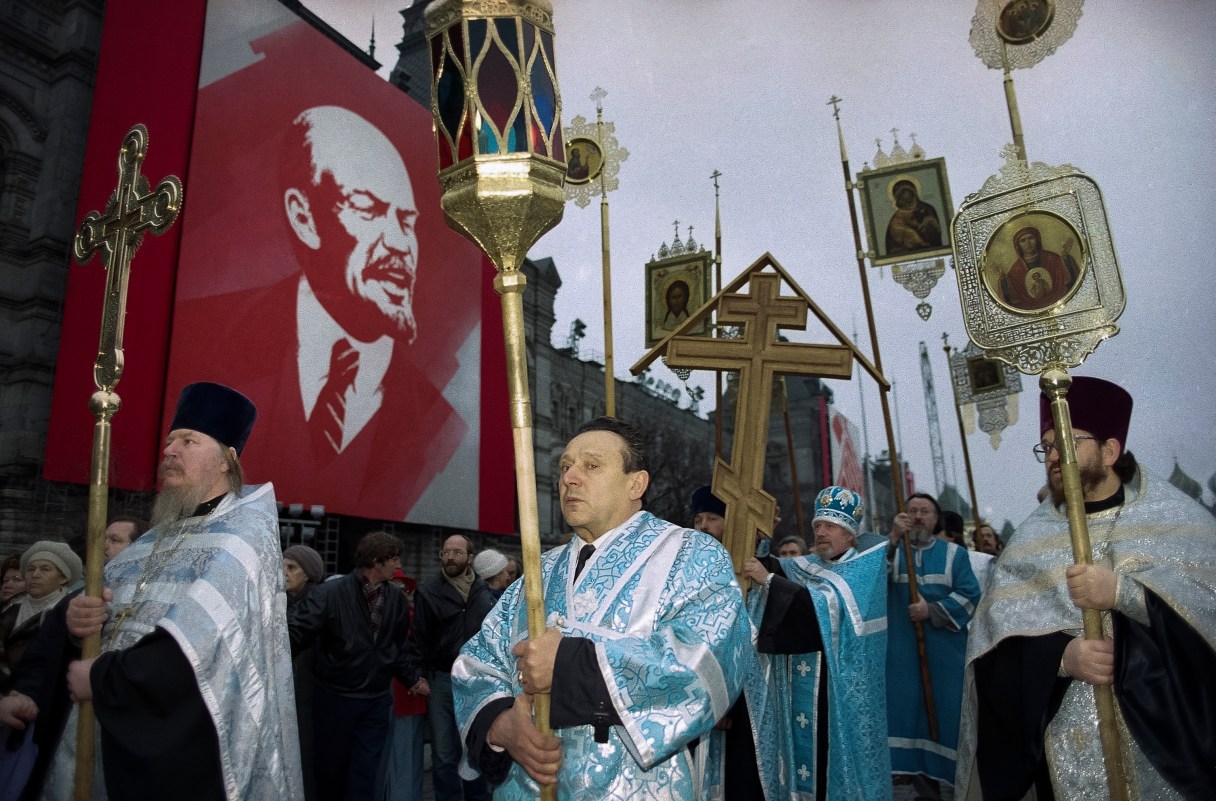
MOSCOW (AP) – When I started working as an AP photographer in Moscow, the Soviet Union was nearing its demise.
In August 1991, I took pictures of Russian President Boris Yeltsin rallying opposition to a hard-line coup that briefly ousted Soviet President Mikhail Gorbachev. When the coup collapsed, I witnessed triumphant crowds pulling down a towering monument of Soviet secret police founder Felix Dzerzhinsky next to the main KGB headquarters in central Moscow.
The coup fueled separatist sentiments in the republics and weakened the Kremlin’s power, precipitating the Soviet breakup. Gorbachev stepped down on Dec. 25, 1991, and the Soviet Union ceased to exist.
The ensuing economic meltdown led to widespread poverty. Amid raging political infighting in 1993, Russian President Boris Yeltsin used army tanks to pummel the parliament building where rebellious lawmakers holed up.
The following year, he sent troops to crush a separatist rebellion in Chechnya, launching years of bloody conflict.