
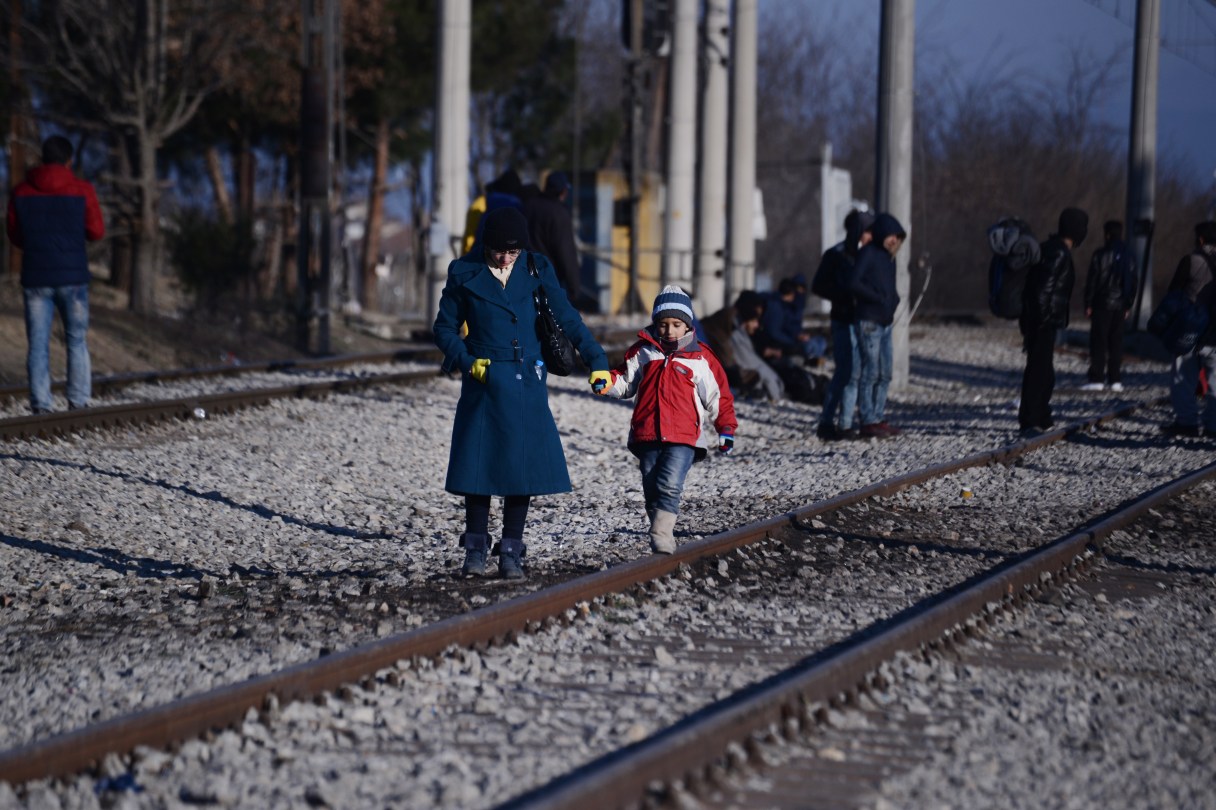
AMSTERDAM (AP) – European Union foreign ministers anxious to stem the flow of migrants coming through the Balkans on Saturday sought with their counterparts from the region better ways to protect borders.
With Greece unable to control the thousands of migrants making the crossing from Turkey, some EU nations are now looking to help non-member Macedonia stop them at its southern border before they get to the European Schengen zone of border-free travel.
Hungarian Foreign Affairs Minister Peter Szijjarto said, “If Greece is not ready or able to protect the Schengen zone and doesn’t accept any assistance from the EU then we need another defense line which is obviously Macedonia and Bulgaria.”
An estimated 850,000 migrants arrived in Greece in 2015, overwhelming the coast guard and reception facilities. Aid groups say cash-strapped Greece has shelter for only about 10,000 people, just over 1 percent of those who have entered. Most travel on via land across the Balkans and into the EU’s heartland of Germany and beyond.
Szijjarto said that the EU nations are “defenseless from the south. There are thousands of irregular migrants entering the territory of the EU on a daily basis.”
Because of this, several member states have re-imposed border crossings to manage the flow into their nations better, but EU officials are doing their utmost to keep the Schengen zone as open as possible and want member states to center on reinforcing the external borders only.
Austrian Foreign Minister Sebastian Kurz said at the two-day meeting which ends Saturday that if the flow of migrants is not stopped at external borders like in Greece “we will find other ways.” Austria has suggested sending its military to help Balkan countries such as Macedonia or Serbia secure their borders so that effectively, the migrant flow through the Balkans would be slowed and people kept in Greece.
And the EU is also looking at Turkey to make a better effort to make sure refugees from the Syrian war do not make the dangerous crossing. EU nations have committed 3 billion euros ($3.3 billion) for dealing with refugees in Turkey as part of a package of incentives aimed at persuading it to do more to stop thousands of migrants leaving for Greece.