
Thursday, November 12, 2026Nov 12

News Guide: A Japanese volcano turns deadly

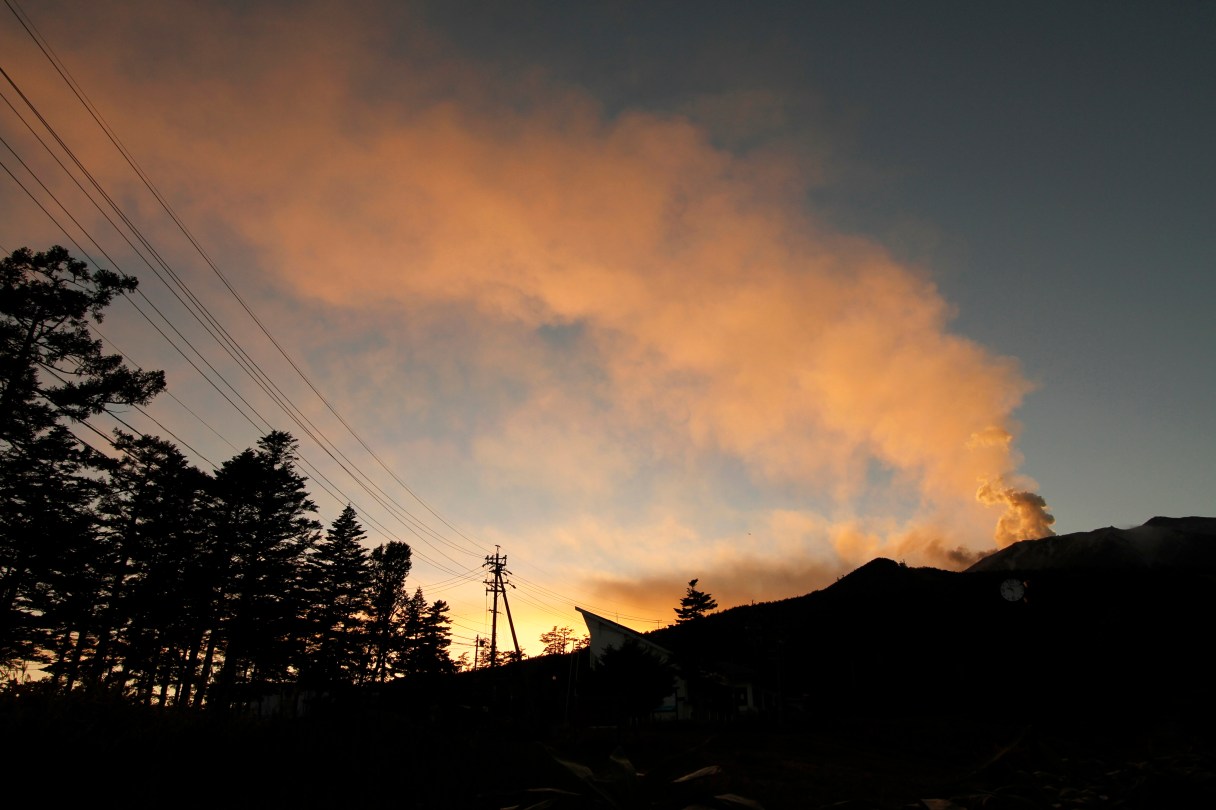
Smoke billows from Mount Ontake observed from Otaki Village, Nagano prefecture, central Japan, Sunday, Sept. 28, 2014. Rescue workers found 30 or more people unconscious and believed to be dead near the peak of the erupting volcano, local government and police said. Nagano prefecture posted on its website that about 30 people had heart and lung failure, the customary way for Japanese authorities to describe a body until police doctors can examine it. (AP Photo/Koji Ueda)
Smoke billows from Mount Ontake observed from Otaki Village, Nagano prefecture, central Japan, Sunday, Sept. 28, 2014. Rescue workers found 30 or more people unconscious and believed to be dead near the peak of the erupting volcano, local government and police said. Nagano prefecture posted on its website that about 30 people had heart and lung failure, the customary way for Japanese authorities to describe a body until police doctors can examine it. (AP Photo/Koji Ueda) Smoke billows from Mount Ontake observed from Otaki Village, Nagano prefecture, central Japan, Sunday, Sept. 28, 2014. Rescue workers found 30 or more people unconscious and believed to be dead near the peak of the erupting volcano, local government and police said. Nagano prefecture posted on its website that about 30 people had heart and lung failure, the customary way for Japanese authorities to describe a body until police doctors can examine it. (AP Photo/Koji Ueda)

TOKYO (AP) – A popular hiking site in central Japan turned into a death trap Saturday when a volcano erupted. At least 31 people are believed to have been killed at Mount Ontake, though authorities have only begun recovering the bodies. Here’s a summary of events and a guide to understanding them:

___

BAD TIMING

Mount Ontake erupted at perhaps the worst possible time. It was a beautiful fall Saturday with clear blue skies, shortly before noon – a perfect time for a hike. At least 250 people are believed to have been on the upper reaches of the 3,067-meter (10,062-foot) peak when it erupted with thunder-like booms, sending a steady plume of gas and ash skyward and over the surrounding area. It’s unclear how the victims died, but survivors said the plume was so large that it blocked out the sun, plunging them into total darkness for a time.

It’s not necessarily the size of the eruption that matters, but also the volcano’s proximity to people, Nagoya University volcanologist Koshun Yamaoka said at a news conference Sunday. “Even small eruptions can cause major damage if people are around,” he said. “And the problem is that catching signs of such small eruptions is difficult.”